Is Japanese Curry Halal? 2026 Roux Guide for Muslim Travelers
Quick Answer: No. Most Japanese curry roux sold inside Japan is not halal. S&B's standard Golden Curry contains gelatin that S&B states is made from pork skin, and House Vermont Curry contains a beef-and-pork fat blend and pork extract. We could not find a halal-certified Japanese curry roux that is made and sold in Japan. S&B's only animal-free roux is a 1kg commercial pack, and it is not halal-certified. The closest certified option is "Sasa House Kari Jepang," a House Foods joint-venture product sold in Indonesia.
✅ Written and halal-verified by Zeshan Hayat
CMO & Head Halal Auditor, Halal Navi
Published May 14, 2026 · Last verified October 15, 2026
Every product status in this guide was rechecked against the manufacturer's own product page, customer FAQ or announcement in October 2026. Where an earlier version of this article was wrong or relied on third-party sites, we have corrected it.
How we verified each curry roux brand
Halal information about supermarket products changes quietly. A brand can add pork gelatin or a wine-based flavoring without a public announcement, and an outdated guide can mislead Muslim families for years. For each product below we used only:
- The manufacturer's own ingredient list or customer FAQ, on its official website.
- The manufacturer's own announcements for new halal products and factories.
- The halal certification shown by the manufacturer for the product. In Indonesia, MUI issues the religious fatwa and BPJPH issues the certificate under Law No. 33/2014.
If you spot any ingredient change we have missed, please email our editorial team via the Halal Navi contact page and we will reverify within 7 days.
What changed in this version
An earlier version of this article listed S&B Golden Curry as having "no animal-derived ingredients and no alcohol." That is not true for the Japan-market product: S&B's own customer FAQ states that the gelatin in it is made from pork skin.
Earlier versions also recommended an "S&B Vegetarian Curry" and a Daiso curry roux as Muslim-friendly, based on third-party sites. We could not find either product on the manufacturers' own pages in October 2026, so we have removed them.
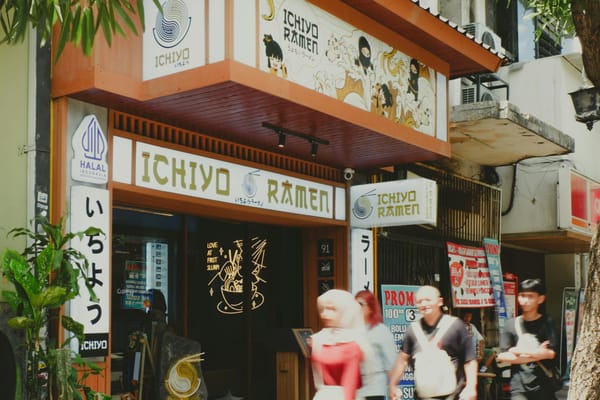
Finally, CoCo Ichibanya's two halal stores in Tokyo, in Akihabara (2017) and Shinjuku Kabukicho (2018), have closed: its official store search showed no halal store in September 2026. Other CoCo Ichibanya branches are not halal.

Why most Japanese curry roux is not halal
Japanese curry roux is a solidified block of fat, flour, curry spices and flavor enhancers. The basic spice-and-flour foundation is naturally permissible. The problem is what manufacturers add on top of that base.
1. Animal-derived fats and extracts. Many roux blocks use beef tallow, pork lard or a beef-and-pork fat blend, and meat extracts for flavor.
2. Gelatin and emulsifiers. Some brands, including the Japan-market S&B Golden Curry, use gelatin. On the label it can appear only as たん白加水分解物(ゼラチン), without the animal source. Emulsifiers (乳化剤) also usually do not state their source.
3. Alcohol-based flavorings. Cooking wine (料理酒), mirin and wine flavoring appear in some curry roux blocks. Even when ingredients are otherwise plant-based, added alcohol disqualifies the product.
A separate problem is the kitchen at curry restaurants. Many Japanese curry shops cook all orders from the same base, so even seafood or vegetable curry at a non-halal-certified restaurant carries a high cross-contamination risk.
Brand-by-brand: which Japanese curry roux is halal in 2026?
❌ S&B Golden Curry (sold in Japan): not halal
Status: ❌ Not halal · contains gelatin made from pork skin
Last verified: October 15, 2026
S&B's product page lists たん白加水分解物(ゼラチン), a gelatin-based protein hydrolysate, among the ingredients, and gelatin among the allergens. S&B's customer FAQ states that the gelatin used is made from pork skin (ゼラチンの原材料は豚皮を使用しています).
Important: the Japanese label does not print the word pork next to the gelatin. Treat any curry roux that lists ゼラチン as not halal unless the pack is halal-certified. Export versions sold overseas can have a different recipe, so always read the package you actually hold.
⚠ S&B Golden Curry with no animal-derived ingredients (commercial 1kg)
Status: ⚠ No animal-derived ingredients · not halal-certified · sold for restaurant use
Last verified: October 15, 2026
S&B's customer FAQ names two animal-free products, both for commercial use: a 1kg curry roux, ゴールデンカレー動物性原材料不使用 (Golden Curry with no animal-derived ingredients), and a 180g retort vegetable curry. Neither is halal-certified, and "no animal-derived ingredients" does not tell you about alcohol, so read the full ingredient list before buying.
✅ Sasa House Kari Jepang: halal-certified (Indonesia)
Status: ✅ Halal-certified in Indonesia (BPJPH mark) · sold in Indonesia
Last verified: October 15, 2026
This is the closest thing in 2026 to a "halal-certified Japanese curry roux." It is made in Indonesia, not Japan, by a joint venture between Japan's House Foods Group and Indonesia's PT Sasa Inti. According to House Foods' launch announcement (February 2024), it comes in Original and Spicy (Pedas) variants in 20g, 40g and 80g packs, with suggested retail prices of IDR 3,000 (20g), IDR 9,500 (40g) and IDR 17,000 (80g).
In April 2025, House Foods Group announced a new Indonesian subsidiary and factory to make halal-certified curry roux, with operation expected to start in 2027. The larger "House Kari Ala Jepang" pack sold in Indonesia is also covered by MUI halal certification.
Where to buy in Japan: it is not sold on standard Japanese supermarket shelves. Check Indonesian or halal specialty shops, and look for the halal logo on the pack.
❌ House Vermont Curry and other mainstream roux in Japan: not halal
Status: ❌ Not halal
Last verified: October 15, 2026
House Vermont Curry contains a beef-and-pork fat blend and pork extract; see our Vermont Curry guide. Other mainstream roux blocks on Japanese shelves use meat extracts, animal fats or similar ingredients, and we have not found any of them with halal certification. Read the ingredient list of any roux before buying.
Comparison: Japanese curry roux at a glance
| Product | Halal status | Animal ingredients? | Where sold |
|---|---|---|---|
| S&B Golden Curry (Japan) | ❌ Not halal | Yes: gelatin made from pork skin | Japanese supermarkets |
| S&B Golden Curry, no animal-derived ingredients (1kg) | ⚠ Not certified | No (per S&B) | Commercial use |
| Sasa House Kari Jepang | ✅ Halal-certified in Indonesia | Covered by certification | Indonesia |
| House Kari Ala Jepang | ✅ Covered by MUI certification | Covered by certification | Indonesia |
| House Vermont Curry (Japan) | ❌ Not halal | Yes: beef-and-pork fat, pork extract | Japanese supermarkets |
📱 Find halal restaurants, prayer rooms and Muslim-friendly places across Japan with the free Halal Navi app.
Download on the App Store · Get it on Google Play
How to read a Japanese curry roux package
If you are standing in a konbini or supermarket in Japan and you want to verify a curry roux yourself, here are the Japanese-language flags to check on the back-label ingredient list (原材料名):
- ゼラチン: gelatin. It can appear as たん白加水分解物(ゼラチン), and the animal source is usually not printed. Treat it as not halal unless the pack is certified.
- 牛脂 / 豚脂 / 鶏脂: beef tallow / pork lard / chicken fat
- チキンエキス / ビーフエキス / ポークエキス: chicken / beef / pork extract
- 乳化剤: emulsifier; the source is usually not stated.
- 料理酒 / みりん / ワイン / 酒精: cooking sake / mirin / wine / added alcohol.
- 動物性原材料不使用: "no animal-derived ingredients used." A useful sign, but it says nothing about alcohol and is not halal certification.
A roux that carries a recognised halal logo, such as BPJPH or MUI, is the only thing we recommend treating as confirmed halal. Anything else is at best an ingredient-based judgement.
Frequently Asked Questions
Is S&B Golden Curry halal?
No, not the version sold in Japan. Its ingredient list includes たん白加水分解物(ゼラチン), and S&B's customer FAQ states that the gelatin is made from pork skin. Export versions sold overseas can have a different recipe, so always check the package in your hand.
Is there any fully halal-certified Japanese curry roux in 2026?
Only outside Japan, as far as we could find. Sasa House Kari Jepang, from a House Foods and PT Sasa Inti joint venture launched in February 2024, carries Indonesian halal certification and is sold in Indonesia. We could not find a halal-certified Japanese curry roux that is made and sold in Japan as of October 2026.
Can I eat curry at a regular Japanese curry restaurant if I order vegetable curry?
We do not recommend it. Many Japanese curry shops cook all orders from the same base, which usually contains animal stock, so cross-contamination risk is high. For halal curry in Japan, eat at a halal-certified restaurant or cook at home.
What about Japanese curry rice (kare-raisu) sold in konbini?
Avoid the ready-made curry-rice meals at Lawson, FamilyMart and 7-Eleven unless the ingredient list shows no meat, extracts or alcohol. Most use chicken or beef extract in the sauce.
Why is the Indonesian House Foods curry halal but the Japanese House Foods curry not?
They are different products. The Indonesian product is made for a market where halal certification is required by law (Law No. 33/2014), with certified ingredients and processes. The Japan-shelf products are made for the Japanese mass market and are not halal-certified.
Are there any halal-certified Japanese curry restaurants in Tokyo?
CoCo Ichibanya's halal stores in Tokyo (Akihabara, 2017, and Shinjuku Kabukicho, 2018) have closed, and its other branches are not halal. See the Halal Navi restaurant database for halal-certified restaurants in Tokyo that serve curry.
How long does a halal certificate stay valid in Indonesia?
Under Indonesia's current law, a halal certificate stays valid with no fixed end date as long as the ingredients and production facilities do not change, according to Indonesia's public broadcaster RRI (December 2025). If a brand changes its recipe or facility, the certificate must be updated.
Verdict
The honest 2026 answer is that Japan's mainstream curry roux has not caught up with Muslim demand. The most popular brands on the shelf contain pork-derived gelatin or a beef-and-pork fat blend, and S&B's only animal-free roux is a commercial 1kg pack that is not certified.
If you want a certified halal Japanese-style curry roux, look for Sasa House Kari Jepang in Indonesia or at Indonesian specialty shops. If you cook in Japan without a certified roux, look for a roux labelled 動物性原材料不使用 and read the full ingredient list for alcohol; even then it is not halal-certified. If you want curry at a restaurant, eat at a halal-certified restaurant rather than a standard curry chain.
House Foods has announced a halal curry roux factory in Indonesia, planned to start in 2027. We will keep this guide updated.
Sources & references
- S&B Foods: Golden Curry product page, accessed October 15, 2026.
- S&B Foods customer FAQ: gelatin source (00449) and animal-free products (00510), accessed October 15, 2026.
- House Foods Group: Sasa House Kari Jepang launch announcement (February 15, 2024) and Indonesian subsidiary and factory announcement (April 18, 2025).
- House Foods Indonesia: House Kari Ala Jepang product page, accessed October 2026.
- RRI: Sertifikat halal kini berlaku tanpa batas waktu (December 7, 2025).
- USDA Foreign Agricultural Service: Indonesia's Expanding Halal Standards (2025).
About this article
Written and halal-verified by Zeshan Hayat, CMO & Head Halal Auditor, Halal Navi.
Update policy: If you find an outdated claim, contact our editorial team and we will correct it within 7 days. The previous version of this article (published 2021) misstated S&B Golden Curry as animal-free; this 2026 rewrite corrects that record based on current ingredient disclosures.
Disclosure: Halal Navi receives no payment from any restaurant or hotel in exchange for inclusion, and all recommendations reflect independent editorial judgment based on Muslim-friendly criteria. Some articles contain affiliate booking links (e.g. Trip.com); if you book through one, Halal Navi may earn a small commission at no extra cost to you.
Last verified: 2026-10-15
🛒 Once you know what is safe to buy, the next question is where. We list halal grocery stores and halal-friendly supermarkets across Japan.
Find halal groceries in Japan →