
Muslim-Friendly Jeju Island 8-Day Itinerary: 2026 Guide
Quick Answer: Jeju Island works for an 8-day Muslim trip in 2026 if you plan your meals. In October 2026 we could confirm only one restaurant that both is operating and describes itself as halal on its own official account: Asalam, a Yemeni restaurant in central Jeju City. For prayer, Jeju Central Masjid in Jeju City is active in 2026. The rest of the itinerary pairs UNESCO sites such as Seongsan Ilchulbong with seafood meals you check yourself, and meals near Asalam on the days you are in Jeju City.
✅ Written and halal-verified by Zeshan Hayat
CMO & Head Halal Auditor, Halal Navi
Published May 13, 2026 · Last verified October 15, 2026
This itinerary started from our 2018 reporting trip with the Jeju Tourism Organization. In October 2026 we checked every restaurant, prayer space and attraction again against official sources from the past 12 months, and removed anything we could not confirm.
How we verified every venue in this Jeju itinerary
For each restaurant we looked for two things dated within the past 12 months: proof that it is operating (its own official account or recent map reviews) and a halal statement from the restaurant itself or a certifier. Older lists, including the Korea Tourism Organization's Muslim-friendly guidebook (information as of December 2021) and older tourism pages, were not enough on their own.
That rule removed most of the restaurants in the earlier version of this guide. Bagdad, an Indian restaurant in Jeju City, is operating, but a March 2026 review with photos shows wine and beer on its menu, so we no longer recommend it. Raj Mahal is operating, but its halal evidence is older than 12 months. Yellow Café in Seogwipo has closed.
For attractions, we checked hours, prices and addresses on the official sites or the Visit Jeju tourism portal in October 2026. If you spot anything that has changed, please contact our editorial team.
Why Jeju Island works for Muslim travelers in 2026
Jeju is not a Muslim-majority destination, and halal restaurants are few. Three things still make it workable.
First, a self-declared halal restaurant in Jeju City. Asalam describes itself as halal on its official Instagram account and was posting in September 2026. It is the anchor for the days you spend in Jeju City.
Second, an active mosque. Jeju Central Masjid in Jeju City posts on its official Instagram account in 2026 and keeps a Friday prayers section there.
Third, a seafood-heavy local cuisine. Grilled fish, abalone and sea urchin dishes are common. They are not halal by default, because sauces can contain alcohol and broths can contain meat, but they give you more to ask about than many other places in Korea.
Day 1: Arrival, Dongmun Market and Jeju City check-in
Most international travelers fly into Jeju International Airport (CJU). Plan your first day light: one anchor meal, one easy sight, hotel check-in.
Lunch: Asalam (Jeju City). Asalam is a Yemeni restaurant whose official Instagram account describes it as halal. On 28 September 2026 it posted that it stayed open through the Chuseok holiday. We did not find the name of a certifying body, and we do not know whether it serves alcohol, so ask the staff.
- Halal status: Halal, as stated by the restaurant (no certifier named)
- Address: 1F, 7 Jungang-ro 2-gil, Jeju-si
- Last verified: October 15, 2026
Afternoon: Jeju Dongmun Traditional Market. Jeju's largest and oldest permanent market is a good introduction to island food. Look for tangerines, dried hairtail (galchi) and omegi rice cakes. The market is open from about 08:00 to 21:00, and its night market runs every day. Ask before buying anything cooked: Does this contain pork or alcohol? (돼지고기나 술이 들어 있나요?)
For dinner, return to Asalam or choose a seafood meal you have checked. If you want your hotel to prepare a meal, ask when you book; we have not verified any hotel's halal meal arrangement.
Day 2: UNESCO Seongsan Ilchulbong and the east coast
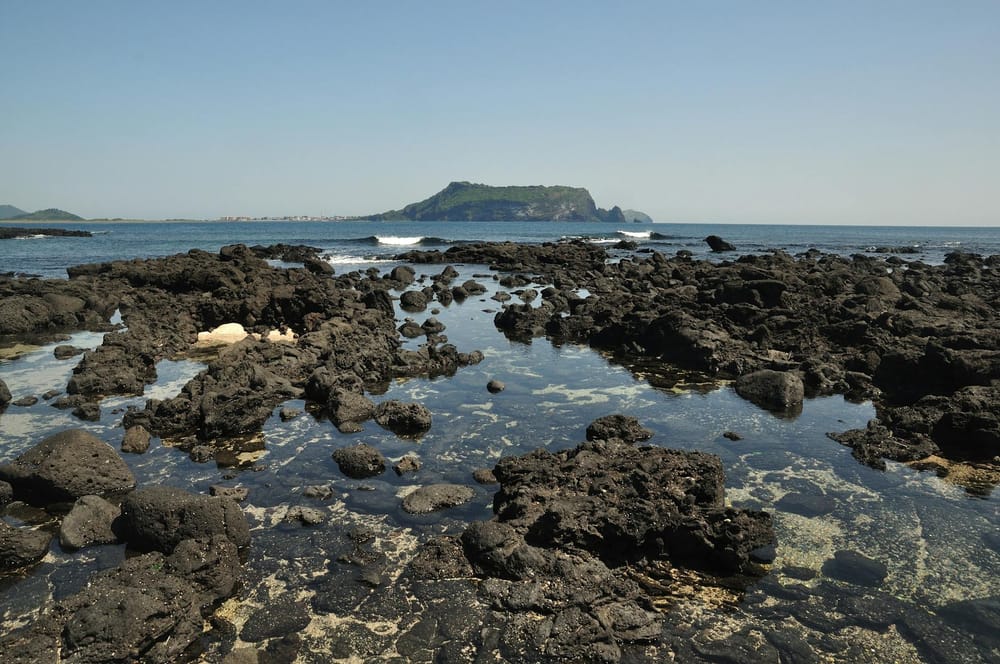
Morning: Seongsan Ilchulbong (Sunrise Peak). This tuff cone is part of the UNESCO World Heritage property Jeju Volcanic Island and Lava Tubes. The climb to the summit takes about 30 to 40 minutes on stairs. Opening hours change by season (05:00 to 19:00 in spring and autumn), and the site closes on the first Monday of each month.
- Address: 284-12, Ilchul-ro, Seongsan-eup, Seogwipo-si
- More information: Visit Jeju's Seongsan Ilchulbong page
Afternoon: Haenyeo Museum. Jeju's haenyeo are women divers who harvest seafood without breathing equipment, a culture inscribed on UNESCO's Intangible Cultural Heritage list in 2016. The Haenyeo Museum (26 Haenyeobangmulgwan-gil, Gujwa-eup) opens 09:00 to 18:00 and closes every Monday.
Dinner: a seafood meal you check yourself. Grilled fish and abalone dishes are common on the east coast, but sauces and side dishes can contain mirin, cooking wine or meat broth. Ask: Does this contain pork or alcohol? (돼지고기나 술이 들어 있나요?)
Day 3: Camellia Hill and tangerine season
Morning: Camellia Hill. This garden in Seogwipo holds more than 6,000 camellia trees of about 500 varieties from 80 countries. A full loop takes about 40 minutes to 1 hour 20 minutes. Adult admission is KRW 12,000. See Visit Jeju's Camellia Hill page.
Afternoon: tangerines. Jeju is South Korea's main citrus-growing region. In season, some farms offer picking experiences; ask your hotel or check the Visit Jeju portal, since smaller farms open and close by season.
Dinner: if you are staying in Jeju City, Asalam is the simplest choice. Otherwise, choose a seafood meal and ask the same question about pork and alcohol.
Day 4: Innisfree Jeju House and Spirited Garden
Morning: Innisfree Jeju House. The Korean beauty brand's center at 23 Sinhwayeoksa-ro, Andeok-myeon, Seogwipo-si, opens daily from 09:00 to 18:00. Visitors can try soap making, and the café serves desserts. See Visit Jeju's Innisfree Jeju House page. We did not check the café's ingredients, so treat it as an activity, not a meal stop.
Afternoon: Spirited Garden. This bonsai and stone garden at 675 Nokchabunjae-ro has been visited by Chinese leaders, according to Visit Jeju's Spirited Garden page. Allow about 1.5 hours.
Dinner: the Halal Navi app shows places near you. Check each listing's date and ask the staff before ordering.
Day 5: Jeju Folk Village and the southern coast
Morning: Jeju Folk Village. This open-air museum at 631-34 Minsokhaean-ro, Pyoseon-myeon, Seogwipo-si, displays about 100 traditional houses. It opens 09:00 to 19:00 from March to October and 09:00 to 18:00 from November to February. See Visit Jeju's Jeju Folk Village page. Allow 2 to 3 hours.
Afternoon: Jusangjeolli Cliff. These hexagonal basalt columns are on the Daepo coast. Daepo Jusangjeolli Cliff (36-30 Ieodo-ro, Seogwipo-si) opens 09:00 to 17:50, and adult admission is KRW 2,000. See Visit Jeju's Jusangjeolli page.
Prayer: Jeju Central Masjid is in Jeju City, about an hour's drive from the south coast. If you need to pray while in Seogwipo, plan to pray at your hotel.
📱 Find halal restaurants, prayer rooms and Muslim-friendly places in Korea and Japan with the free Halal Navi app.
Download on the App Store · Get it on Google Play
Day 6: Jungmun and Cheonjeyeon Falls
Morning: Cheonjeyeon Falls. This three-tier waterfall at 132 Cheonjeyeon-ro is in the Jungmun resort area of Seogwipo. Combine it with Jungmun Beach and a slow afternoon.
Note on KPOP attractions: several KPOP-themed experiences in Jeju have opened and closed in recent years, so we no longer recommend a specific venue. Check Visit Jeju shortly before you travel.
Day 7: Hallasan and forest walks
Morning: Hallasan National Park. Hallasan, at 1,947 meters, is South Korea's tallest mountain and part of the UNESCO Jeju Volcanic Island and Lava Tubes property. Summit trails require advance booking through the official Hallasan reservation system. For a shorter walk, the Eoseungsaengak trail is 1.3 km one way and takes about 30 minutes.
- Bookings, trail conditions and closures: Hallasan National Park official site
Afternoon: easy walks. Jeju Olle Route 7 runs 12.9 km from the Jeju Olle Tourist Center to the Seogwipo Bus Terminal Olle via Beophwanpogu Port and takes 3 to 4 hours. For something gentler, Saryeoni Forest Trail is about 10 km long, open 09:00 to 17:00, and may close in bad weather.
Dinner: for your last full evening, Asalam in Jeju City is the restaurant in this guide with a current halal statement.
Day 8: Souvenirs and departure
Morning: last gifts. Dongmun Market and the Jungang underground shopping center in Jeju City are convenient for tangerine sweets, hallabong citrus products and skincare. Check the ingredient list on any snack before you buy it.
Afternoon: airport. We could not confirm halal food options or a prayer room inside Jeju International Airport in October 2026. Eat before you go to the airport and check the Jeju Airport official site for current facilities.
Where to stay in Jeju
This itinerary moves between Jeju City, where Asalam and Jeju Central Masjid are, and the south coast around Seogwipo (Days 5 and 6). If you want to stay near Cheonjeyeon Falls and Jungmun Beach for the south-coast days, these two resort hotels are close to each other in the Jungmun resort area:
Jeju Central Masjid is about an hour's drive from Jungmun. If you need halal meals, a prayer mat or the qibla direction, ask the hotel before you book. For more options, see Halal Navi's list of hotels in Jeju.
At a glance: where to eat and pray in Jeju
| Place | Type | Halal evidence (past 12 months) | Area |
|---|---|---|---|
| Asalam | Yemeni restaurant | Describes itself as halal on its official Instagram; no certifier named | Jeju City |
| Jeju Central Masjid | Mosque | Active official Instagram in 2026, with a Friday prayers section | Jeju City |
| Seafood restaurants | Local food | None; ask about pork, alcohol and broth every time | Island-wide |
Frequently Asked Questions
Is Jeju Island a good destination for Muslim travelers?
Yes, with planning. Jeju has one restaurant in Jeju City, Asalam, that describes itself as halal on its official account, and an active mosque, Jeju Central Masjid. Outside Jeju City you will need to check each meal yourself.
Are there any fully halal-certified restaurants on Jeju Island?
We could not confirm one in October 2026. Asalam describes itself as halal, but we did not find the name of a certifying body. Treat Jeju as a destination where you confirm each meal.
Where can Muslims pray on Jeju Island?
Jeju Central Masjid, on the 2nd floor of 15 Sancheondandong 2-gil in Jeju City (address from Kakao Map), is active on its official Instagram account in 2026. Check there for Friday prayer details. Elsewhere on the island, plan to pray at your hotel.
What is Jeju famous for in terms of food?
Jeju is known for tangerines (gamgyul and hallabong), black pork (which Muslim travelers must avoid), abalone, hairtail (galchi), grilled mackerel and omegi rice cakes. Seafood dishes are not automatically halal, because sauces can contain mirin or cooking wine and broths can contain meat.
How many days do I need in Jeju Island?
Five to eight days covers Jeju comfortably. Three to four days is enough for the main sights but leaves little time to plan meals. Eight days, as in this itinerary, lets you add a rest day and a slow nature day.
Can I drink the tap water in Jeju?
Jeju Samdasoo is a bottled water brand drawn from the island's volcanic groundwater. If you are unsure about the tap water where you stay, ask your hotel.
What is the best time of year to visit Jeju Island as a Muslim traveler?
Spring and autumn are the most comfortable for walking, and winter is camellia season. Summer is hot and humid and is the busiest domestic travel season.
Are there halal options at Jeju International Airport?
We could not confirm any in October 2026. Eat before you go to the airport and check the Jeju Airport official site for current facilities.
How current is the information in this itinerary?
We checked every restaurant, prayer space and attraction in October 2026 and used only sources from the past 12 months as evidence for halal status and operation. If you find anything that has changed, we will review and correct it within 7 days.
Verdict
Jeju works for Muslim travelers who plan their meals. In October 2026, Asalam in Jeju City is the only restaurant we could confirm as operating with its own current halal statement, and Jeju Central Masjid is the active mosque. Base your Jeju City days around them, enjoy the UNESCO sites and haenyeo culture, and ask about pork, alcohol and broth at every other meal.
Sources & references
- Asalam, official Instagram account, instagram.com/jejuhalalasalam, checked October 15, 2026.
- Jeju Central Masjid, official Instagram account, instagram.com/jejucentralmasjid, checked October 15, 2026.
- UNESCO World Heritage Centre, Jeju Volcanic Island and Lava Tubes, whc.unesco.org/en/list/1264, checked October 15, 2026.
- UNESCO Intangible Cultural Heritage, Culture of Jeju Haenyeo, ich.unesco.org, checked October 15, 2026.
- Visit Jeju official tourism portal, visitjeju.net/en, checked October 15, 2026.
- Hallasan National Park official site, jeju.go.kr/hallasan, checked October 15, 2026.
- Jeju Olle Foundation, jejuolle.org, checked October 15, 2026.
About this article
Written and halal-verified by Zeshan Hayat, CMO & Head Halal Auditor, Halal Navi.
Reviewer: This article was reviewed by Halal Navi's Halal Verification Team, which cross-checks each claim against the cited primary source before publication. See our editorial standards for the full review process.
Update policy: If you spot outdated information, we will review and correct it within 7 days.
Disclosure: The original 2018 reporting trip was hosted by the Jeju Tourism Organization. This 2026 rebuild was produced independently and the Jeju Tourism Organization had no editorial input, review rights, or knowledge of the updated content prior to publication. No restaurant or hotel mentioned in this article paid for placement.
Last verified: 2026-10-15


