Where to Stay in Japan as a Muslim Traveller: The Real Guide to Tokyo, Kyoto & Osaka
Quick Answer: Pick the neighbourhood before the hotel. In Tokyo, Asakusa/Ueno and Shinjuku/Shin-Okubo put halal food and a masjid within walking distance for a fraction of Ginza prices. In Kyoto the balance flips — stay by Kyoto Station, where the hotels with certified halal kitchens are. In Osaka, stay in Namba. Families should look at apartment hotels with kitchens and loaner Muslim-dedicated cookware. And re-confirm every halal claim with the hotel before you book, including the ones in this guide.
The hotel you book does not just decide where you sleep. It decides whether you pray in a clean, quiet room or in a stairwell. It decides whether breakfast is a halal-certified bento or a convenience-store onigiri you are squinting at the ingredients list of. It decides whether you spend ¥3,000 a day on trains or ¥600.
And the most expensive hotel is very rarely the one that solves any of this. At some of Japan's most famous five-stars we could not confirm any prayer facilities at all — while a ¥13,000-a-night apartment hotel in Ueno will lend you a Muslim-only knife and chopping board so you can cook your own dinner.
So let's do this properly. Below is what we could establish about staying in Tokyo, Kyoto and Osaka — split by area, by traveller type (solo, couples and honeymooners, families), and always paired with the answer to the question that actually matters: how do I get from here to the thing I came to see, and what does it cost me? Where a claim could not be confirmed, it says so.
Some hotel links in this guide are affiliate links to Trip.com. If you book through one, Halal Navi may earn a small commission at no extra cost to you. It does not affect which hotels we include.
Jump to: Tokyo · Kyoto · Osaka · Booking checklist · FAQ
Part 1: The three rules that should decide your hotel
Rule 1 — Your neighbourhood matters more than your hotel
This is the single biggest mindset shift.
A hotel with zero Muslim-friendly facilities in a neighbourhood full of halal restaurants and a 24-hour masjid will serve you better than a hotel with a loaner prayer mat in a district where the nearest halal meal is 40 minutes away.
Tokyo's Ikebukuro/Otsuka area is the perfect example. The hotels there offer almost nothing Muslim-specific — but Otsuka Masjid (the Japan Islamic Trust HQ) is open 24/7 with three Jumu'ah slots, and there is a cluster of halal restaurants within walking distance. You eat and pray outside the hotel, and you save a fortune doing it.
Rule 2 — Stay one ring out, travel in
Japan's trains are so good that "central" is a marketing word, not a geographic one.
Ginza is expensive. Asakusa is not. Asakusa to Ginza is a direct 16-minute ride on the Ginza Line for about ¥210 — no changes, trains every few minutes. You could make that trip four times a day and still be thousands of yen ahead of the person who booked in Ginza.
The same logic holds everywhere:
| You want to be near… | Book here instead | The journey | Cost |
|---|---|---|---|
| Ginza / Tokyo Station | Asakusa or Ueno | 12–18 min, Ginza Line, direct | ~¥210 |
| Shibuya / Harajuku | Shinjuku (or Hatagaya) | 5–12 min | ~¥170 |
| Gion, Kyoto | Kyoto Station area | 12–18 min by bus or subway | ¥230 flat |
| Dotonbori, Osaka | Daikokucho or Shinsaibashi | 4–7 min walk or 1 stop | ¥190 |
| Kyoto (whole city) | Osaka, for part of your trip | 29 min JR Special Rapid | ¥580 |
We will use this principle constantly below.
Rule 3 — "Vegetarian-friendly" is not halal, and a lot of hotels blur the line
You will see this phrase everywhere on Japanese hotel websites. It is not the same thing. A vegetarian Japanese dish is very likely cooked with mirin or cooking sake, and almost certainly prepared on shared equipment.
Two of Tokyo's most beautiful luxury hotels — Aman Tokyo and Palace Hotel Tokyo — advertise vegetarian menus, and we could not confirm halal dining, prayer mats or qibla direction at either. That does not make them bad hotels. It makes them hotels you should email six weeks in advance with a very specific request, rather than assume.
Our rule: if a hotel names a certifying body (Kyoto Muslim Association, Japan Muslim Association, Japan Islamic Trust, Japan Islamic Cultural Center, Kyoto Halal Council), take it seriously. If it just says "Muslim-friendly," ask.
Part 2: Transport and money — the 2026 numbers
Get an IC card before you worry about anything else
Suica, PASMO and ICOCA are all the same thing for your purposes: a tap-to-pay card that works on virtually every train, subway and bus nationwide, plus convenience stores and vending machines. The major IC card types are mutually compatible for transit across Japan — ICOCA works on Tokyo Metro, and Suica works on Osaka Metro, Hankyu and Keihan. Buy one, use it everywhere.
If you have an iPhone: don't buy anything. JR East's Welcome Suica Mobile app is free, iPhone-only, needs no deposit, and is valid 180 days instead of the plastic card's 28 — you issue it in the app instead of queueing at a counter, and it books Shinkansen and limited express reserved seats too. It needs an iPhone XR or later on iOS 17.2+, and unlike the standard Suica app it accepts foreign credit cards registered in Apple Pay. Set it up at home before you fly.
If you have an Android phone: you almost certainly need a physical card. Mobile Suica requires Osaifu-Keitai (FeliCa) hardware that overseas Android phones essentially never have. Grab a Welcome Suica at Narita Terminals 1 and 2·3, Haneda Terminal 3, or a JR EAST Travel Service Center. Arriving at Kansai instead? Pick up an ICOCA at the JR West counter.
Ignore any older article claiming you can't get an IC card — the 2023 chip shortage is over and unregistered Suica and Pasmo cards went back on sale in March 2025.
The JR Pass: read this before October
This is time-sensitive, so it goes near the top.
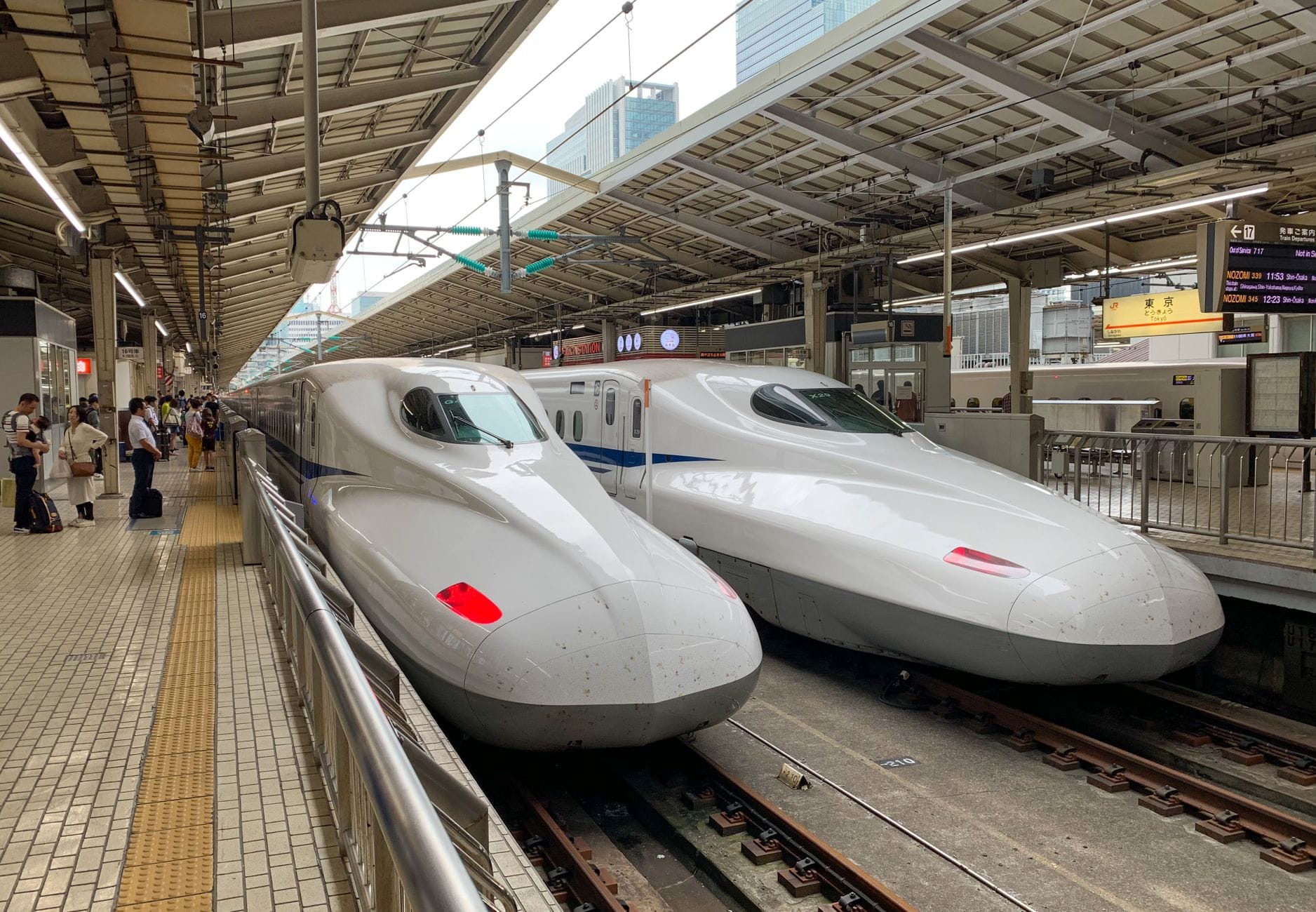
The ordinary 7-day nationwide JR Pass is ¥50,000, the 14-day ¥80,000 and the 21-day ¥100,000 — and from 1 October 2026 these rise to ¥53,000, ¥84,000 and ¥105,000. Check the official JR Pass site for the current price before you buy; the increase applies to overseas sales agents.
But here is the more important point: for a Tokyo–Kyoto–Osaka trip, the JR Pass is usually the wrong purchase. A simple Tokyo–Kyoto round trip loses roughly ¥22,000 against the pass price. And the pass does not cover the fastest Nozomi and Mizuho trains by default — you can buy a supplement (around ¥4,960 for Tokyo–Kyoto), or just take the Hikari, which is only about five minutes slower on that route.
Buy single Shinkansen tickets instead. Tokyo to Kyoto is roughly ¥13,000–14,000 one way and takes 2h15–2h40. Do that twice and you have spent about ¥27,000, not ¥50,000.
If you are staying in Kansai, a regional pass usually wins — the Kansai WIDE Area Pass runs around ¥12,000 for 5 days.
City passes: worth it or not
Tokyo — mostly no. Just tap your IC card. Rides are ¥180–320 and unless you are doing six or more legs in a day, pay-as-you-go wins. The exception is a heavy first day: a Tokyo Subway 24-hour pass (about ¥800) can pay off.
Kyoto — this is where a pass earns its keep, because Kyoto's sights are spread out and the bus is how you reach half of them. The Subway & Bus 1-Day Pass is ¥1,100 for adults and ¥550 for children, and covers all Kyoto Municipal Subway lines, all Kyoto City Bus routes, plus Kyoto Bus, Keihan Bus and West Japan JR Bus routes in the designated areas. Ordinary city bus rides inside the flat-fare zone are ¥230 for adults and ¥120 for children. So the pass breaks even at five rides — very achievable on a temple-hopping day.
Important: the ¥700 bus-only day pass is gone. Kyoto withdrew it in 2023 and stopped accepting old ones in early 2024, deliberately pushing tourists off the overcrowded buses and onto the subway. Delete it from your plans.
Osaka — the Osaka Amazing Pass (around ¥3,500 for one day, and digital QR-code only since the physical card ended in June 2024) bundles unlimited Osaka Metro and city bus travel with free entry to 40-plus attractions. Visit Osaka Castle (¥600), the Umeda Sky Building observation deck (¥1,500) and take a Dotonbori river cruise (¥1,200), plus a few subway rides, and you have already cleared the price. Buy it only for a genuinely packed sightseeing day. One trap: coverage stops at Osaka City limits — a Nankai train toward Kansai Airport or a Hankyu service heading to Kyoto or Kobe means paying separately for the portion outside the zone.
Airport to city
| Route | Option | Time | Cost |
|---|---|---|---|
| Narita → Ueno | Keisei Skyliner | ~41 min | ~¥2,580 |
| Narita → Tokyo Stn | Narita Express | ~55 min | ~¥3,070 |
| Haneda → central Tokyo | Keikyu / Monorail | ~30 min | ~¥500–700 |
| KIX → Namba | Nankai Airport Express | ~45 min | ~¥970 |
| KIX → Namba | Nankai Rapi:t (reserved) | ~38 min | ~¥1,490 |
| KIX → Osaka Stn | JR Haruka | ~50 min | ~¥2,400 |
What a night actually costs
Throughout this guide we use four price bands. Rough guide for a double room in normal season:
- ¥ — under about ¥12,000/night
- ¥¥ — about ¥12,000–25,000
- ¥¥¥ — about ¥25,000–50,000
- ¥¥¥¥ — ¥50,000+
Cherry blossom season (late March to early April), autumn colours (mid-November) and Golden Week (late April to early May) can double these. If you have flexibility, avoid all three.
Tokyo: areas, decoded
Tokyo is not one city, it is about eight, and the gap between the best and worst Muslim-traveller neighbourhoods is enormous. Get this right and everything else falls into place.
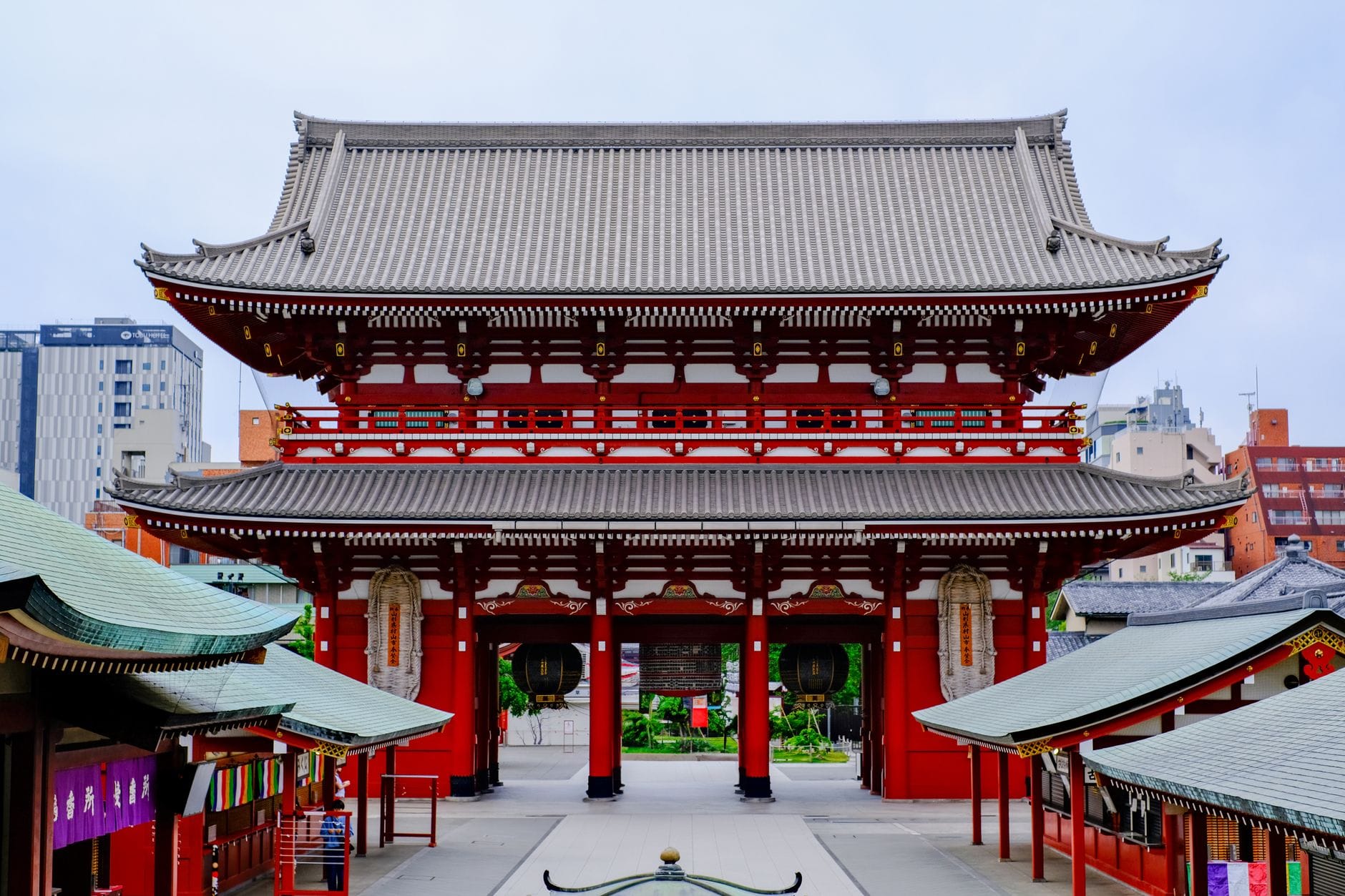
Asakusa / Ueno — the best all-round base in Tokyo. Old-town atmosphere, Sensoji Temple on your doorstep, small masjids embedded in the neighbourhood, halal ramen and kebab shops, and — critically — the Ginza Line runs straight from Asakusa through Ueno, Ginza and on to Shibuya. You get cheap rooms and expensive-neighbourhood access on the same ticket. Tokyo Skytree is a 15-minute walk or one stop away.
Shinjuku / Shin-Okubo — the food capital. Shin-Okubo is one stop from Shinjuku on the Yamanote Line (about two minutes) and is the densest concentration of halal restaurants and halal grocers in Japan. Shin-Okubo Musalla is here. Shinjuku itself gives you direct airport limousine buses from both Haneda and Narita, and every train line you could want.
Ikebukuro / Otsuka — the budget play. Otsuka Masjid (Japan Islamic Trust HQ) is open 24/7 with Jumu'ah at 11:50, 12:30 and 13:00, one stop from Ikebukuro. Halal restaurants cluster nearby. The hotels themselves offer almost nothing — that is the trade you are making, and it is often a good one.
Shibuya / Harajuku — style, and Tokyo Camii. Tokyo Camii, Japan's largest mosque, is at Yoyogi-Uehara in Shibuya ward. Worth visiting for the Ottoman architecture alone even if you are not praying there.
Odaiba — for families with young kids. A man-made island in Tokyo Bay: aquarium-and-mall territory, Rainbow Bridge views, and public prayer rooms at Decks Tokyo Beach (5F, with wudu) and Ariake Garden. It is a 20–30 minute ride from central Tokyo, which is fine if your days are slow and kid-paced, and annoying if they are not.
Ginza / Tokyo Station — where you visit, not where you sleep. Beautiful, central, and disproportionately expensive. There is a prayer room at Tokyo Station (Marunouchi North Exit, inside the JR EAST Travel Service Center, with wudu) — use it, then go back to your cheaper hotel.
One important correction before you book
Richmond Hotel Premier Asakusa International appears in dozens of "Muslim-friendly Tokyo" listicles — including the hotel's own old 2018 post — offering four types of halal breakfast box reservable by 21:00 the night before.
That service has been discontinued. We confirmed it by phone with the hotel on 30 July 2026. Prayer mat loan and a wudu washing area in the restroom are still available, but do not plan your mornings around halal breakfast here. The hotel is also closed for full renovation from 1 October to 8 November 2026.
This is exactly why you should re-confirm facilities at booking rather than trusting any article — including this one — as gospel.
Check rates on Trip.com (outside the 1 October – 8 November 2026 renovation) →
Tokyo for solo travellers
You want cheap, well-connected and easy to eat around. Facilities in the room matter less because you are barely in it.
Sakura Hotel Hatagaya — ¥ — the strongest budget pick in Tokyo
This is a hostel, so manage your expectations on room size. But look at what Sakura Hotel Hatagaya has: an in-house Muslim prayer room, a qibla arrow on the ceiling, prayer mat loan, no alcohol in rooms, and Sakura Cafe downstairs serving halal Egyptian, Indian and Malaysian menus 24/7 — with breakfast from 4:30 AM, which is a genuine gift if you are up for Fajr and hungry.
Pairing: one minute from Hatagaya Station on the Keio New Line, and within walking distance of Tokyo Camii. Shinjuku is two stops away. For a solo traveller who wants to pray properly, eat halal without thinking, and still be in the middle of things, nothing else in Tokyo comes close at this price.
Check rates and availability on Trip.com →
APA Hotel Ikebukuro Eki Kitaguchi — ¥ — the pure-location bargain
Expect nothing from the hotel itself — we could not confirm prayer items or halal meals here. Four minutes' walk from Ikebukuro Station, and cheap.
Pairing: you are one stop from Otsuka Masjid (24/7, three Jumu'ah slots) with halal restaurants in between. If your plan is "sleep here, live outside," this works. If you want anything at all from the front desk, book elsewhere.
hotel MONday Asakusa / Akihabara-Asakusabashi / Premium Ueno-Okachimachi — ¥¥ — the reliable middle
The MONday group is consistent across properties: prayer mat loan, qibla compass loan, women's prayer attire loan, and vegetarian and seafood-focused breakfast buffet options. We found no halal certification for the kitchens, so treat the food as Muslim-friendly rather than certified — but the loan items save you packing a mat.
Pairing: MONday Asakusa is a 3-minute walk from Asakusa Station — so Sensoji before breakfast, Ginza in 16 minutes, Shibuya in about 30, all on the Ginza Line without changing trains. MONday Premium Ueno-Okachimachi is a 1-minute walk from Okachimachi, dropping you between Ueno Park's museums and Akihabara's electronics. Akihabara-Asakusabashi is 2 minutes from Asakusabashi, the cheapest of the three.
Shinjuku Washington Hotel — ¥¥ — for eating well without walking far
Tamanna Biryani, an Indian-Pakistani restaurant that advertises halal-friendly cooking, is in the basement of the hotel — confirm its current halal status directly, as it is not on our verified list. There is also a ladies-only floor, which solo female travellers frequently ask us about.
Pairing: 8 minutes from Shinjuku Station South Exit, with direct limousine buses from both Haneda and Narita — so your arrival day is one bus and a short walk, not three train changes with luggage. Shin-Okubo's halal food street is one stop up the Yamanote.
Tokyo for couples and honeymooners
Here you are paying for atmosphere, service and a hotel that treats your requirements as normal rather than exotic.
Sheraton Miyako Hotel Tokyo — ¥¥¥ — the strongest certified claim in Tokyo
Sheraton Miyako Hotel Tokyo states that its Muslim-friendly breakfast menu is certified by the Kyoto Halal Council, served with a dedicated corner, dedicated cookware and dedicated tableware — meaning no cross-contamination anxiety over the eggs. The hotel also describes prayer mats and qibla compasses placed in every room, and pork-free, alcohol-free rooms. Ask the hotel to confirm the certificate and its scope when you book.
This is the answer for couples who do not want to spend their honeymoon interrogating waiters. You walk down, you eat, it is handled.
Pairing: it is in Shirokanedai — quiet, green, upscale — with a free shuttle bus from Meguro Station and easy access to Roppongi and Shibuya. Not the middle of the action, which for a honeymoon is usually the point.
Hotel Chinzanso Tokyo — ¥¥¥ — the romantic one
Hotel Chinzanso Tokyo is a luxury hotel built around a genuine Japanese garden, complete with a waterfall and its famous evening mist display. The hotel describes Muslim-friendly kaiseki at the Kinsui restaurant using halal-certified wagyu and halal-certified flour tempura; prayer mat and qibla compass pre-placed in the room free of charge; no alcohol in rooms; pork-free and alcohol-free menus; halal toiletries provided.
Book the kaiseki 7 days in advance — this is not optional, and it is one of the most romantic halal meals available in Tokyo.
Pairing: the garden means you do not have to leave for your special evening. It is in Bunkyo ward, near Mejiro and Edogawabashi — a taxi or short ride from Ikebukuro, and about 20 minutes from Shinjuku.
Check rates and availability on Trip.com →
Park Hyatt Tokyo — ¥¥¥ — the icon
The Lost in Translation hotel, and the view from the 52nd floor still justifies the price. What surprises people: the hotel says a Quran, prayer mat and qibla compass are placed in every guest room, customised halal meals are available with prior notice, and staff will direct you to halal restaurants and mosques. Confirm the meal arrangement when you book.
Pairing: about a 12-minute walk from Shinjuku West Exit — a genuine walk with luggage, so taxi in. But you are in Shinjuku, which means Shin-Okubo's halal food district is two stops away when you want something less formal than in-house dining.
Hilton Tokyo Odaiba — ¥¥¥ — for the view
The Japanese restaurant Sakura offers a halal-certified kaiseki course with a dedicated halal kitchen and cookware, reserved two days ahead — confirm the certifying body when you reserve. Rooms look out over Rainbow Bridge, which at night is the photo everyone wants.
Pairing: direct connection to Odaiba-Kaihinkoen Station, plus a free Haneda Airport shuttle — a real convenience on a tight schedule. Halal restaurants within 500m, and the Decks Tokyo Beach prayer room (5F, wudu available) is close.
The Ginza swap, for couples
If you are dreaming of Ginza shopping and Tokyo Station's architecture: book Hotel New Otani Tokyo (¥¥¥) instead. It is a classic hotel set in a 400-year-old Japanese garden with prayer mat loan on advance request, directly connected to Akasaka-Mitsuke and Nagatacho stations. You are minutes from Ginza and the Imperial Palace, in a garden, for less than Aman or Palace — neither of which we could confirm any halal provision for.
Tokyo for families
Families need three things Japanese hotels historically do not provide: space, a kitchen, and rooms that sleep more than two. One brand solves all three.
MIMARU Tokyo Ueno Inaricho — ¥¥ — the family answer
MIMARU is an apartment-hotel brand and it is, without exaggeration, the reason a lot of Muslim families can travel to Japan comfortably at all.
Every room has a full kitchen. They lend a dedicated Muslim cookware set — knife, cutting board, tableware kept separate — plus prayer mat and qibla compass. There are halal-eating staff on duty. Give them advance notice.
Why this matters: you buy halal chicken and produce, you cook dinner your kids will actually eat, and you stop spending ¥8,000 a night on restaurant meals for four people. On a 10-night trip that difference is a flight.
Pairing: 3 minutes from Inaricho Station (Ginza Line), 5 minutes from JR Ueno Station. Ueno Park, its zoo and its museums are on your doorstep — the single best cluster of things to do with children in Tokyo. Sensoji is two stops. Ginza is a direct 12-minute ride. And Ueno is the Keisei Skyliner terminus, so Narita is 41 minutes away with a pram.
MIMARU Tokyo Asakusa Station — ¥¥ — same idea, Skytree side
Identical Muslim-friendly setup: kitchens in every room, Muslim cookware set loan, prayer mat, qibla compass.
Pairing: one minute from Asakusa Station. Tokyo Skytree is one stop or a walk across the river, Sensoji is around the corner, and you are on the Ginza Line for everything else. If your children are Skytree-obsessed, pick this over Inaricho.
Agora Place Asakusa — ¥¥ — halal-friendly breakfast, halal restaurants nearby
Agora Place Asakusa serves a halal-friendly Japanese breakfast. The hotel told us by phone in September 2026 that its kitchen also handles pork, so cross-contact during preparation is possible. Whether that works for you is your call. The hotel also lists free prayer mat loan and a qibla direction app.
If you would rather eat at a halal restaurant, you do not have to go far. HALRA (halal wagyu sukiyaki) and Menya Honolu Asakusa (halal ramen) are about 200m from the hotel, and Ayam-ya (halal ramen) and Asakusa Sushi Ken (halal sushi) are within about 600m.
Pairing: Asakusa, so Sensoji, Nakamise shopping street and the Ginza Line are all on your doorstep.
Check rates and availability on Trip.com →
Shinjuku Prince Hotel — ¥¥ — the best-equipped mid-range in Tokyo
Prayer mats and qibla compasses in guest rooms, no alcohol in rooms, a dedicated prayer room, halal-friendly menus at in-house restaurants (25F Fuga Japanese and Prince Mache), plus halal meals at Sakura Cafe. That is a strong package for the price.
Pairing: 5 minutes from Shinjuku East Exit. Shin-Okubo Musalla is one stop on the Yamanote Line or roughly a 15-minute walk. Shin-Okubo's halal restaurants and grocers are the same trip. For a family that wants prayer and food solved without a car, this is one of the most efficient bases in Tokyo.
Grand Nikko Tokyo Daiba — ¥¥¥ — bay views, but read the fine print
We could not confirm halal dining or an in-house prayer room here. What the hotel does publish is a vegetarian-friendly menu — which, as we said, is not halal.
Pairing: it earns its place on area. Direct connection to Daiba Station, Rainbow Bridge and Tokyo Tower views, prayer rooms at Decks Tokyo Beach (5F, wudu), Ariake Garden and Tokyo Big Sight, and halal-certified and Muslim-friendly restaurants in Aqua City and DiverCity. A good bet for families doing an aquarium-and-mall day, less so if you need the hotel itself to feed you.
Hotel Metropolitan Tokyo Ikebukuro — ¥¥ — big rooms, eat in the neighbourhood
Hotel Metropolitan Tokyo Ikebukuro is JR East's 4-star flagship, one minute from Ikebukuro West Exit, with the room sizes families need. We could not confirm halal menus at its restaurants, so ask directly rather than assuming.
Pairing: again, the neighbourhood does the work. Halal restaurants within about 500m, and Otsuka Masjid one stop away, open 24/7.
Kyoto: areas, decoded
Kyoto is the city Muslim travellers worry about most — and, surprisingly, it is the city where hotels have gone furthest. Kyoto has more hotels advertising certified halal kitchens than Tokyo does. What it has less of is mosques and street-level halal food, so the balance flips: here, the hotel matters more than the neighbourhood.
Kyoto Station area — book here first. Unromantic, and completely correct. Every bus and train in the city radiates from here, the Shinkansen stops here, and it is where the concentration of halal hotel kitchens is highest. Fushimi Inari is 5 minutes and ¥150 away on the JR Nara Line. Arashiyama is about 15 minutes on the JR Sagano Line. You will save an hour a day staying here.
Shijo / Kawaramachi — central Kyoto, the shopping and eating heart. Nishiki Market, Pontocho Alley, department stores, and halal ramen at Halal Ramen Honolu Premier - Kyoto Gion. Walkable to Gion. Slightly pricier than Kyoto Station but far more alive in the evening.
Gion / Higashiyama — the postcard. Wooden machiya, Yasaka Shrine, Kiyomizu-dera, geiko districts. Beautiful, and priced accordingly. Bus-dependent for the rest of the city.
Arashiyama — the bamboo grove, and Kyoto's best onsen ryokan. About 15 minutes from Kyoto Station but it feels like a different world: mountains, the Katsura river, monkeys, and the famous bamboo path. Crucially for us, Yoshiya — a halal-certified restaurant — and the free OAGARI prayer room are both here, which makes Arashiyama unusually workable for a Muslim overnight stay.
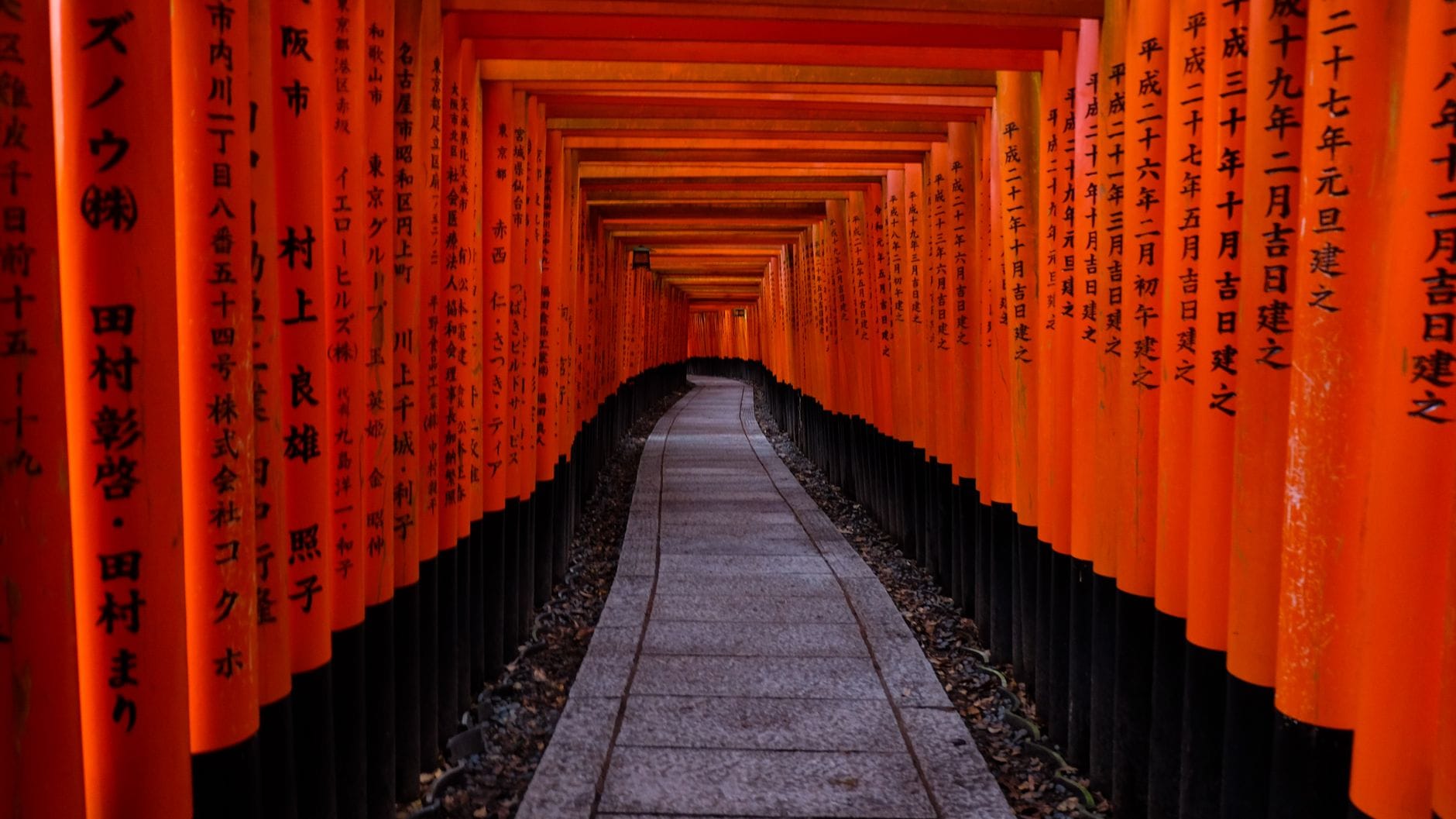
Fushimi — cheap, and near the red gates. Between Kyoto Station and Fushimi Inari. Halal Chinese Restaurant Haryarai is under a kilometre from Fushimi Inari, and Masjid Al-Huda is further south in Momoyama. We confirmed by phone in September 2026 that both are open.
Kinkaku-ji / Kitano — the golden pavilion side. Quiet, residential, bus-reliant. Fine for one night, awkward as a base.
Kyoto for solo travellers
MIMARU Kyoto Station — ¥¥ — best value in the city
MIMARU Kyoto Station gives every room a kitchen, rents halal cooking utensils, provides prayer mat and qibla compass on request, and has international Muslim staff on site — which means the person at the desk understands the question before you finish asking it.
Pairing: 2 minutes from Kyoto Station's Hachijo Exit. That puts Fushimi Inari 5 minutes away, Arashiyama 15, Nara 45 and Osaka 29. Solo travellers doing day trips should not stay anywhere else.
Ryokan Hostel Gion — ¥ — the cheapest way into the postcard
A budget hostel with traditional Japanese styling, 6 minutes from Gion-Shijo Station, near the antique shops and Gion Shirakawa, and not far from Kyoto Masjid.
Pairing: you are sleeping in Gion for hostel money. Yasaka Shrine, Hanamikoji and the Kamo river are all walkable, and the Keihan Line takes you to Fushimi Inari in about 5 minutes. Bring your own prayer mat — expect nothing from the front desk.
Kyoto Traveler's Inn — ¥¥ — modest, but they help
This is a functional room, not an experience. What earns it a mention: the front desk provides a halal restaurant list, which is genuinely useful in a city where halal options are scattered.
Pairing: 7 minutes from Higashiyama Station, right by Heian Shrine and its enormous torii gate, and a short walk into the Gion and Higashiyama temple circuit.
Hotel Keihan Kyoto Grande — ¥¥ — cheap sleeps by the station
We could not confirm anything Muslim-specific at the hotel — ask directly if you need prayer items.
Pairing: it sits between Kyoto Station and Fushimi, which puts Fushimi Inari's thousand gates minutes away. Go at sunrise, before the crowds — this is the tip everyone gives and almost nobody takes. For halal dinner, the Kyoto Station cluster is a short ride back.
Kyoto for couples and honeymooners
Kyoto is where you spend the money. This is also where Japan's halal kaiseki actually exists.
Hotel Granvia Kyoto — ¥¥¥¥ — the one with the confirmed halal menu
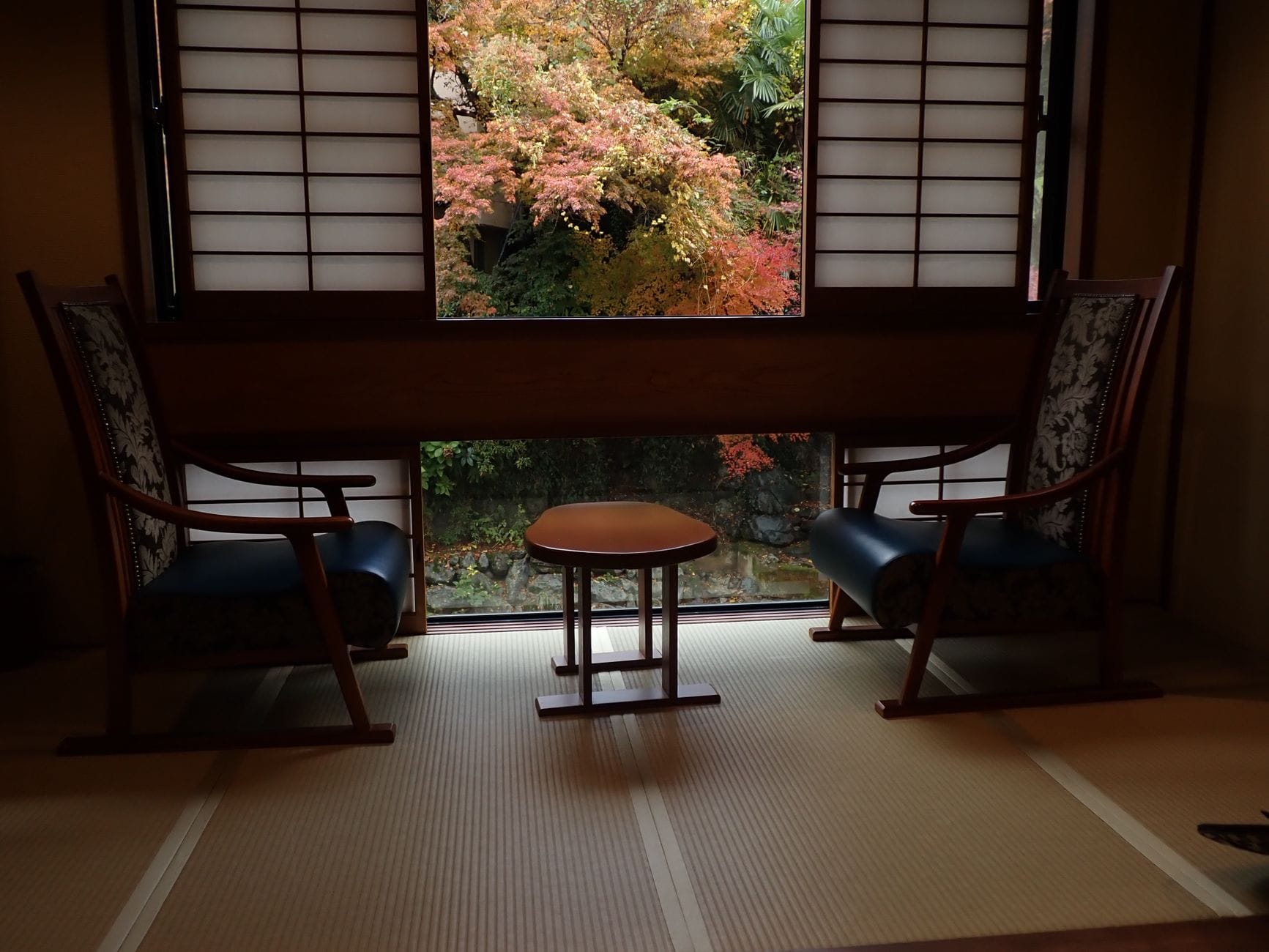
Confirmed directly with the hotel's marketing team on 7 August 2026: at Hotel Granvia Kyoto, Café Restaurant Le Temps serves five halal dishes — a halal Western-style bento, halal hamburg steak teriyaki bento, halal beef fillet steak, halal grilled chicken, and a halal kids' plate.
Note this is lunch and dinner, not breakfast. Also: prayer mat, qibla direction, Quran available, and prayer space on request.
Pairing: it is built into Kyoto Station. You step off the Shinkansen and you are in the lobby. For a couple on a tight itinerary, or a honeymoon with a lot of day trips, that convenience is worth real money.
Check rates and availability on Trip.com →
The Westin Miyako Kyoto — ¥¥¥¥ — the halal buffet
The Westin Miyako Kyoto runs a designated halal section in the Aqua Blue restaurant buffet, plus prayer mats and qibla compasses. A grand hillside hotel in Higashiyama with forest walking trails on the property.
Pairing: you are in the Higashiyama temple district — Nanzen-ji, Heian Shrine and the Philosopher's Path are within reach on foot — and there is a shuttle bus from Kyoto Station so arrival is not a struggle. Romantic, green, and you can eat breakfast without an interrogation.
Check rates and availability on Trip.com →
Hotel Nikko Princess Kyoto — ¥¥¥ — seven halal set menus
Hotel Nikko Princess Kyoto advertises seven halal-certified set menus — the widest halal choice of any Kyoto hotel here — with prayer rooms available on advance consultation, plus prayer mat and qibla compass. Ask which body certifies the menus when you book.
Pairing: 3 minutes from Shijo Station Exit 5, meaning Nishiki Market, Pontocho and Kawaramachi's shopping are all on foot, and Gion is a 15-minute walk across the river. This is the best combination of halal dining and evening atmosphere in Kyoto.
Check rates and availability on Trip.com →
Kyoto Century Hotel — ¥¥¥ — certified Japanese cuisine
Kyoto Century Hotel advertises halal Japanese cuisine certified by the Kyoto Muslim Association, halal breakfast and dinner, prayer mat, prayer dress, qibla compass and prayer space. It requires 3 days' advance notice — put a reminder in your phone the moment you book.
Pairing: 2 minutes from Kyoto Station. If Granvia is out of budget but you want the same station convenience and a certified kitchen, this is your hotel.
Check rates and availability on Trip.com →
Kyoto Takasegawa Bettei — ¥¥ — quietly perfect
A minimalist ryokan by the Takase river in Shimogyo ward, with hinoki cypress baths and soundproofed rooms. There is a quiet prayer space and vegetarian meals on request. Ganko Sanjo Honten, a short walk north, is halal-friendly.
Pairing: you get the ryokan experience — tatami, cypress bath, stillness — in central Kyoto rather than an hour out of town, walkable to Kawaramachi and Gion. For couples who want traditional Japan without committing to a remote mountain inn, this is the sweet spot, and at ¥¥ it is the best-value romantic stay in this guide.
Kyoto Arashiyama Onsen Kadensho — ¥¥¥ — onsen ryokan, bamboo grove
Right next to Hankyu Arashiyama Station, with free yukata rental. No halal certification — meals are buffet-style and may include non-halal items, so contact them directly to arrange something Muslim-friendly, or plan to eat out.
Pairing: and eating out here works, because Yoshiya and the free OAGARI prayer room are both within walking distance. Bamboo grove at dawn, onsen in the evening, halal dinner nearby. That combination does not exist anywhere else in Kyoto.
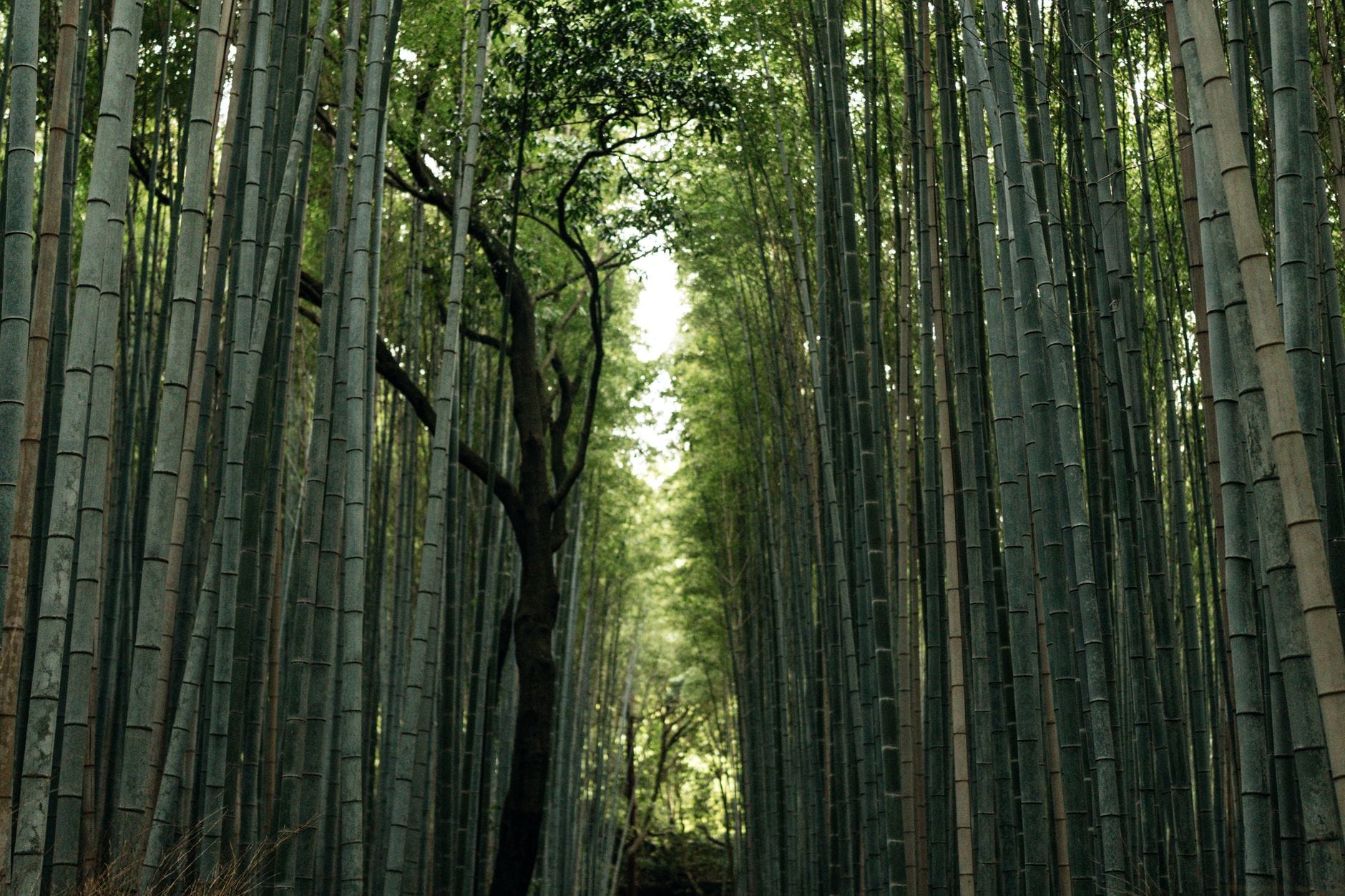
Seikoro Ryokan — ¥¥¥¥ — 190 years old
A historic ryokan offering private dining and private bathing — which for many Muslim couples solves the single biggest hesitation about ryokan stays, the communal onsen. Vegetarian meals with advance notice.
Pairing: 7 minutes from Kyoto Station, with Kyoto Masjid about 10 minutes by car. Genuine old Kyoto, genuine privacy, genuinely central.
Two splurges worth knowing about
HOSHINOYA Kyoto (¥¥¥¥) is a riverside luxury ryokan in Arashiyama reached only by private boat. Vegetarian kaiseki on request; no halal certification, so contact them well ahead. Yoshiya is nearby. MUNI KYOTO (¥¥¥¥) has 21 rooms overlooking Togetsukyo Bridge. We could not confirm Muslim-specific facilities, but it is walking distance to both Yoshiya and the OAGARI prayer room, so the area covers what the hotel does not.
Kyoto for families
MIMARU SUITES Kyoto Shijo — ¥¥¥ — built for groups
Every room has four or more bedrooms and a full kitchen. Muslim-friendly utensil rental, prayer mat, qibla compass. If you are travelling as an extended family or two families together, this removes the awkward maths of booking three separate rooms.
Pairing: 3 minutes from Shijo subway station, so you are in central Kyoto — Nishiki Market for groceries, Kawaramachi for everything else, Gion walkable. Cook, pray, sleep, all in one apartment.
MIMARU Kyoto Nijo Castle — ¥¥ — the practical family base
Full kitchens (stovetop, fridge, microwave, cookware), halal cooking utensils available to rent, prayer mat and qibla compass on request.
Pairing: 750m from Nijo Castle — the shogun's palace with the nightingale floors that squeak deliberately, which children love more than any temple. Central Kyoto, easy subway access.
MIMARU Kyoto Nishinotoin Takatsuji — ¥¥ — the market-adjacent one
Same MIMARU package: kitchens, Muslim utensil rental, prayer mat, qibla compass.
Pairing: 5 minutes from Shijo Station, close to Nishiki Market — Kyoto's 400-year-old covered food street, where you can buy fresh produce for the kitchen. Halal Ramen Honolu Premier - Kyoto Gion is about a 10-minute walk from the market, so groceries and a halal dinner out fit into the same evening.
MIBU-JUKU Shichijo Umekoji — ¥¥ — the most complete halal package in Kyoto
This deserves more attention than it gets. Halal breakfast and halal dinner, Indonesian Muslim female staff on site, and halal dinner prepared with separate Muslim-only utensils. Prayer mat and qibla compass provided.
For a family that wants to simply not think about food for a few days, this is as close to fully solved as Kyoto gets.
Pairing: 5 minutes from JR Umekoji-Kyoto-Nishi Station, which puts you next to Umekoji Park, the Kyoto Railway Museum and the Kyoto Aquarium — the three best things to do in Kyoto with children under ten, all clustered together.
SEN Toji Uomitsu — ¥¥ — a machiya with wudu facilities
A traditional Kyoto townhouse property offering prayer mat, qibla direction, prayer clothing, wudu facilities (each room has a tap or shower for wudu), halal cooking utensils and a halal menu.
Pairing: 5 minutes from Toji Station, next to To-ji Temple and its five-storey pagoda — the tallest wooden tower in Japan — and one stop from Kyoto Station. Staying in an actual machiya, with wudu sorted, is a rare combination.
RIHGA Royal Hotel Kyoto — ¥¥¥ — big hotel, big rooms
Muslim-friendly menus excluding non-halal ingredients (not certified), qibla compass, prayer mat, and prayer rooms available on advance request. A large conventional hotel with the family room capacity that smaller Kyoto properties lack.
Check rates and availability on Trip.com →
THE KAGAYA KYOTO Japanese Style Inn — ¥¥¥¥ — private kitchen, private hot tub
A luxury aparthotel near Nijo Castle, with Kinkaku-ji a short ride away. Every apartment has its own kitchen, so you can cook your own halal meals, plus a private indoor hot tub — no shared bath to plan around. We could not confirm prayer items or other Muslim-specific services, so bring your own mat. Expensive, but for a family that wants total privacy plus the ability to cook, it is a rare combination.
Check the name when you book: THE KAGAYA KYOTO hachijokuchi, near Kyoto Station, is a different property.
Osaka: areas, decoded
Osaka is the easiest of the three cities. It is compact, cheap, loud and food-obsessed — and it has more prayer rooms in shopping centres than either Kyoto or Tokyo. It also makes an excellent base for the whole of Kansai: Kyoto is 29 minutes away, Nara about 40, Kobe about 25.
If your budget is tight, seriously consider basing yourself in Osaka and day-tripping to Kyoto rather than the other way round. Osaka rooms are meaningfully cheaper.
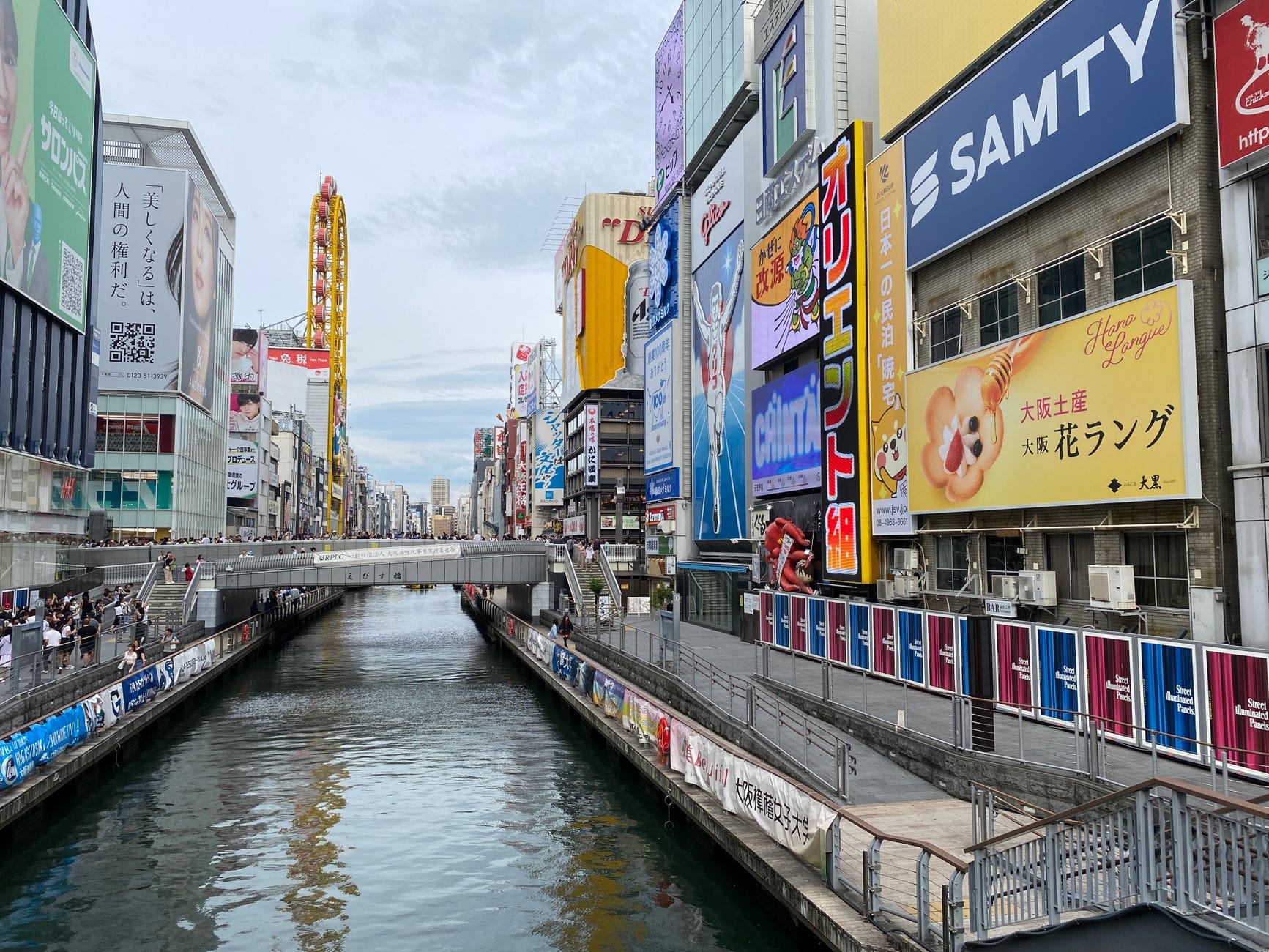
Namba / Dotonbori / Shinsaibashi — stay here. This is Minami, the southern heart: the Glico running man sign, the canal, the food streets, the covered Shinsaibashi shopping arcade. Nearly everything is walkable. There is a prayer room at Namba City (B1 — you collect the access code from the information desk on B2, in front of Uniqlo), so you can fit prayer into a shopping day without a detour.
Umeda / Osaka Station — the northern hub. Skyscrapers, department stores, the Umeda Sky Building's floating observatory. Better for business travel, airport access via Haruka, and Shinkansen connections at Shin-Osaka. There is a prayer room at JR Osaka Station.
Bay area / USJ — for families with a theme-park mission. Universal Studios Japan and the Kaiyukan aquarium. Tempozan Marketplace has a prayer room on 3F (again, access code from the information counter near the ticket desk).
Tennoji / Uehommachi — quieter, well-connected, cheaper. Shinsekai's retro streets and Tsutenkaku Tower are here, and the Kintetsu line to Nara starts at Uehommachi.
Osaka's main mosques include Osaka Masjid in Nishiyodogawa, plus Osaka Grand Masjid, Masjid Istiqlal Osaka and the Japan Da'wah Centre. None are in the tourist core — plan a visit rather than assuming you will walk past one. The shopping-centre prayer rooms are what you will actually use day to day.
Osaka for solo travellers
Osaka has the best budget Muslim-friendly hotels in Japan. All of these are ¥ — under about ¥12,000 a night.
Dotonbori Hotel — ¥ — the best budget pick in Osaka
Famous for the four giant stone faces on its facade. More importantly: halal chicken breakfast (reserve one day ahead), free prayer mat loan, a qibla marker, and a dedicated pot plus disposable tableware. At this price that is remarkable.
Pairing: 3 minutes from Namba Station Exit 25 on the Midosuji Line. Dotonbori's canal and food streets are a 5-minute walk, the Namba City prayer room is right there, and the Midosuji Line takes you to Umeda in 8 minutes for ¥240. Osaka in a single hotel booking.
Richmond Hotel Namba Daikokucho — ¥ — halal food in the building
Richmond Hotel Namba Daikokucho offers a halal-certified menu at its in-house restaurant, plus multiple halal restaurants within 500m. For a budget business hotel, that is an unusually strong offer.
Pairing: 5 minutes from Daikokucho Station, one stop south of Namba — which is exactly the "stay one ring out" trick. You are a 10-minute walk from Dotonbori, paying less, with halal food downstairs.
Check rates and availability on Trip.com →
Quintessa Hotel Osaka Shinsaibashi — ¥ — for a comfortable solo night
Quintessa Hotel Osaka Shinsaibashi has a Muslim-friendly menu, prayer goods loan, a qibla direction marker, vegetarian options — and a manga and book library on site, which is a very Osaka touch.
Pairing: about 5 minutes from Shinsaibashi Station, so the covered shopping arcade runs from your door down to Dotonbori. Rain-proof, which matters more than you would think in June.
Check rates and availability on Trip.com →
Hotel Plaza Osaka — ¥ — halal sukiyaki on a budget
At Hotel Plaza Osaka, the Japanese restaurant Kaden serves menus with halal-certified beef — sukiyaki, tempura and more. Halal sukiyaki at this price point is rare in Japan. Prayer mat loan available.
Pairing: 5 minutes from Hankyu Juso Station, three minutes from Umeda by train. You are out of the tourist centre, which is why it is cheap, but you are two stops from everything.
Osaka for couples and honeymooners
Swissotel Nankai Osaka — ¥¥¥¥ — the full package
Swissotel Nankai Osaka is a 5-star advertising a halal-certified kitchen serving halal menus, plus pork-free Muslim-friendly options, meeting rooms made available for prayer, prayer mat loan and qibla guidance. Confirm the certificate and which meals it covers when you book.
Pairing: directly connected to Nankai Namba Station — which is the Kansai Airport line, so you are a single 38-minute Rapi:t ride from your flight with no changes and no luggage drama. And you are on top of Dotonbori. For a honeymoon that starts or ends in Osaka, the logistics alone justify it.
Check rates and availability on Trip.com →
Hilton Osaka — ¥¥¥ — halal wagyu teppanyaki
At Hilton Osaka, the 3F Japanese restaurant Genji serves halal wagyu teppanyaki using Japan Islamic Trust certified meat. Also: prayer mat loan, Quran loan, qibla compass loan and a prayer space provided.
Watching a chef cook certified halal wagyu in front of you is one of the genuinely special halal experiences available in Japan. Book it.
Pairing: 2 minutes from JR Osaka Station in Umeda. Umeda Sky Building's Floating Garden Observatory is a short walk — go at sunset — and Kyoto is a 29-minute train ride from your doorstep.
Sheraton Miyako Hotel Osaka — ¥¥¥ — certified by the Japan Muslim Association
Sheraton Miyako Hotel Osaka offers halal-certified Muslim-friendly menus certified by the Japan Muslim Association, at both the buffet restaurant eu and the Japanese restaurant Uemachi. Prayer mat loan and vegetarian options.
Pairing: directly connected to Osaka-Uehommachi Station on the Kintetsu line — which is the direct line to Nara, about 40 minutes. Quieter than Namba, cheaper than Umeda, certified halal dining in the building, and a day trip to the deer park without changing trains.
Check rates and availability on Trip.com →
Hotel Nikko Osaka — ¥¥¥ — halal-certified meat on Midosuji
Muslim-friendly menu using halal-certified meat, with pork-free and alcohol-free seasonings, prayer mat loan and vegetarian options.
Pairing: directly connected to Shinsaibashi Station on Midosuji Avenue — Osaka's grand tree-lined boulevard, and the luxury shopping street. Dotonbori is a 10-minute walk south. Central, elegant, and it feeds you.
Hotel Granvia Osaka — ¥¥¥ — inside the station
Hotel Granvia Osaka has a halal menu available at the Ukihashi restaurant with advance reservation, prayer mat loan and qibla direction.
Pairing: it is inside the South Gate Building, directly connected to JR Osaka Station. Zero-walk arrival, and immediate access to the Kyoto and Kobe lines. Practical rather than romantic — good for a couple with a packed multi-city itinerary.
Check rates and availability on Trip.com →
Osaka for families
MIMARU Osaka Namba North — ¥¥ — kitchens, in the middle of Namba
MIMARU Osaka Namba North has a full kitchen in every room, dedicated Muslim cookware loan (knife, cutting board, tableware), prayer mat and qibla compass loan, and Muslim staff on duty. Advance notice required.
Pairing: you are in Namba, so Dotonbori is walkable, the Namba City prayer room (B1) is minutes away, and Osaka Metro's Midosuji Line runs the length of the city from your door. Buy halal ingredients, cook for the family, then walk out into the best street-food district in Japan for everyone else's dessert.
Quintessa Hotel Osaka Bay — ¥ — the USJ hotel
Quintessa Hotel Osaka Bay is purpose-built for this audience and it shows: Muslim-friendly breakfast menu with a Muslim chef on staff, prayer mat loan, Quran loan, qibla marker placed in guest rooms, dedicated halal cookware — and a Muslim owner. They have been running Muslim accommodation services since 2019.
Pairing: there is a free shuttle bus to Universal Studios Japan (reservation required). USJ is an all-day, early-start, exhausted-return kind of place, and having a shuttle plus a halal breakfast waiting removes the two hardest parts. The Kaiyukan aquarium and the Tempozan Marketplace prayer room (3F) are also in this bay area.
At ¥ pricing, this is the best-value Muslim-friendly family hotel in Japan.
Check rates and availability on Trip.com →
Hotel Vischio Osaka by Granvia — ¥¥ — the halal breakfast box
Hotel Vischio Osaka by Granvia serves a halal-certified breakfast box certified by the Japan Islamic Cultural Center, prepared in a dedicated kitchen with dedicated cookware, and a pork-free, alcohol-free menu. That is a properly serious setup for a mid-range hotel.
Pairing: 5 minutes from JR Osaka Station. Breakfast is handled before you have even left the building, and then Kyoto, Nara, Kobe and the Shinkansen are all one short walk away. For a family doing Kansai day trips, this is the efficient choice.
Check rates and availability on Trip.com →
RIHGA Royal Hotel Osaka — ¥¥¥ — space, and a prayer space
Prayer mat loan (limited stock — request early), qibla direction marker, a prayer space available, and pork-free and alcohol-free menu options.
Pairing: on Nakanoshima, the river island between Umeda and central Osaka — green, quiet, and a free shuttle bus from JR Osaka Station so you are not dragging children through a mega-station. Osaka Science Museum and the Museum of Oriental Ceramics are on the same island.
Flying out early? Hotel Nikko Kansai Airport — ¥¥
A qibla direction marker in every guest room, supervised by a Muslim scholar, and prayer mat loan. It is in the Aeroplaza right next to KIX Terminal 1, with prayer rooms an 8-minute walk away inside the terminal.
For a 7am flight after two weeks of travelling, this is worth the extra cost.
How to split your nights
7 nights, first-timer: 3 Tokyo, 2 Kyoto, 2 Osaka.
10 nights, comfortable: 4 Tokyo, 3 Kyoto, 3 Osaka, with a Nara day trip from Osaka or Kyoto.
7 nights, budget: 3 Tokyo, 4 Osaka, day-tripping to Kyoto and Nara. Osaka rooms are cheaper and Kyoto is 29 minutes and ¥580 away. You lose the Kyoto evening atmosphere, and you save a lot.
Honeymoon, 8 nights: 3 Tokyo, 4 Kyoto, 1 Osaka near the airport. Kyoto is where the romance is; give it the most nights.
Travel between cities on the Shinkansen mid-morning, not first thing — you will get a seat and you will not waste a full day.
Rough daily budgets, per person
| Budget | Mid-range | Comfortable | |
|---|---|---|---|
| Accommodation (shared double) | ¥5,000 | ¥10,000 | ¥20,000+ |
| Food (halal) | ¥3,000 | ¥5,500 | ¥10,000 |
| Local transport | ¥800 | ¥1,200 | ¥1,500 |
| Attractions | ¥1,000 | ¥2,000 | ¥3,000 |
| Daily total | ~¥9,800 | ~¥18,700 | ~¥34,500 |
Add roughly ¥14,000 per Shinkansen leg between Tokyo and Kansai. Families cooking in an apartment hotel can cut the food line by 40–50%.
The one-page booking checklist
Copy this into an email and send it to any hotel before you book. Getting a written answer is the whole point.
- Do you provide a prayer mat and qibla direction in the room, or on loan? Is there a fee?
- Is there a prayer space in the hotel? Does it need advance booking?
- Do you serve halal food? Which certifying body? Is it certified, or "Muslim-friendly"?
- Is halal dining available at breakfast, lunch or dinner — and how many days' notice do you need? (Several hotels here need 2, 3 or 7 days.)
- Are separate utensils and cookware used?
- If you have a kitchen in the room, do you lend Muslim-dedicated cookware?
- Is there a halal children's menu? (Rare. Granvia Kyoto has one.)
- Can you point me to the nearest masjid or prayer room?
Five things we would tell a friend
- Book the halal kaiseki when you book the room. Chinzanso needs 7 days. Kyoto Century needs 3. Hilton Tokyo Odaiba needs 2. These are among the best halal meals in Japan and they sell out.
- Set up your IC card before you fly if you have an iPhone. It takes two minutes and saves you a queue at the airport.
- Don't buy the JR Pass reflexively. For Tokyo–Kyoto–Osaka, singles are cheaper. Run the numbers.
- Carry a small prayer mat anyway. Even hotels that lend them run out, and Japan gives you a lot of clean, quiet corners.
- Re-confirm everything. Halal provision in Japan changes fast — the Richmond Asakusa breakfast is proof. Facilities described in this guide were checked in 2026, and we still recommend you email.
Frequently asked questions
Which area of Tokyo is best for Muslim travellers?
Asakusa and Ueno for an all-round base: cheap rooms, halal ramen and kebab shops, small masjids, and the Ginza Line running direct to Ginza and Shibuya. Shinjuku and Shin-Okubo if food matters most — Shin-Okubo has the densest cluster of halal restaurants and grocers in Japan. Ikebukuro and Otsuka if budget matters most, because Otsuka Masjid is open 24 hours and halal restaurants cluster around it.
Do Japanese hotels provide prayer mats and qibla direction?
Some do, and the practice is spreading, but it is never safe to assume. Sheraton Miyako Hotel Tokyo, Hotel Chinzanso Tokyo and Park Hyatt Tokyo describe prayer mats and qibla compasses placed in the room; many mid-range hotels lend them on request; budget business hotels usually have nothing. Carry a small travel mat regardless — even hotels that lend them run out.
Is vegetarian food in Japan halal?
No. A vegetarian Japanese dish is very likely cooked with mirin or cooking sake, and almost certainly prepared on shared equipment with meat. Japanese hotel websites use "vegetarian-friendly" widely, and it does not mean halal. Ask specifically about halal certification, shared fryers and shared cookware.
Which Japanese hotels have halal-certified kitchens?
Kyoto has the highest concentration. Hotel Granvia Kyoto confirmed five halal dishes at lunch and dinner directly with us in August 2026. Kyoto Century Hotel advertises certification by the Kyoto Muslim Association, Sheraton Miyako Hotel Osaka by the Japan Muslim Association, and Hotel Vischio Osaka by the Japan Islamic Cultural Center. Always ask which body issued the certificate and what it covers — the kitchen, or one menu.
Is the JR Pass worth it for a Tokyo–Kyoto–Osaka trip?
Usually not. The 7-day nationwide pass is ¥50,000, while a Tokyo–Kyoto round trip on single tickets is roughly ¥27,000. The pass also excludes the fastest Nozomi and Mizuho trains without a supplement. If you are staying inside Kansai, a regional pass such as the Kansai WIDE Area Pass is the better buy.
Where can Muslim families cook their own food in Japan?
Apartment hotels are the answer. MIMARU properties in Tokyo, Kyoto and Osaka give every room a full kitchen and lend a dedicated Muslim cookware set — knife, cutting board and tableware kept separate — with advance notice. MIBU-JUKU Shichijo Umekoji in Kyoto goes further and serves halal breakfast and dinner. Cooking typically cuts a family's food budget by 40–50%.
How do I find a mosque or prayer room while travelling in Japan?
Tokyo Camii in Shibuya, Otsuka Masjid in Toshima, Shin-Okubo Musalla in Shinjuku, Kyoto Masjid and Osaka Masjid are the main ones for travellers. Day to day, you will more often use prayer rooms inside stations and shopping centres — Tokyo Station's Marunouchi North Exit, Namba City B1, Tempozan Marketplace 3F, Decks Tokyo Beach 5F. Several require an access code from an information desk.
Plan the rest of your trip
Halal Navi lists halal and Muslim-friendly restaurants, mosques and prayer rooms across Japan, with the halal status and its source shown on each venue page. Download the app for the App Store or Google Play to search by your current location while you are travelling, or browse the venues linked throughout this guide.
Want a longer shortlist for one city? See our guides to Muslim-friendly stays in Tokyo, Kyoto and Osaka, and our halal-friendly hotels across Japan.
About this article
Author: Aisha Rahman, Halal Navi Editorial Team. Aisha Rahman is a pen name used by the Halal Navi editorial team to maintain consistency across our halal verification reporting. Editorial responsibility is held collectively by our Halal Verification Team.
Reviewer: Halal-reviewed by Zeshan Hayat (Lead Halal Auditor, Halal Navi / Founder, HHAJ). Zeshan holds ISO 9001:2015 Internal Auditor and ISO 19011 Auditor credentials. See our editorial standards for the full review process.
Update policy: We re-verify every claim in this article quarterly. If you spot outdated information, we will review and correct it within 7 days.
Disclosure: Halal Navi receives no payment from any restaurant or hotel in exchange for inclusion, and all recommendations reflect independent editorial judgment based on Muslim-friendly criteria. Some articles contain affiliate booking links (e.g. Trip.com); if you book through one, Halal Navi may earn a small commission at no extra cost to you.
Last verified: 2026-09-17