Halal Food in Ikebukuro 2026: Tokyo's Other Chinatown
Quick Answer: Ikebukuro is one of Tokyo's most underrated halal neighbourhoods, with almost everything clustered in Ikebukuro 2-chome. Pray at Otsuka Mosque, one stop away on the Yamanote line — visitors report that the prayer room long listed at Nishi-Ikebukuro 1-2-3 is not there. Eat hand-pulled Lanzhou beef noodles at Kaenzan Lanzhou Lamian, Uyghur lamb and laghman at DOLAN, or halal wagyu ramen at Gyumon Ikebukuro (4.8 across 7,123 reviews), which also has a prayer room with ablution area inside. Only HALAL Wagyu Shabu-Shabu SHOUTAIAN at LINKS Ikebukuro makes a dated first-party certification claim (15 June 2025, certifier unnamed); Gyumon and Toribushi state they cook to Islamic dietary law without naming a body, and smaller kitchens like Aliya and Suniku-bo have no verifiable listing.
If you have one evening in Ikebukuro, do this. Pray at the musalla by the west exit, walk fifteen minutes north-west into Ikebukuro 2-chome, and eat hand-pulled Lanzhou beef noodles for under ¥1,200.
That is the whole trip. Almost everything halal here sits in one neighbourhood, and almost none of it is in the guidebooks.
One thing to know before you read on. Most of the restaurants below are not officially certified — they are kitchens run by Muslim families and operators who state that they cook to Islamic dietary law. We say which is which at the end, and we say plainly where we could not confirm anything.
Why Ikebukuro Has This and Shibuya Does Not
Ikebukuro's north and west sides are where Tokyo's Chinese community actually lives — the working Chinatown, as opposed to the one in Yokohama that people visit.
Where there is a Chinese community in Japan there is usually a Chinese Muslim one, and this is where it settled. What grew here is qingzhen (清真) cooking: the food of China's Hui and Uyghur Muslims, which has never contained pork because those regions have never cooked with it. Not Chinese food with the pork taken out. A different cuisine that happens to be Chinese.
It was built for people who live here, which is why it is cheap, open late, and invisible to tourism.
Where to Pray
There is no prayer room in Ikebukuro itself. A room at Nishi-Ikebukuro 1-2-3 has been listed for years across several guides, but visitors who have gone looking — most recently in 2024 — report finding nothing there and no answer on the listed phone number. Plan your prayer stop around Otsuka instead.
For jumu'ah, Otsuka Mosque at Minami-Otsuka 3-42-7 is one stop away on the Yamanote line. That is closer than most of central Tokyo manages, and it is the real argument for basing yourself here rather than passing through.
The Noodles
Start at Kaenzan Lanzhou Lamian, Ikebukuro 2-47-7.
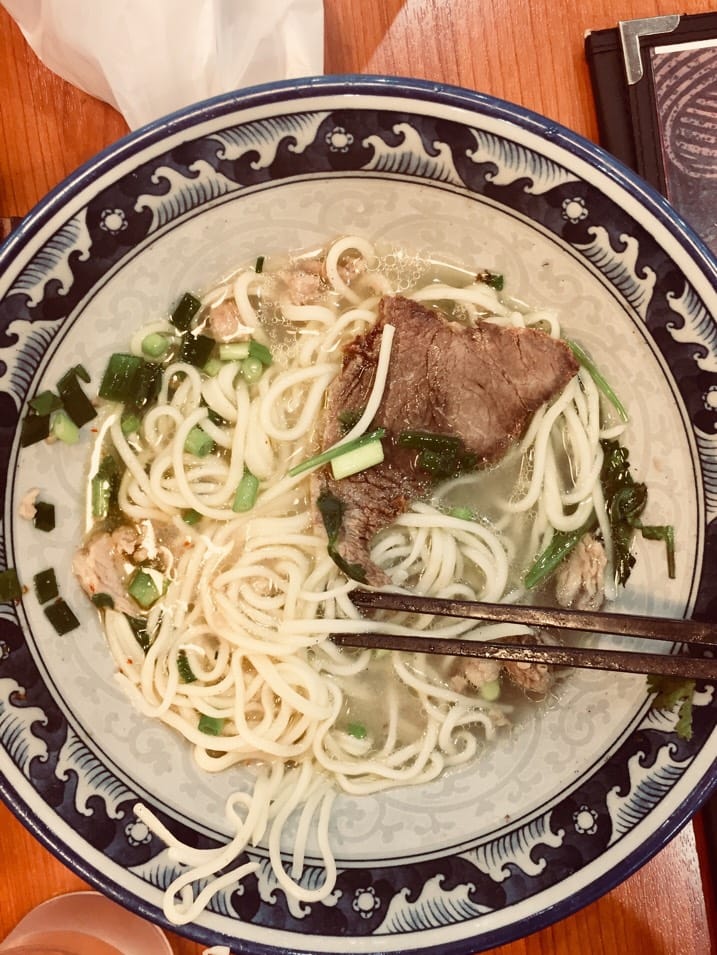
Order the 蘭州牛肉麺 — Lanzhou beef noodles. Hand-pulled wheat noodles in a clear beef broth, with sliced daikon, coriander and chilli oil. It comes from Lanzhou in Gansu province, it is a Hui Muslim dish, and there has never been pork in it. Around here it runs ¥980 to ¥1,080, with a small size cheaper again.
Two minutes' walk gets you Uyghur Cuisine DOLAN, at Ikebukuro 2-13-8 — the best-reviewed place in the cluster and a completely different meal. Xinjiang food: lamb skewers heavy with cumin, laghman hand-pulled noodles under a stir-fried lamb and pepper sauce, flatbread that anyone from Central Asia will recognise on sight.
Aliya Halal Restaurant at Nishi-Ikebukuro 1-43-3, second floor, runs 11:00 to 23:00 — useful, because it is open when almost nothing else halal in this part of Tokyo is. It is the Ikebukuro branch of the operation that puts 清真美食 on its sign in Ueno.
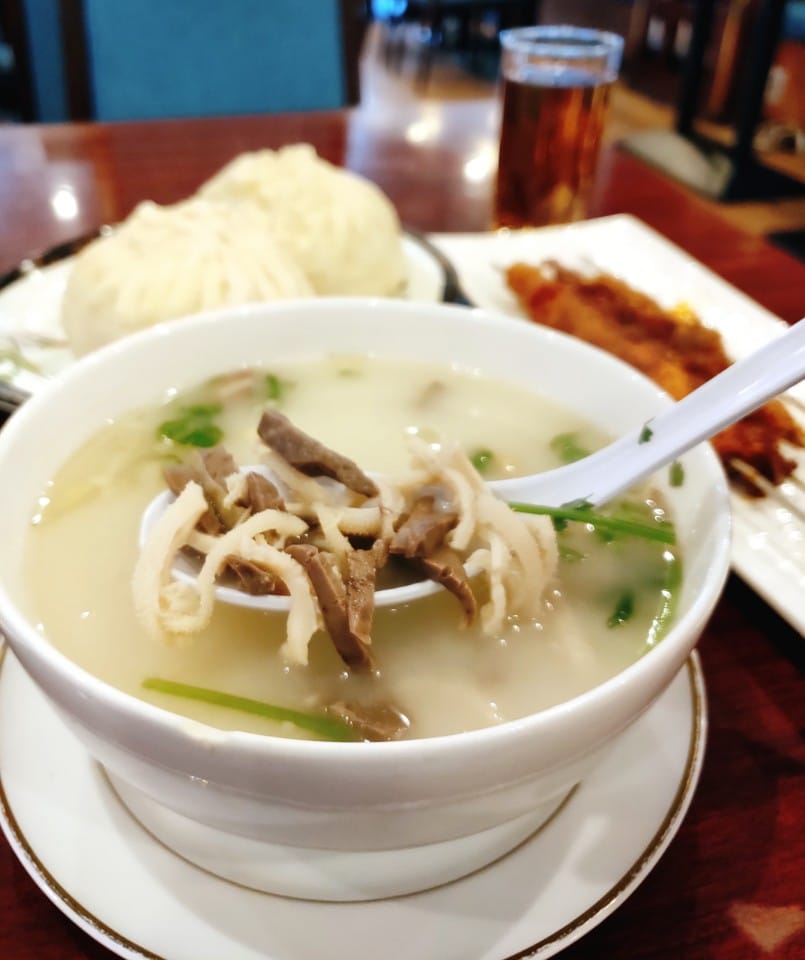
Suniku-bo (酥肉坊) is the small one, open 11:00–21:00. No website, no English, no listing anywhere. It is exactly the kind of place this neighbourhood produces.
If you order one thing wrong here, make it the cooking wine. Chinese kitchens reach for 紹興酒 almost reflexively, and a qingzhen kitchen will not — but a shop that adopted Lanzhou noodles because they became fashionable might not have thought about it. Ask. It is one sentence and it is the question that actually matters.
The Meal Worth Booking
HALAL Wagyu Shabu-Shabu SHOUTAIAN, eighth floor of LINKS Ikebukuro at Minami-Ikebukuro 1-28-1.
Shabu-shabu is one of the meals a Muslim visitor to Japan normally writes off entirely — the broth, the dipping sauces and the shared pot each rule it out. This is a room built to do it properly, and the operator states it took halal certification on 15 June 2025, which is the most recent and most specific claim on this page.
It is two minutes from the station on the east side, in a shopping building, which makes it the one place here you could take people who would not otherwise walk to Ikebukuro 2-chome.
Gyumon Ikebukuro, and the Room at the Back
Gyumon Ikebukuro, fourth floor at Ikebukuro 2-42-1, is the biggest halal restaurant in the ward — 4.8 across 7,123 reviews, which is more than the rest of this article combined.
Get the beef-bone ramen if you want the house dish, the spicy miso if you want it hot, and the gyukatsu if you would rather eat wagyu than drink it. Open 12:00–15:00 and 16:30–22:00, so the gap between three and half four will catch you out if you arrive mid-afternoon.
But the reason to come is not the ramen. There is a prayer room with an ablution area inside the restaurant. Very few restaurants anywhere in Japan have one. With the musalla by the west exit and Otsuka Mosque one stop away, that is three options in a single evening — and it is why this neighbourhood works for a long day when central Tokyo does not.
📱 Find halal restaurants, prayer rooms and Muslim-friendly places across Japan with the free Halal Navi app.
Download on the App Store · Get it on Google Play
Also Worth Knowing in Ikebukuro
Halal Ramen Toribushi at Higashi-Ikebukuro 1-13-12 is the chicken option — paitan broth, gyoza, karaage, 11:00 to 23:00, soft drinks only. A change of pace if you have had beef twice already.
Halal MAD CHEFs on Sunshine-dori and Marhaba Halal Restaurant at Ikebukuro 2-63-6 cover the Pakistani side. Halal Wagyu Yakiniku by Nonbee is a few doors from Gyumon, at Ikebukuro 2-43-7.
How to Walk It
The addresses tell the story: 2-13-8, 2-42-1, 2-43-7, 2-47-7, 2-63-6. Everything except the shabu-shabu and Sunshine-dori is in Ikebukuro 2-chome, the blocks north-west of the station.
So: musalla, then a fifteen-minute walk, then a neighbourhood where Uyghur lamb, Lanzhou noodles, halal wagyu ramen and a Pakistani kitchen are within a few hundred metres of each other. It is a tighter cluster than Shin-Okubo, and nobody writes about it.
What We Could and Could Not Verify
This is the honest part, in one place rather than scattered through the article.
A dated, first-party claim: SHOUTAIAN's own site states it obtained halal certification on 15 June 2025. It does not name the certifying body.
Operator statements, no certifier named: Gyumon Ikebukuro and Halal Ramen Toribushi both publish that they cook to Islamic dietary law. Neither names a body. Gyumon's Malaysia Halal Corporation certification covers the group's original Shibuya yakiniku business from 2007, which is not the same as a certificate for this branch.
Google's halal classification only: DOLAN, Kaenzan, Marhaba. That tells you how the venue presents itself, not what is in the kitchen.
Nothing to look up: Aliya, Suniku-bo, MAD CHEFs, Nonbee. Small kitchens with no web presence.
None of that makes these places unsafe — most halal food in Japan operates exactly this way, because certification here is voluntary and expensive. It means the useful question is the one you ask at the counter: where the meat comes from, whether cooking wine goes in the sauces, and whether the fryer is shared.
Frequently Asked Questions About Halal Food in Ikebukuro
Is there a mosque in Ikebukuro? No, and the prayer room long listed at Nishi-Ikebukuro 1-2-3 is not there either — visitors report finding nothing at the address. Otsuka Mosque at Minami-Otsuka 3-42-7 is one stop away on the Yamanote line, which is closer than most of central Tokyo gets to a working mosque.
Where should I eat halal in Ikebukuro? Start with Kaenzan Lanzhou Lamian at Ikebukuro 2-47-7 for hand-pulled Lanzhou beef noodles, or Uyghur Cuisine DOLAN two minutes away for cumin lamb skewers and laghman. For halal wagyu ramen, Gyumon Ikebukuro is the biggest venue in the ward at 4.8 across 7,123 reviews. Almost all of it is within Ikebukuro 2-chome.
Why does Ikebukuro have so much halal Chinese food? Because the north and west sides are where Tokyo's Chinese community actually lives, rather than the Chinatown in Yokohama that people visit. That community includes Chinese Muslims, and what grew here is qingzhen (清真) cooking — the Hui and Uyghur traditions, which have never used pork rather than having had it removed.
Is there halal shabu-shabu in Tokyo? Yes, and it is rare. HALAL Wagyu Shabu-Shabu SHOUTAIAN on the 8th floor of LINKS Ikebukuro states on its own site that it obtained halal certification on 15 June 2025, though it does not name the certifying body. Ordinary shabu-shabu is out of reach — the broth, the dipping sauces and the shared pot each rule it out.
Is there a restaurant in Tokyo with a prayer room inside? Gyumon Ikebukuro on the 4th floor at Ikebukuro 2-42-1 has a prayer room with an ablution area inside the restaurant. That is unusual for a restaurant anywhere in Japan. Confirm for your specific branch when booking rather than assuming every Gyumon has one.
What should I ask at a qingzhen restaurant? Whether Chinese cooking wine (紹興酒) is used in the sauces — it is the ingredient most easily overlooked, because it is invisible in the finished dish. Then where the meat comes from, and whether the wok or fryer is shared. A Hui or Uyghur kitchen will have clear answers.
Are Ikebukuro's halal restaurants certified? Mostly not in the sense of a body you can name. Only SHOUTAIAN makes a dated first-party claim, and it does not identify the certifier. That is normal for halal food in Japan rather than a warning sign — but it means this neighbourhood suits travellers comfortable asking questions in person more than those who want paperwork.
Is Ikebukuro a good base for Muslim travellers? It is underrated. A prayer room minutes from the west exit, a mosque one stop away, a restaurant with its own prayer room, and most of the eating inside one walkable neighbourhood at neighbourhood prices.
Find Halal Food in Ikebukuro with Halal Navi
Ikebukuro is not a compromise. It is one of the best-served parts of Tokyo for prayer, and it holds a category of food the rest of the city barely has.
Download the Halal Navi app to find halal restaurants, shops and prayer spaces near wherever you are standing.
Muslim-friendly stays in Asakusa, Ueno and Ikebukuro
Two things matter for a Muslim traveller choosing a hotel: what the property itself provides, and whether there is halal food you can walk to. We show both, from our own restaurant database. Confirm anything that matters to you when you book.
- Richmond Hotel Premier Asakusa International — Muslim-friendly facilities declared by the hotel: Halal meal box certified by the Japan Islamic Cultural Center is available at breakfast. See the halal details Halal food within walking distance: 24 places (9 certified) · nearest 1m. Wagyu Yakiniku PANGA Asakusa | Tokyo Halal restaurant 0m · KOBE BEEF DAIA ASAKUSA RAKUTENCHI STORE 11m · HALAL WAGYU RAMEN & BEEF CUTLET SHUNPUDOU 春風堂 35m.
- RYOKAN KAMOGAWA — No Muslim-friendly facilities are declared for this property — it is here for the location. See the halal details Halal food within walking distance: 23 places (9 certified) · nearest 81m. Halal Wagyu Ramen & Gyukatsu GYUMON Kaminarimon Tokyo Asakusa 81m · LUXE BURGERS & Sunny's Table Asakusa 104m · Kobe Beef Wagyu Katana Asakusa No. 2 Branch 106m.
- Kaminarimon Ryokan — No Muslim-friendly facilities are declared for this property — it is here for the location. See the halal details Halal food within walking distance: 19 places (8 certified) · nearest 22m. Halal Wagyu Ramen & Gyukatsu GYUMON Kaminarimon Tokyo Asakusa 22m · Tokiwado Kaminari-okoshi Kaminarimon Main Store 28m · The Kebab Factory 133m.
Want to see where a local creator has actually eaten? Navito's list of halal places in Japan collects the venues he has filmed, each shown with its current halal status.
About this article
Author: Aisha Rahman, Halal Navi Editorial Team. Aisha Rahman is a pen name used by the Halal Navi editorial team to maintain consistency across our halal verification reporting. Editorial responsibility is held collectively by our Halal Verification Team.
Reviewer: Halal-reviewed by Zeshan Hayat (Lead Halal Auditor, Halal Navi / Founder, HHAJ). Zeshan holds ISO 9001:2015 Internal Auditor and ISO 19011 Auditor credentials. See our editorial standards for the full review process.
Update policy: We re-verify every claim in this article quarterly. If you spot outdated information, we will review and correct it within 7 days.
Disclosure: Halal Navi receives no payment from any restaurant or hotel in exchange for inclusion, and all recommendations reflect independent editorial judgment based on Muslim-friendly criteria. Some articles contain affiliate booking links (e.g. Trip.com); if you book through one, Halal Navi may earn a small commission at no extra cost to you.
Last verified: 2026-08-05