Are Udon and Soba Halal? It Depends on the Mentsuyu
Quick Answer: Whether udon and soba are halal depends not on the noodles themselves but on the broth and dipping sauce they are served with. Udon (wheat flour, water, salt) and soba (buckwheat, sometimes wheat) contain no animal products or alcohol by themselves and are generally halal-safe as plain noodles. The problem is mentsuyu — the seasoning base used in nearly every Japanese noodle soup and dipping sauce — which traditionally contains mirin (a rice wine with roughly 10–14% alcohol) and sometimes sake, making standard restaurant broths not permissible for observant Muslims. Fish-based dashi is considered permissible by most Islamic scholars, though individual comfort levels vary. A number of restaurants across Tokyo, Kyoto, Osaka, Takayama, and other locations have been reported as Muslim-friendly or advertise halal-conscious preparation, but visitors should confirm current certification and broth ingredients directly with each venue before ordering.
Are udon and soba halal? It's one of the most common questions Muslim travelers ask before their first trip to Japan — and the honest answer is: it depends entirely on the broth, the dipping sauce, and the kitchen. The noodles themselves are usually fine, but the devil is in the dashi. This guide walks you through exactly what goes into traditional Japanese noodle soups, where the halal concerns lie, and which restaurants across Japan serve noodles you can rely on so you can slurp with confidence in 2026.
Are Udon and Soba Noodles Themselves Halal?
Let's start with the good news. Udon noodles — thick, chewy wheat noodles — are made from wheat flour, water, and salt. Soba noodles are made from buckwheat flour, sometimes blended with wheat flour. Neither noodle contains animal products, alcohol, or pork derivatives by itself. From an ingredient standpoint, the dried or fresh noodles you find in a Japanese supermarket are almost always halal-safe.
The concern arises the moment those noodles are cooked and served in broth. Traditional Japanese noodle soups are built on dashi — a stock typically made from kombu (dried kelp) and katsuobushi (dried bonito/skipjack tuna flakes). Some dashi varieties also use niboshi (dried sardines) or shiitake mushrooms. Fish-based dashi is generally considered permissible under most Islamic jurisprudence since fish is halal, but scholars differ on dried fish processing methods, so individual comfort levels vary.
The far bigger issue is mirin and soy sauce in mentsuyu (noodle dipping sauce/broth seasoning). Mirin is a sweet rice wine containing roughly 10–14% alcohol — used in almost every version of mentsuyu, tsuyu, and many ramen tare. Cooking soy sauce (tamari or ordinary shoyu) is technically alcohol-free, but many Japanese soy sauces do contain trace alcohol from fermentation. For observant Muslims, the presence of mirin in the broth or mentsuyu is a clear non-halal flag.
What Is Mentsuyu and Why Does It Matter for Halal Udon and Soba?
Mentsuyu (めんつゆ) is the concentrated seasoning sauce poured into noodle soups or served as a cold dipping broth alongside chilled soba. It is the soul of Japanese noodle cooking. A standard mentsuyu recipe calls for dashi, soy sauce, mirin, and sometimes sake — meaning almost every bottle of mentsuyu sold in Japanese supermarkets contains alcohol.
When you sit down at a mainstream udon or soba restaurant in Japan, you are almost certainly being served a broth or dipping sauce made with mirin-based mentsuyu. The restaurant staff may not know this is an issue, and the menu will rarely disclose it. This is why Muslim travelers cannot assume that udon or soba is automatically halal just because it "looks simple" or doesn't contain meat.
Some halal-certified and Muslim-friendly restaurants in Japan have reformulated their broths using halal mirin substitutes (glucose syrup-based alternatives) or halal-certified soy sauce, and clearly label their dishes accordingly. Those are the venues worth seeking out — and we cover the top ones below.
Is Somen Halal? The Thin Wheat Noodle That Is Not Ramen
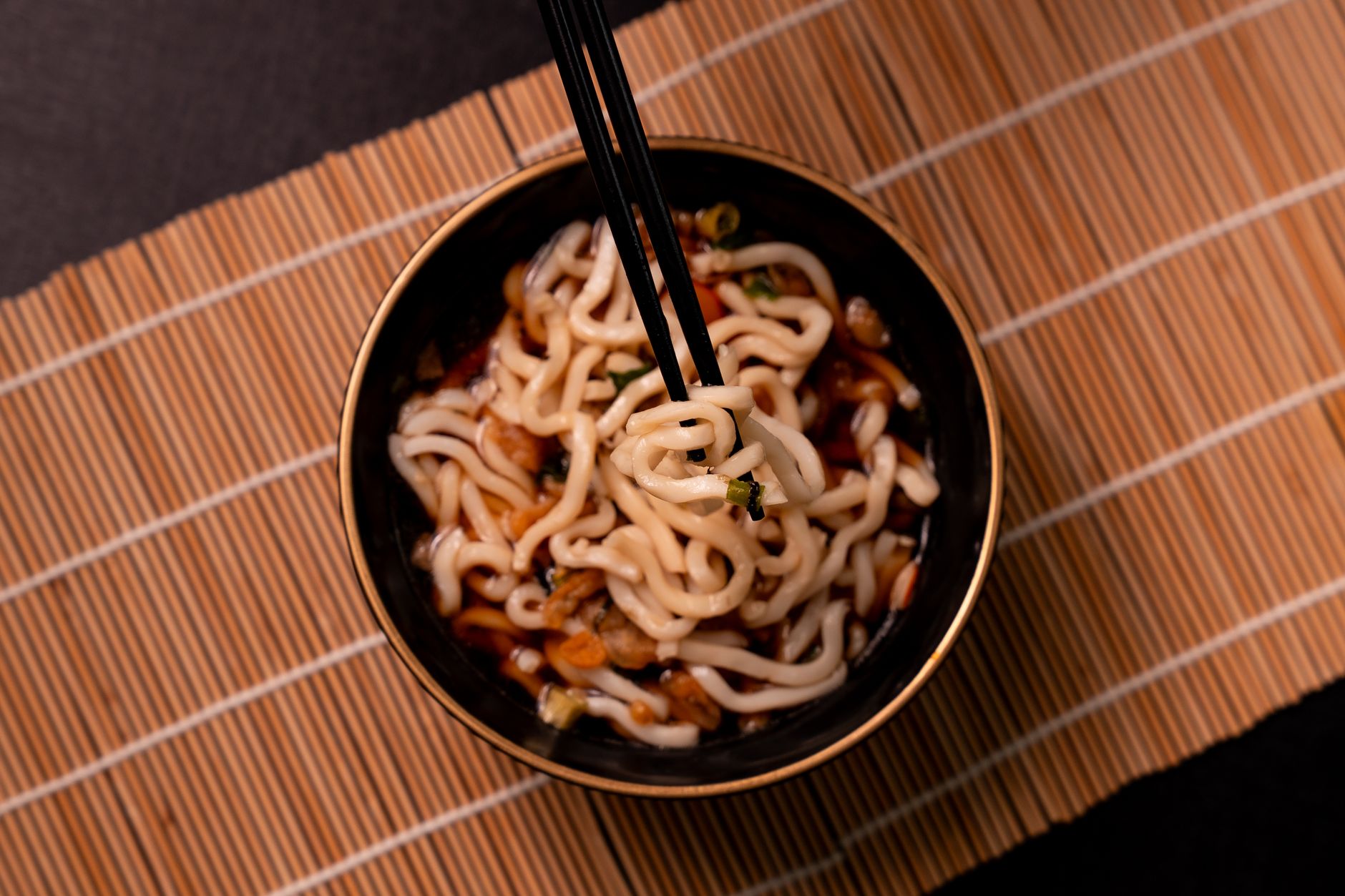
Somen is a very thin wheat noodle, usually served with a dipping sauce. It is a different noodle from ramen, so a ramen shop's halal status tells you nothing about somen, and the other way round.
The noodle itself is simple. Ibo no Ito (揖保乃糸), the best-known brand, lists wheat flour, salt and vegetable oil. The cooperative that makes it says the oil is cottonseed oil, brushed on during hand-stretching so the strands do not dry out or stick together, and that it makes no products containing egg. Other brands list their own ingredients, so check the label.
As with udon and soba, the question is the sauce, not the noodle. Somen comes with a mentsuyu-style dipping sauce, which typically contains mirin and sometimes sake — see what is in mentsuyu above. At a restaurant, ask the same questions you would for udon or soba.
Are Udon and Soba Halal at Restaurants Across Tokyo?
Tokyo has the highest concentration of halal-conscious Japanese noodle options in the country. The neighbourhoods of Asakusa and Shinjuku are the best starting points.
In Asakusa, Sankyu Halal Ramen Japanese Food Asakusa 三休ハラール日本料理浅草店 is certified by the Japan Halal Foundation, with the certification covering its halal menu. It goes beyond ramen into a broader Japanese menu, which helps when your companions want something other than noodles. Also in Asakusa, Halal And Vegan Ramen Dattebayo! is also certified by the Japan Halal Foundation, covering the whole kitchen, and serves broth free from pork and alcohol derivatives; visitors report it as Muslim-friendly, though you should confirm halal policy at the time of your visit.
In Shinjuku, Honolu Halal Ramen Honolu Shinjukugyoenmae Halal Ramen is a frequently cited option for halal Japanese noodle soup. Also in Shinjuku, MB HALAL Wagyu Ramen / N'NANTI ASIAN RESTO advertises halal wagyu-based ramen, making it particularly notable for travellers wanting to experience Japanese-style noodle broth with verified halal meat. Confirm current certification before visiting.
For udon specifically in the Narita Airport area — extremely useful for travellers in transit — KINEYA MUGIMARU UDON NOODLE is located in Narita and has been reported as serving Muslim-friendly udon options. This is a rare find given how scarce dedicated halal udon spots are in Japan; search the Halal Navi app for current listings and opening hours.
Halal Udon and Soba Options in Kyoto and Osaka
The Kansai region is Japan's cultural heartland and increasingly well-served for Muslim diners seeking halal Japanese noodles.
In Kyoto near the station area, Halal Honolu's Wagyu Udon Ramen Kyoto in Shimogyo Ward is one of the most directly relevant venues for this topic — it specifically serves wagyu udon and ramen with a halal-conscious approach, making it a standout choice for Muslim travelers who want an authentic Japanese noodle experience. Nearby, Halal Ramen Ayam-Ya Karasuma Kyoto holds Japan Halal Foundation certification (FPS-108) and builds its noodles on a chicken broth. Both are reported as Muslim-friendly; please verify current policy on arrival.
Also in Kyoto, Honolu Kyoto Halal Ramen 帆のる京都錦 in Nakagyo Ward offers Japanese noodle soups in a central, accessible location. And Halal Ramen Honolu Premier Kyoto Gion near Gion-Higashiyama is convenient for travelers exploring Kyoto's famous geisha district.
In Osaka's Namba-Dotonbori area, Best Halal Ramen Marhaba!マルハバ! in Chuo Ward is well-known among Muslim visitors for its Japanese-style ramen. In Nishi-Shinsaibashi, Halal Ramen Naniwaya 浪速屋 (formerly Naritaya) is the most reviewed halal restaurant in the city — 4.7 across more than 6,000 Google reviews, no pork and no alcohol. Search the Nishi-Shinsaibashi address rather than the name, because older listings still point at branches that have closed.

Halal Soba in Rural Japan: Takayama and Shirakawa-go
One of the joys of traveling Japan is finding halal-friendly options far beyond the major cities. The historic mountain towns of Takayama and Shirakawa-go are famous for their traditional soba, and Muslim travelers can explore this culinary tradition too.
In Takayama, Hidasoba Kofune has been reported as a Muslim-friendly soba restaurant, offering Hida-region buckwheat soba in a traditional setting — a remarkable find in a rural area. Confirm the current halal policy and broth ingredients when you visit.
In Shirakawa-go, the UNESCO World Heritage gassho-zukuri village, Home made Soba Noodle Restaurant Soba Dojo in Ono has been noted as a venue accommodating Muslim dietary needs with homemade soba — please verify the broth preparation and mentsuyu ingredients directly with staff. These rural soba experiences are exactly the kind of authentic Japanese travel memory that Muslim visitors deserve access to.
Also worth noting: in Himi (Toyama Prefecture), Himiudon Kaizuya has been reported as a Muslim-friendly option for regional udon — a local specialty that Muslim travelers to the Hokuriku area should look into. Search the Halal Navi app for current listings.
📱 Find halal restaurants, prayer rooms and Muslim-friendly places across Japan with the free Halal Navi app.
Download on the App Store · Get it on Google Play
What to Ask at Any Udon or Soba Restaurant in Japan
Even at venues not specifically marketed as halal, some udon and soba shops can accommodate Muslim diners if you know what to ask. The key questions to communicate (ideally in Japanese or via a translation app):
- Does the broth contain mirin or sake? (だしにみりんやお酒が入っていますか?)
- Does the tsuyu or mentsuyu contain alcohol? (つゆにアルコールが含まれていますか?)
- Is the broth made with fish-only dashi and no pork? (出汁は魚のみで、豚肉は使っていませんか?)
Many soba shops in Japan offer a pure kombu-and-soy dashi option for vegetarian customers — this can sometimes be adapted for Muslim diners if mirin is also absent. However, never assume; always confirm directly with staff. Restaurants with Muslim-friendly certification will have this information readily available.
For Muslim women traveling solo or in groups, venues in the Asakusa and Namba areas tend to be female-friendly with comfortable seating and non-pressured dining environments. Several halal-certified restaurants in these areas also display qibla direction on menus or upon request — and some offer prayer space guidance.
Halal Noodles at Airports and Transit Points
Transit travelers have limited time and need fast, reliable halal options.
At New Chitose Airport (Sapporo), Hakodate Noodle Kitchen Ajisai New Chitose Airport in Hakodate has been reported as offering Japanese noodles in an airport setting — unusually convenient for Muslim travelers passing through Hokkaido. Verify halal status before ordering.
For travelers arriving at Narita, KINEYA MUGIMARU UDON NOODLE in Narita is worth noting again as a rare halal-conscious udon option at a gateway to Japan. Narita International Airport also has documented multi-faith prayer rooms in Terminal 1 and Terminal 2, which are a stable, publicly confirmed facility for Muslim travelers needing to pray during layovers.
For halal noodle-adjacent souvenirs and snacks to bring home — or to tide you over between meals — JAPANeid Osaka l Muslim-friendly/Halal Japanese Souvenir & Snacks in Nishi, Osaka, stocks Muslim-friendly Japanese food products, which may include noodle kits and halal-certified mentsuyu alternatives.
Frequently Asked Questions: Are Udon and Soba Halal?
Are udon noodles halal? Udon noodles made from wheat flour, salt, and water are halal by ingredient. However, the broth they are served in typically contains mirin (a rice wine) and sometimes sake, which are not halal. Always ask about the broth and dipping sauce, not just the noodles.
Are soba noodles halal? Soba noodles made from buckwheat (and sometimes wheat) are halal by ingredient. The concern is the mentsuyu dipping sauce or soup broth, which traditionally contains mirin and possibly sake. Confirm with the restaurant whether the broth is alcohol-free before ordering.
What is mentsuyu and does it contain alcohol? Mentsuyu is a concentrated seasoning base used in Japanese noodle soups and dipping sauces. Standard mentsuyu contains mirin (approximately 10–14% alcohol) and sometimes sake, making it non-halal for observant Muslims. Halal-certified restaurants use alcohol-free alternatives.
What is dashi and is it halal? Dashi is Japanese soup stock, most commonly made from kombu (kelp) and katsuobushi (dried bonito flakes). Fish is generally considered halal, so kombu-and-bonito dashi is accepted by most Islamic scholars, though individual jurisprudence may vary. Dashi made from pork or containing pork fat would not be halal.
How can I find halal udon and soba restaurants in Japan? Look for restaurants that explicitly advertise halal certification or Muslim-friendly menus — these will have reformulated their broths to exclude mirin and sake. The Halal Navi app is the most efficient way to locate verified halal and Muslim-friendly noodle restaurants near your location across Japan.
Can I ask a Japanese restaurant to modify their broth to make it halal? In some cases, yes — especially at smaller soba shops that use simple dashi. However, this requires clear communication and the restaurant's willingness to accommodate. At mainstream chain udon restaurants, modification is rarely possible. Dedicated halal Japanese noodle restaurants are the safest choice.
Are there halal udon or soba options outside Tokyo? Yes. Halal and Muslim-friendly udon and soba options exist in Kyoto, Osaka, Takayama, Shirakawa-go, Himi, and even at New Chitose Airport in Hokkaido. The availability of options in rural areas is more limited, so planning ahead using the Halal Navi app is recommended.
Is somen halal? Ibo no Ito, the best-known somen brand, lists wheat flour, salt and cottonseed oil, and makes no products containing egg. As with udon and soba, the concern is the dipping sauce, which typically contains mirin and sometimes sake. Somen is a different noodle from ramen.
Find Halal Udon, Soba, and Noodle Restaurants with the Halal Navi App
Navigating Japanese noodle culture as a Muslim traveler doesn't have to mean missing out — it means knowing where to look. Whether you're hunting for wagyu udon near Kyoto Station, hand-pulled halal noodles in Ikebukuro, or a bowl of soba in the mountains of Gifu, the Halal Navi app connects you with Muslim-friendly venues wherever you are in Japan.
Download Halal Navi free from the App Store or Google Play to search halal and Muslim-friendly restaurants by location, filter by cuisine type, and check real traveler reviews before you commit. Never guess about mirin in the broth again — let Halal Navi do the research so you can focus on the food.
About this article
Written and halal-verified by Zeshan Hayat, CMO & Head Halal Auditor, Halal Navi.
Update policy: If you spot outdated information, we will review and correct it within 7 days.
Disclosure: Halal Navi receives no payment from any restaurant or hotel in exchange for inclusion, and all recommendations reflect independent editorial judgment based on Muslim-friendly criteria. Some articles contain affiliate booking links (e.g. Trip.com); if you book through one, Halal Navi may earn a small commission at no extra cost to you.
Last verified: 2026-07-04