Halal Food in Ginza and Roppongi 2026: Where to Eat and Pray
Quick Answer: Ginza and Roppongi have no mosque — the Arabic Islamic Institute in Motoazabu closed in December 2019, and the nearest Friday prayer is at Tokyo Camii in Yoyogi-Uehara, about fifteen minutes away by train. For daily prayer, the Matsuya Ginza prayer room (R floor, Ginza 3-6-1, rated 4.9 across 155 reviews), Azabudai Hills Tower Plaza (4th floor), and Tokyo Midtown Prayer Space are among the best-reviewed facilities in central Tokyo. For food, three venues can name a certifier: GINZA THE EMPEROR (Japan Halal Foundation, halal Kobe beef), Hangry Joe's Tokyo (Japan Halal Foundation mark displayed), and Tokyo Halal Deli & Cafe (Japan Islamic Culture Center) — though the first two serve alcohol as a drink. Many halal wagyu options require advance booking, and several listings share websites or phone numbers, so review counts should not be added together.
Ginza and Roppongi are where Tokyo keeps its department stores, its embassies and its expensive beef. For a Muslim visitor they behave differently from Shinjuku or Asakusa, and it is worth knowing how before you plan a day here.
Two things shape everything else. There is no working mosque in either district — the nearest one holding Friday prayer is in Shibuya. And a lot of the halal food here is not a menu you can walk in and order; it is a course you have to book, sometimes days ahead, sometimes at a price that reflects the postcode.
The good news is twofold. The prayer rooms in this part of Tokyo are among the best in the country, and they are inside buildings you were probably going to visit anyway. And Ginza itself has more halal wagyu than Roppongi does — it is simply underground, in basements and upper floors that no English guide has walked into.
Prayer in Ginza and Roppongi
Start with the correction, because it matters more than anything else on this page.
If you search for a mosque in Roppongi you will find listings for the Arabic Islamic Institute in Motoazabu, often marked as holding Friday prayer. That facility closed in December 2019. Google shows it as closed and the institute itself shut down. Do not build a Friday around it. Our own database still carries the old record and we are correcting it.
For jumu'ah, go to Tokyo Camii in Yoyogi-Uehara — Japan's largest mosque, about fifteen minutes from Roppongi by train. There is no closer option.
For daily prayers, however, this district is unusually well served, because the new developments built rooms in.
Azabudai Hills has a prayer room on the 4th floor of Tower Plaza, at Azabudai 1-3-1. It rates 4.9 across 37 Google reviews. Azabudai Hills opened in 2023, which is why it is still missing from many listings — it is one of the newest prayer facilities in central Tokyo.
Tokyo Midtown Prayer Space in Roppongi, at Akasaka 9-7, is the other one, rating 4.4 across 56 reviews. Between Midtown and Azabudai Hills, the Roppongi–Azabu stretch is covered.
In Ginza, the Matsuya Ginza prayer room sits on the R floor — the roof level — at Ginza 3-6-1. It rates 4.9 across 155 reviews, the best-reviewed prayer facility in this guide and one of the better ones in Tokyo. Note the floor: it is above the shopping floors, not among them, and people miss it.
LAOX Ginza also keeps a prayer space. Between the Matsuya room and LAOX you can shop the length of Chuo-dori without planning your day around prayer times.
The Three Places That Can Name Their Certifier
Three venues in this part of Tokyo let you name the body that certified them. That is worth stating plainly, because "halal" appears on a lot of signage here without anything behind it — and because one of the three is in Ginza itself.
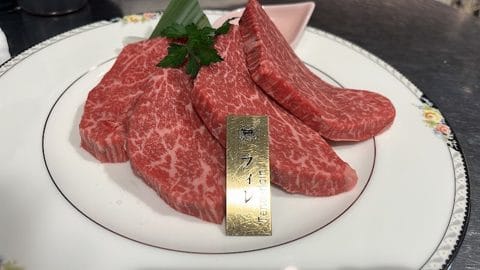
GINZA THE EMPEROR on the 6th floor at Ginza 7-6-10 is certified by the Japan Halal Foundation — its own site names the body. It serves halal Kobe beef and wagyu: yakiniku courses, beef sushi, tartare and sukiyaki, with no additives, no chemical seasonings and no alcohol used in the cooking. It rates 4.6 across 152 reviews. Two things to know before you book — alcohol is served as a drink, and there is no prayer room on site.
Hangry Joe's Tokyo at Kanda Sudacho 2-3-12 displays the Japan Halal Foundation mark on its own site. It rates 4.5 across more than 1,000 reviews and serves Nashville-style hot chicken — burgers with a spice level you pick from 0 to 5, fried chicken, wings, tacos. Open 11:00–23:00, until 21:00 on Sundays and holidays.
One thing to know before you go: alcohol is served in the evening — draft beer, wine, spirits and cocktails are on the dinner menu. The food is certified; the room is not dry. Whether that works for you is your call, not ours, and we would rather you knew before you arrived than after.
Tokyo Halal Deli & Cafe holds certification from the Japan Islamic Culture Center, with a halal kitchen and halal equipment throughout, around 80 seats, and a Nepalese chef cooking under Muslim supervision. It is the strictest operation on this page.
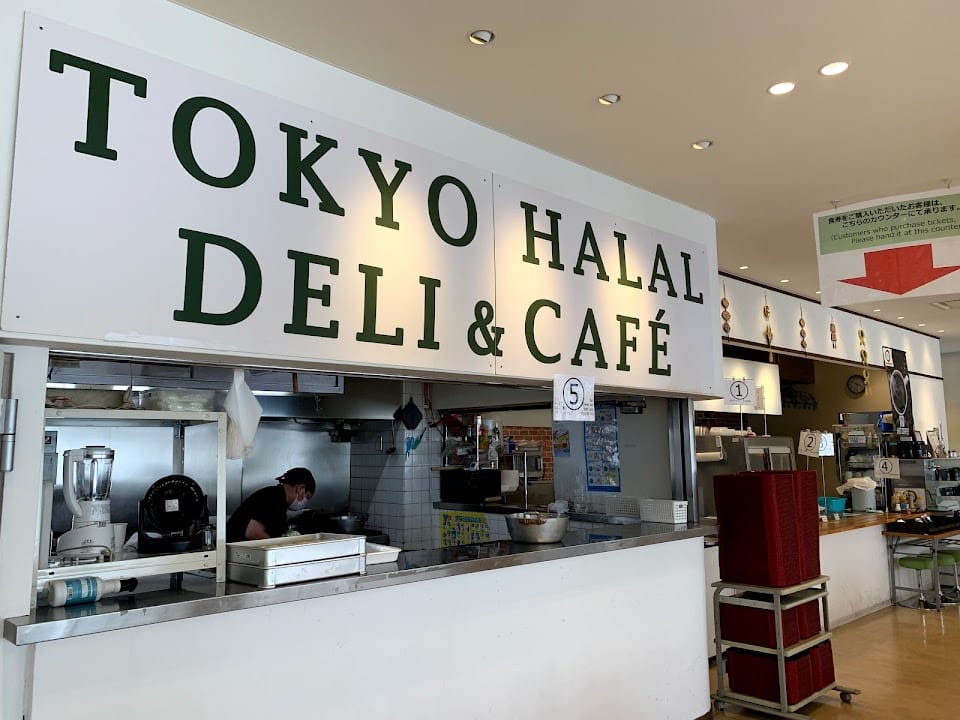
The catch is where it is: inside Sophia University, on the 4th floor of Hoffman Hall at Kioicho 7-1, Yotsuya. It keeps university hours — Monday to Friday 8:00–18:00, Saturday 11:00–15:00, closed Sundays and closed according to the academic calendar. Turn up in the middle of the summer break and you will find the doors shut. Check before you travel across town for it.
Halal Wagyu: The Thing This District Actually Does
If there is one reason to eat here rather than somewhere cheaper, it is the beef.
Sumibi Yakiniku Ushizaka (炭火焼肉うしざか) at Nishi-Azabu 4-3-2 is the most straightforward. It is not certified, but everything it serves is halal, and it keeps a prayer space on the premises — no wudu facilities and no qibla marking, so make ablutions beforehand. It rates 4.8 across about 170 reviews. Charcoal-grilled wagyu, and you order off the menu rather than booking a special course.
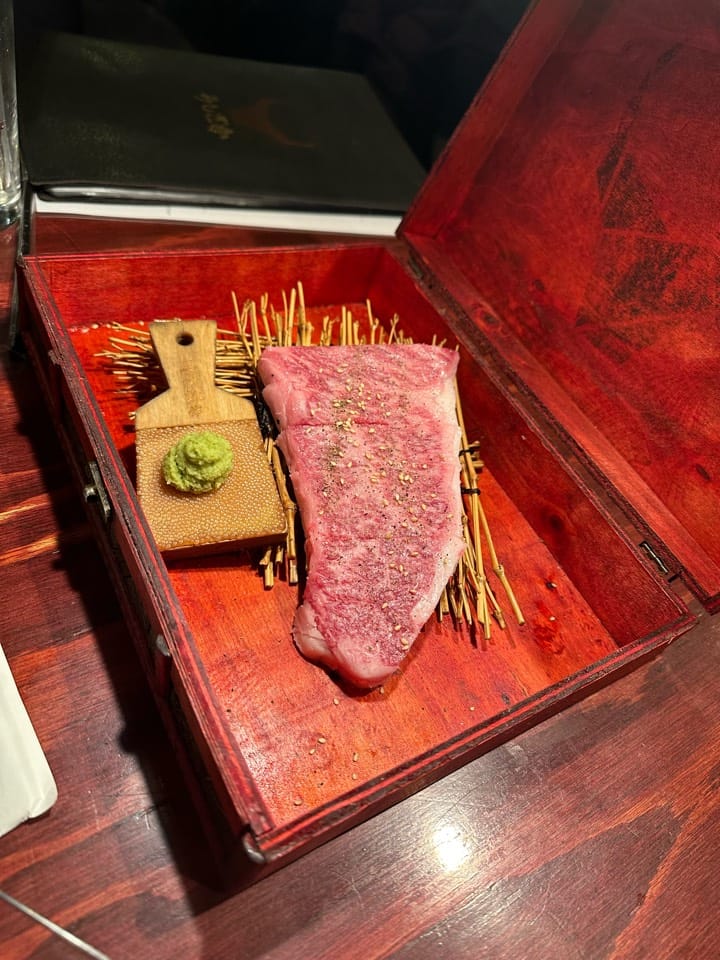
Halal Wagyu Yakiniku SHOUTAIAN (肉の匠 将泰庵) near Kanda serves A5 kuroge wagyu in semi-private rooms. Its operating company announced on its own site that the Kanda branch obtained halal certification and began serving a halal menu on 15 February 2025 — recent, and first-party. The announcement does not name the certifying body, so treat it as an operator's statement rather than a certificate you can look up. It rates 4.8 across more than 1,200 reviews. Three minutes from Shin-Nihonbashi, four from Kanda south exit.
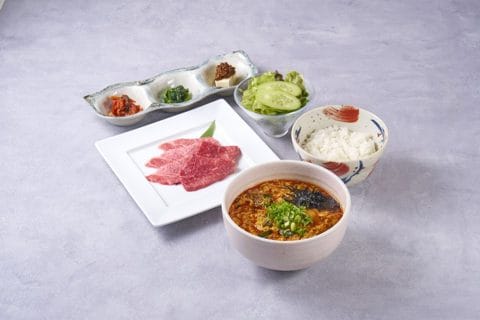
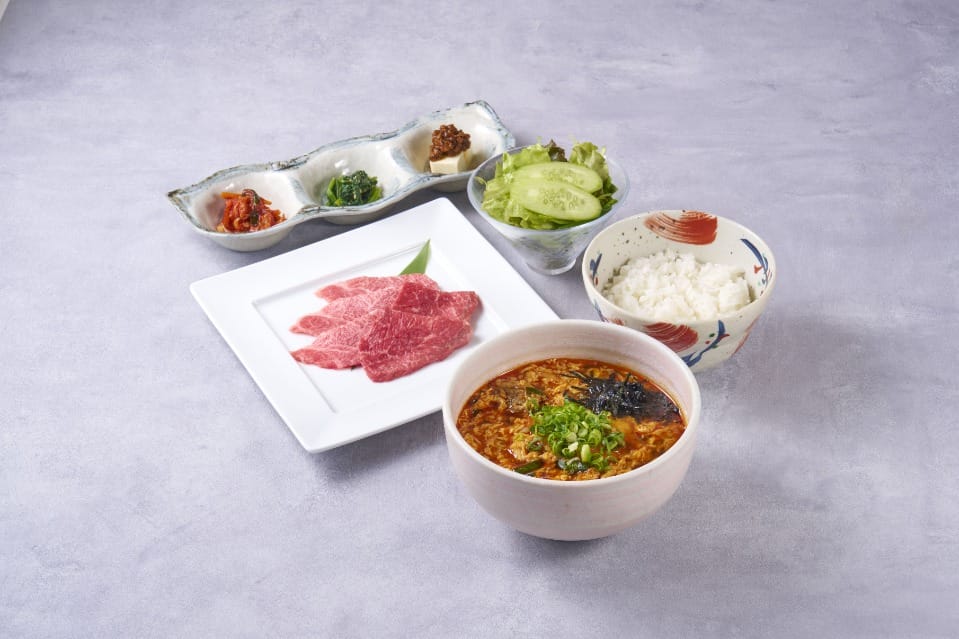
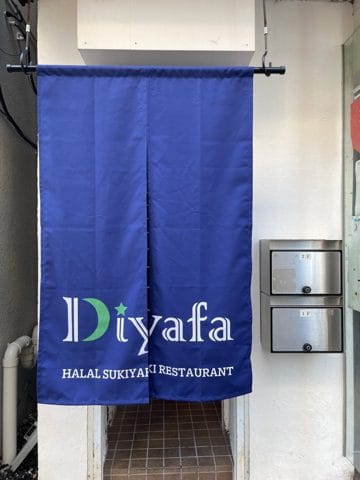
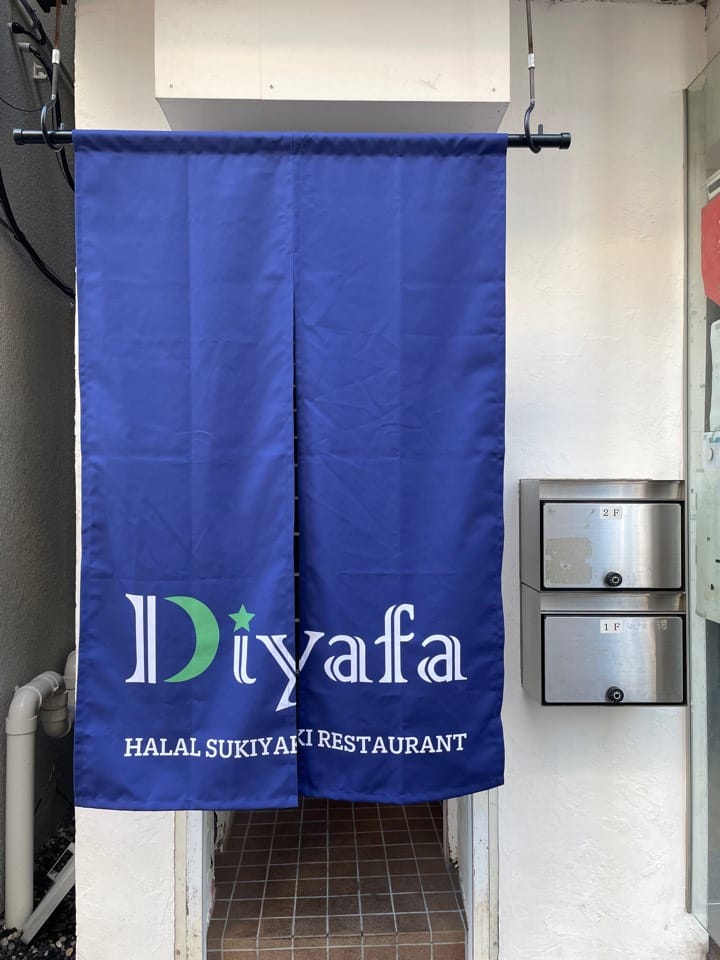
Halal Sukiyaki Restaurant Diyafa at Shiba 2-18-4 is the one to book if you want the full Japanese set piece. Its site states that all ingredients are halal and that the wagyu is halal certified, and — unusually — it offers a dedicated private prayer room with wudu facilities. That combination is rare enough in Tokyo to be worth a detour. A5 wagyu sukiyaki, chicken sukiyaki, wagyu hitsumabushi. Lunch Monday to Friday 11:30–15:00, dinner daily 17:00–22:00; during Ramadan it opens for dinner only.
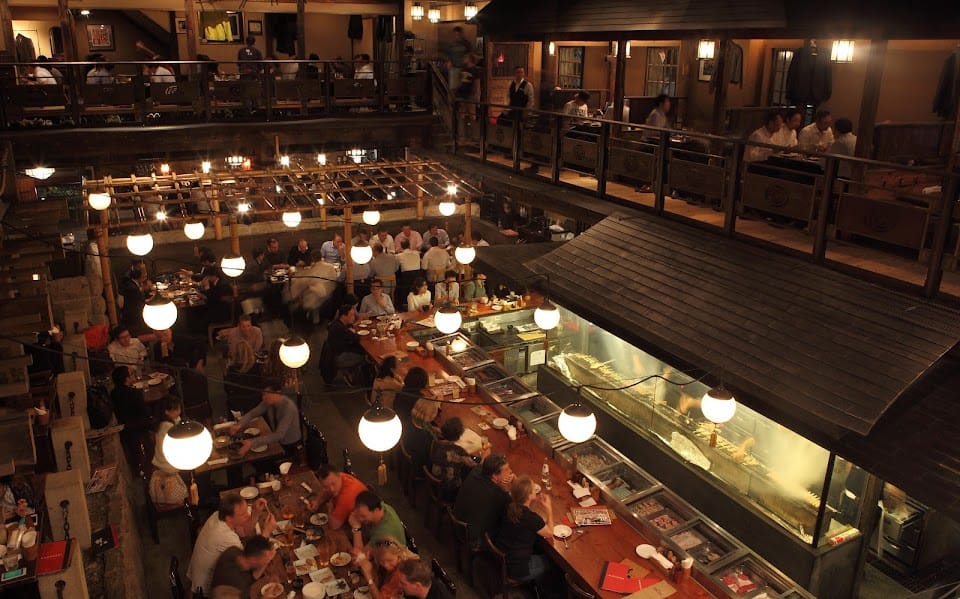
Gonpachi Nishi-Azabu at Nishi-Azabu 1-13-11 is the famous one — the two-storey wooden izakaya, 4.3 across more than 8,200 Google reviews, easily the most reviewed venue on this page. It runs a halal kuroge wagyu course at ¥16,500, as steak or as sukiyaki. Read what Gonpachi says about itself before you book: it holds no halal certification from any body, and instead operates its own Muslim-friendly policy using halal-certified beef and chicken with compatible seasonings. Alcohol is served in the restaurant. Book the course by phone or through the site; you cannot order it off the standard menu.
Ginza's Basements: The Cluster Nobody Lists
Roppongi gets the halal wagyu coverage. Ginza has more of it, and almost none of it appears in English guides — partly because it is underground. Most of these are B1 floors and upper storeys of narrow buildings, invisible from the street.
Halal Wagyu Gyumon in the basement at Ginza 6-12-1 rates 4.9 across 4,293 reviews — halal wagyu ramen and gyukatsu from the Gyumon group, which runs seven halal restaurants across Tokyo, Osaka and Kyoto. The group states halal on its own site but does not name a certifying body, so treat it as an operator's commitment rather than a certificate.
One Operator, Six Listings
Then there is a group of restaurants around Ginza and Tsukiji that look like six separate businesses on Google and are not. We checked the websites behind each listing, and they all sit on halal-food-wagyu.com:
- Godaime Wagyu Tokyo, Ginza 8-18-4 B1 — 4.7 across 7,792 reviews
- Godaime Wagyu Tokyo, listed again at Ginza 3-12-16 — 4.8 across 5,675
- Wagyu & Vegan Hamburger (Halal Gluten Free), Ginza 7-13-1 B1 — 4.7 across 3,634
- Kobe Beef Wagyu Halal Hamburger Pizza & Steak, Ginza 7-11-11 B1 — 4.8 across 1,388
- Wagyu (Halal) Ramen Noodle Ginza, Ginza 3-12-7 — 4.7 across 859
- Wagyu Steak Hamburger & Ramen, Tsukiji 6-26-7 — 4.8 across 1,410
The two Godaime entries share a phone number and a website, so they are very likely one restaurant listed twice rather than two branches. Do not add these review counts together, and do not assume six different kitchens.
What the operator says about itself is straightforward, and more honest than most: it raises its own cattle in Miyazaki, it states plainly on the site that it is not officially halal certified, and it says the kitchen was built alcohol-free from the start — "alcohol is not used, even in sauces". That is a self-declaration, not a certificate. But an operator that volunteers the absence of certification is telling you something useful, and an alcohol-free kitchen in Ginza is not nothing.
📱 Find halal restaurants, prayer rooms and Muslim-friendly places across Japan with the free Halal Navi app.
Download on the App Store · Get it on Google Play
Indian, Pakistani and Everyday Prices
Not everything here costs ¥16,500.
ANNAM Indian Restaurant at Ginza 8-10-8 is the workhorse — 4.3 across more than 3,000 reviews, which for a halal restaurant in Ginza is a lot of people. Its own site advertises halal, vegetarian and vegan menus separately, and the chef has been cooking in Japan for over twenty years. No certifying body is named.
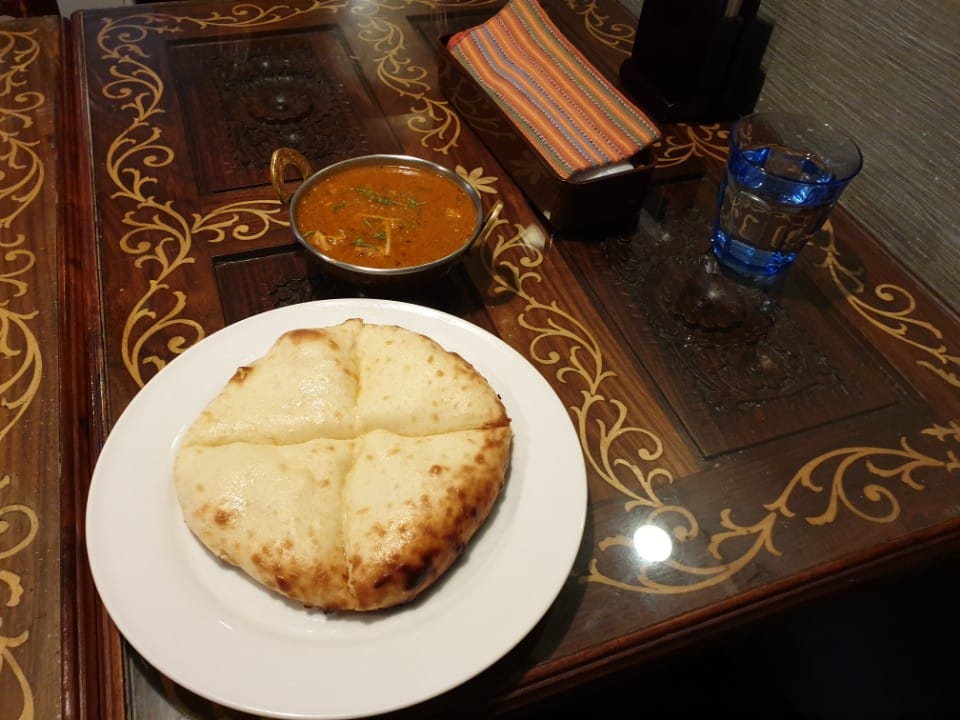
Nawab runs two branches in this area — a biryani house in Kayabacho and a restaurant in Hatchobori at Shinkawa 2-8-2. The group's site states plainly that all its dishes are halal, with a vegetarian menu alongside. Indian and Pakistani cooking, and the biryani is the thing to order at the Kayabacho branch given what it is called.
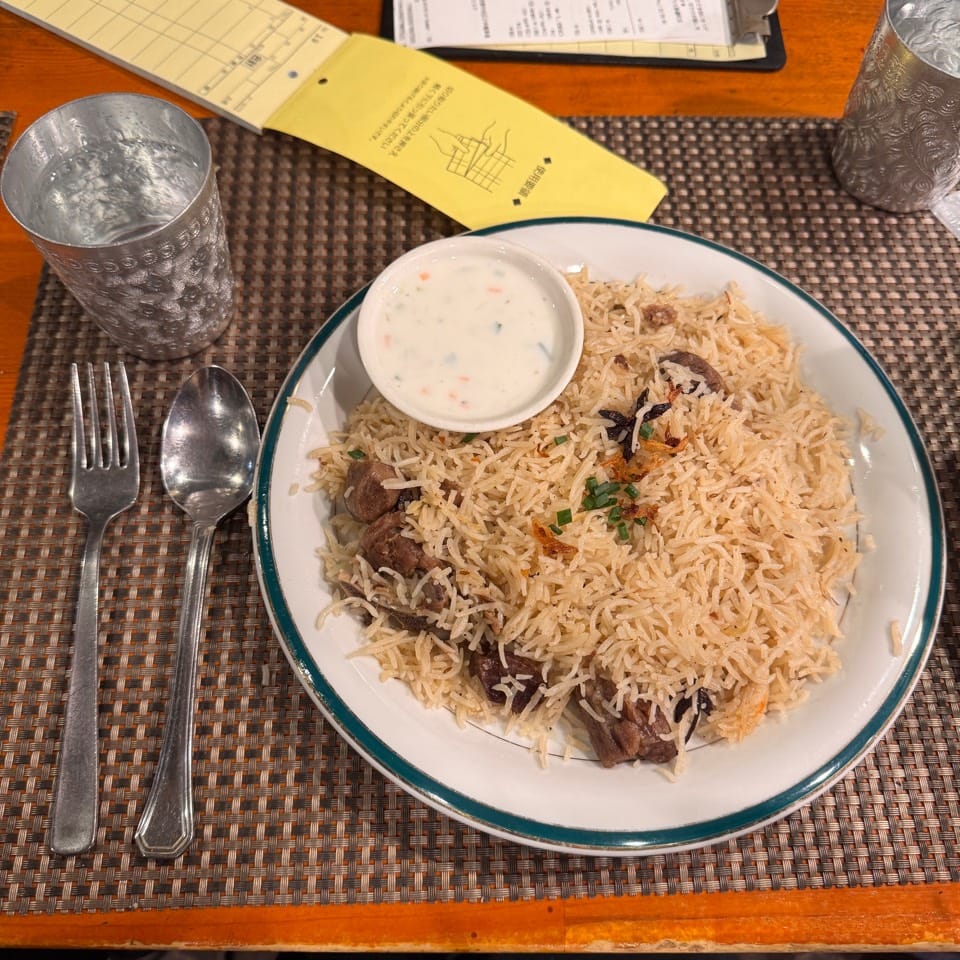
Organic Tokyo Restaurant & Cafe at Azabudai 3-4-8 rates 4.3 across 194 reviews and is worth knowing purely for where it is: a few minutes from the Azabudai Hills prayer room, which makes it the natural place to eat around a prayer stop. It is a small operation with no website beyond Instagram, so there is no certification to look up — ask at the counter.
Siddique Jimbocho at Kanda Jimbocho 2-7 serves Pakistani food, barbecue and thali sets across 40 seats. Its site describes the food as halal without naming a certifier. Open Monday to Saturday 11:00–21:00, last orders 20:30, and it stays open on public holidays — useful, because a lot of Jimbocho shuts on them.
Tunisian, With a Caveat
La maison de Cous Cous at Shibakoen 2-10-4, near Tokyo Tower, describes itself as Mediterranean and halal, with a halal notice displayed at the shop, and it is the only Tunisian restaurant most visitors will come across in Japan. Couscous steamed in the proper pot, lamb, chicken, seafood.
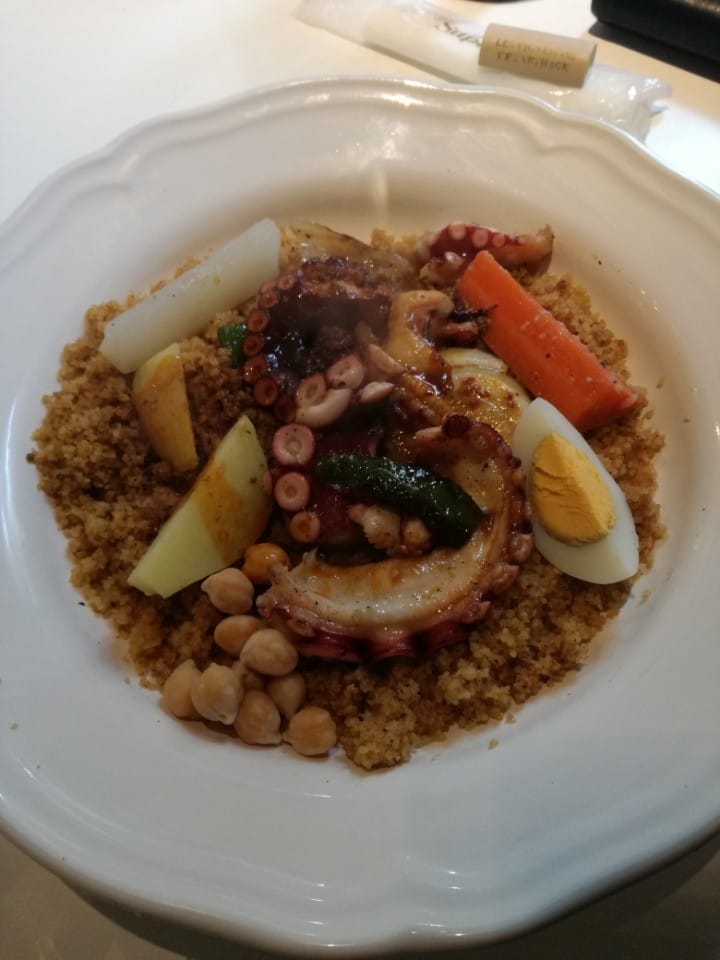
The caveat is straightforward: it serves wine and beer, including Tunisian wine. Tunisia is a wine-producing country and the restaurant leans into that. The food is presented as halal; the premises are not alcohol-free. Again — your judgement, but you should have the fact.
🛏 Staying in Tokyo? We list 18 places to stay there, and each one shows how many halal restaurants are within walking distance.
See places to stay in Tokyo →
Frequently Asked Questions About Halal Food in Ginza and Roppongi
Is there a mosque in Roppongi? No. Listings for the Arabic Islamic Institute in Motoazabu still circulate, but that facility closed in December 2019. For Friday prayer, go to Tokyo Camii in Yoyogi-Uehara, about fifteen minutes from Roppongi by train — it is the nearest mosque holding jumu'ah.
Where can I pray in Ginza? The Matsuya Ginza prayer room is on the R floor, the roof level, at Ginza 3-6-1, rating 4.9 across 155 Google reviews. LAOX Ginza also keeps a prayer space. Note the floor at Matsuya — it sits above the shopping floors and is easy to walk past.
Is there a prayer room at Azabudai Hills? Yes, on the 4th floor of Tower Plaza at Azabudai 1-3-1, rating 4.9 across 37 reviews. Tokyo Midtown Prayer Space in Roppongi is the other one, at Akasaka 9-7. Azabudai Hills opened in 2023, so it is missing from most older halal guides.
Which restaurants in this area are actually halal certified? Three, where you can name the certifier. GINZA THE EMPEROR at Ginza 7-6-10 holds Japan Halal Foundation certification and serves halal Kobe beef. Hangry Joe's Tokyo in Kanda Sudacho displays the Japan Halal Foundation mark. Tokyo Halal Deli & Cafe is certified by the Japan Islamic Culture Center, with a fully halal kitchen, but it is inside Sophia University and closes according to the academic calendar. The first two serve alcohol as a drink while stating none is used in the food; the third does not.
Where is the halal wagyu in Ginza? Ginza has more of it than Roppongi, mostly in basements. Halal Wagyu Gyumon at Ginza 6-12-1 rates 4.9 across 4,293 reviews, GINZA THE EMPEROR serves certified halal Kobe beef, and Godaime Wagyu Tokyo rates 4.7 across 7,792. One caution on the last: Godaime and several similarly named Ginza and Tsukiji listings all run on the same website, and the two Godaime entries share a phone number — so the review counts describe overlapping listings rather than six separate restaurants.
Where can I eat halal wagyu in Roppongi? Sumibi Yakiniku Ushizaka at Nishi-Azabu 4-3-2 serves charcoal-grilled halal wagyu off the standard menu and has a prayer space on site (no wudu facilities). Halal Sukiyaki Diyafa at Shiba 2-18-4 has a private prayer room with wudu. Gonpachi Nishi-Azabu runs a halal kuroge wagyu course at ¥16,500 by reservation, but holds no certification and serves alcohol.
Do I need to book halal food in advance in Ginza and Roppongi? Often, yes — more than in Shinjuku or Asakusa. Gonpachi's halal course is reservation-only and not on the standard menu. Diyafa and SHOUTAIAN are course-led restaurants. Ushizaka, ANNAM, Nawab and Siddique are the walk-in options.
Is halal food in Ginza expensive? It varies more than you would expect. A halal wagyu course runs ¥16,500 at Gonpachi, but ANNAM in Ginza, Nawab in Kayabacho and Hatchobori, and Siddique Jimbocho are ordinary-priced Indian and Pakistani restaurants a few stations away.
Plan Your Halal Tokyo Trip with Halal Navi
Ginza and Roppongi ask more planning of a Muslim traveler than the rest of Tokyo — no mosque, courses that need booking, and a few places where the signage says more than the paperwork does. But the prayer rooms at Azabudai Hills, Tokyo Midtown and Matsuya Ginza are genuinely good, and the halal wagyu here is the best in the city.
Download the Halal Navi app from the App Store or Google Play to check what is open today and find the nearest prayer space from wherever you are standing.
Muslim-friendly stays in Tokyo
All of these are listed in the Halal Navi database as Muslim-friendly. What each property declares is different, so the note is what the property itself states — confirm anything that matters to you when you book.
- Agora Place Asakusa — Muslim-friendly facilities declared by the hotel: Staff trained in Muslim hospitality. See the halal details Halal food within walking distance: 7 places (6 certified) · nearest 167m. HALAL WAGYU SUKIYAKI HALRA Asakusa 167m · Menya Honolu Asakusa - Halal ramen 206m · HALAL WAGYU RAMEN SHINJUKU-TEI Asakusa Tokyo 314m.
- HOTEL Grand Star TATEISHI SEVEN — Muslim-friendly facilities declared by the hotel: Separate halal cookware available. See the halal details
- HOTEL Grand Star Tokyo — Muslim-friendly facilities declared by the property: separate halal cookware, a qibla direction indicator, a prayer mat and information on halal food nearby. See the halal details
About this article
Author: Aisha Rahman, Halal Navi Editorial Team. Aisha Rahman is a pen name used by the Halal Navi editorial team to maintain consistency across our halal verification reporting. Editorial responsibility is held collectively by our Halal Verification Team.
Reviewer: Halal-reviewed by Zeshan Hayat (Lead Halal Auditor, Halal Navi / Founder, HHAJ). Zeshan holds ISO 9001:2015 Internal Auditor and ISO 19011 Auditor credentials. See our editorial standards for the full review process.
Update policy: We re-verify every claim in this article quarterly. If you spot outdated information, we will review and correct it within 7 days.
Disclosure: Halal Navi receives no payment from any restaurant or hotel in exchange for inclusion, and all recommendations reflect independent editorial judgment based on Muslim-friendly criteria. Some articles contain affiliate booking links (e.g. Trip.com); if you book through one, Halal Navi may earn a small commission at no extra cost to you.
Last verified: 2026-08-01