Halal Food in Shibuya and Shinjuku 2026: Where to Eat and Pray
Quick Answer: Shibuya and Shinjuku are well-served for Muslim travelers, with Tokyo Camii — Japan's largest mosque, rated 4.7 across more than 3,900 Google reviews and one stop from Shibuya station — anchoring the area for prayer, alongside prayer rooms at Shibuya PARCO (5th floor), Shibuya Mushalla, Shin-Okubo Musalla, and Kabukicho Ikhlas Musalla. The prayer rooms at Shinjuku Takashimaya and Laox Shinjuku have closed. For food, Gyumon Halal Wagyu Ramen Shibuya, certified by Malaysia Halal Corporation and the article's highest-reviewed halal restaurant in Japan, offers both wagyu yakiniku and ramen with an on-site prayer room; Honolu Shinjukugyoenmae Halal Ramen, which holds halal certification obtained in 2020, serves chicken-based ramen in Shinjuku; and KO-SO CAFE in Shibuya is certified by Malaysia Halal Corporation. Note that Rahmen Eddie is not halal, and the similarly named wagyu listings in Shinjuku share one operator who states on its own site that it is not officially halal certified.
Shibuya and Shinjuku are where most visitors to Tokyo spend their time, and they are better served for Muslim travelers than almost anyone realises. Japan's largest mosque is a fifteen-minute walk from Shibuya station. There is a prayer room on the fifth floor of Shibuya PARCO. And the halal food runs from certified ramen in both wards to the restaurant that brought halal wagyu yakiniku to Japan in the first place.
This is an area guide. If you want a particular dish rather than a neighbourhood, our ramen, sushi and Indian guides go deeper.
Tokyo Camii: Japan's Largest Mosque
Tokyo Camii & Diyanet Turkish Culture Center at 1-19 Oyamacho, Shibuya, is the largest mosque in Japan and rates 4.7 across more than 3,900 Google reviews — one of the most reviewed religious sites in the country. It holds Friday congregational prayer.
It is in Yoyogi-Uehara, one stop from Shibuya on the Chiyoda or Odakyu lines, and it is an Ottoman-style building worth seeing in its own right. Non-Muslim visitors are received.
For a Muslim traveler basing themselves in Shibuya or Shinjuku, this changes the shape of a trip: you are not hunting for a corner to pray in, you are a short train ride from a full mosque with regular jumu'ah.
Prayer Without Leaving the Shops
Tokyo Camii is the anchor, but the useful thing about these two wards is that you do not always have to go there.
Shibuya PARCO has a prayer room on the 5th floor, west side. It rates 4.8 across 184 reviews — a striking score for a department-store facility, and a sign it is properly maintained rather than a token gesture.
Shibuya Mushalla has a prayer space, and there are two more in Shinjuku ward: Shin-Okubo Musalla and Kabukicho Ikhlas Musalla, both serving the area around Shin-Okubo's Islamic food shops.
Two Shinjuku prayer rooms that older guides still list have closed. The room at Shinjuku Takashimaya — opened in 2014 as the first in a Japanese department store — is no longer available, and the one at Laox Shinjuku (6F) went with the store, which has not reopened since 2020. Do not plan a prayer stop around either.
Gyumon Halal Wagyu Ramen Shibuya also keeps a prayer room for its guests, which makes it a rare place to eat and pray in one stop.
Between them, you can plan a full day of shopping in either ward without building the whole schedule around prayer times.
Halal Ramen in Shibuya and Shinjuku
Halal ramen deserves its own section because ordinary ramen is out of reach: the broth is usually pork bone, so it is not something a kitchen can adjust on request. A dedicated halal ramen shop is a genuinely different proposition from a restaurant that will cook you something without pork. Both wards have one.
Honolu Shinjukugyoenmae Halal Ramen (麺屋 帆のる 新宿御苑前店), in the basement at Shinjuku 1-31-3, rates 4.7 across roughly 1,400 Google reviews. The Honolu group started in 2015 and took halal certification in 2020; the broth is chicken from certified farms, with certified soy sauce and noodles, and the house dish is a spicy fried-chicken ramen. Its Shibuya-ward sibling, Halal Ramen Honolu Ebisu, rates 4.4 across about 1,950 reviews at Ebisu-Minami 1-23-1.
Gyumon Halal Wagyu Ramen Shibuya (牛門), in the basement at Shibuya 2-19-17, two minutes from the station, comes at it from the beef side — and it rates 4.9 across 26,732 Google reviews, which as far as we can find is the largest review count of any halal restaurant in Japan. Gyumon opened in 2007 as Japan's first halal wagyu yakiniku restaurant — certified by Malaysia Halal Corporation — and spent years developing a halal wagyu ramen, launching it in 2023 — a beef-bone broth built from more than twenty ingredients, with A5 halal wagyu brisket on top. The restaurant has a prayer room, which makes it one of the few places in Shibuya where you can eat and pray in the same stop.
One warning, because the listing is still circulating. Rahmen Eddie near Shinjuku-Gyoemmae appears in several halal directories. It is not halal. The shop trading under that name today opened in 2023 under an Italian-restaurant operator and its menu includes three kinds of chashu; the halal entries for that address describe an earlier business. This is the most common trap in Japan — the listing outlives the kitchen it described.
Genki Taisho Wagyu-Halal at Kabukicho 2-9-3 rates 4.9 across 1,401 reviews, serving both ramen and yakiniku. HALAL WAGYU RAMEN GYUGEN is also in the Kabukicho area, rating 4.7 across 63.
Halal Yakiniku and Japanese Food
This is the category where you have to read the small print. Very few Japanese restaurants are halal all day; most run a separate course you have to book, and some only do it at lunch. Turning up and asking rarely works.
Gyumon (牛門) is the exception and the anchor. It opened in 2007 as Japan's first halal wagyu yakiniku restaurant, and the Shibuya branch grills A5 halal wagyu as its whole business rather than as a special order booked in advance. Its certification comes from Malaysia Halal Corporation and covers ingredients, seasonings and cooking method. Every branch has a prayer room.
Gonpachi Shibuya on Dogenzaka serves a halal sushi course using Ozaki beef at ¥20,000, by telephone reservation only. The Nishi-Azabu branch runs a halal kuroge wagyu course — steak or sukiyaki — at ¥16,500. Note what Gonpachi says about itself: it holds no halal certification from any body, and instead operates its own Muslim-friendly policy using halal-certified beef and chicken with compatible seasonings. Judge that for yourself, and book ahead either way.
Kurumaya Bekkan at Shinjuku 3-21-1, two minutes from Shinjuku station's east exit, has a Muslim-welcome menu — but at lunch only. It is a teppanyaki and kaiseki house that has been trading for around sixty years.
Tokitarazu Ebisu in Shibuya is the one with the freshest record in our own database, updated in June 2026, and Google classifies it as a halal restaurant.
A venue we had listed here and have removed: Rokkasen Honten in Nishi-Shinjuku. Its own reservation menu carries pork shoulder, pork neck, pork stomach, Iberico pork and pork sausage, alongside all-you-can-drink alcohol. A high Google rating is not a halal signal.
HALAL WAGYU YAKINIKU & RAMEN NARUTO in Udagawacho rates 4.8 across 4,082 reviews with Google's halal classification. HALAL WAGYU STALL, also in Udagawacho, rates 4.8 across 830, and HALAL MASTER CHICKEN SHIBUYA rates 4.8 across 2,221 — fried chicken, and the only halal option in Shibuya that works as a quick stop rather than a meal. Its Takadanobaba branch rates 4.2 across 535.
Halal Wagyu Okonomiyaki & Ramen Usagi in Jingumae rates 4.9 across 264. Okonomiyaki is normally out of reach — the batter and sauce are the problem, not just the pork — so a halal version is unusual enough to plan around.
Hitsujimon in Shibuya rates 4.1 across 325 with the halal classification, and CARVAAN TOKYO rates 3.9 across 719.
Gyumon Has Five More Branches Here Than Guides Mention
Gyumon is not one Shibuya restaurant. Within a few minutes' walk of the scramble crossing there are four separate Gyumon rooms, and every one of them carries a review count most Tokyo restaurants never reach:
- GYUMON Center Gai, 5th floor of the Shibu Building at Udagawacho 24-6 — 4.9 across 9,366 reviews
- GYUMON Scramble, in the basement of the same building — 4.8 across 6,420, open 12:00–23:00
- GYUMON Jinnan, 10th floor of Park Way Terrace at Jinnan 1-20-8 — 4.8 across 5,470
- Halal Wagyu Yakiniku Gyumon Shibuya, and a second Shibuya yakiniku room at Shibuya 3-15-8
In Shinjuku, GYUMON Shinjuku on the 9th floor at Shinjuku 3-34-11 rates 4.9 across 4,331, with A5 Wagyu Burger GYUMON Shinjuku East Exit in the same building.
Two things are worth saying plainly about a group this size. Its own site does not name a certifying body for the ramen branches — Gyumon states that ingredients follow Islamic dietary law, which is the operator's commitment rather than a certificate you can look up. And every branch has a prayer room, which in central Shibuya is worth more than most of what is on the menu.
The Group Behind Half a Dozen Similar Listings
If you search halal wagyu in Shinjuku or Shibuya you will meet a set of listings with near-identical names: Wagyu (Halal Vegan) Hamburger Steak & Ramen, Wagyu Steak & Hamburger (Halal Vegan Gluten free), Wagyu Halal Japanese Food, and so on. They are not the independent restaurants they look like.
We checked the website behind each one. Four of them — Kabukicho 1-12-2 (4.9 across 3,229), Shinjuku 5-8-7 (4.8 across 3,795), Hyakunincho 1-1-27 (4.7 across 1,490) and the Ginza and Tsukiji branches — sit on halal-food-wagyu.com. Two more, at Nishi-Shinjuku 7-11-2 (4.8 across 3,093) and Dogenzaka 2-25-12 (4.8 across 1,457), run on per-branch marketing sites built to the same template.
The operator states on its own site that it is not officially halal certified and that the kitchen was built alcohol-free from the start, with no alcohol used even in sauces. That is a self-declaration rather than a certificate — but it is volunteered, which counts for something. The practical point for a reader is narrower: do not add these review counts together, and do not assume six different kitchens.
Tokyo Omakase Sushi Wagyu (Halal) at Shinjuku 3-7-5 rates 4.8 across 1,013 and belongs to a related set of sites. Halal omakase sushi barely exists in Japan, so it is worth knowing about — but the same caution applies: no certifying body is named.
Ginza Steak Shinjuku at Shinjuku 3-28-7 rates 4.8 across 887 and is a different operation, part of the Ginza Steak group.
Shin-Okubo and Hyakunincho: The Densest Halal Blocks in Tokyo
If you only have one afternoon, spend it here. Shin-Okubo is known abroad as Tokyo's Korean quarter, but the blocks around Hyakunincho, a few minutes west, are where the halal grocers and South Asian kitchens are — and the concentration is higher than anywhere else in the city.
Sabrina in Hyakunincho rates 4.9 across 1,777 reviews with Google's halal classification — one of the best-received halal restaurants in Tokyo by any measure.
Samarkand Terrace in Okubo rates 4.7 across 626 with the halal classification. Uzbek food — plov, samsa, lagman — is a category most Tokyo halal guides skip entirely.
Xiao Wei Yang Salam Halal at Hyakunincho 2-17-3 rates 4.7 across 697 with the halal classification — Chinese Muslim hotpot, which is a category almost nothing else in Tokyo covers. SARAY Turkish & Uzbek Restaurant also has an Okubo branch.
For groceries, Nasco Halal Food at Hyakunincho 2-10-8 rates 4.2 across 817, Shinjuku Halal Food at Hyakunincho 2-9-2 rates 4.6 across 723, Siddique National Mart Shin-Okubo at Hyakunincho 2-9-15 rates 4.6 across 642, Jannat Halal Food Shop at Hyakunincho 2-9-1 rates 4.4 across 451, and SARSINA HALAL FOODS in Hyakunincho rates 4.5 across 198. Four of those sit on the same two blocks, which is the whole point of coming here. Sabiha Halal Restaurant at Hyakunincho 2-20-23 rates 3.9 across 102 and is shop-and-kitchen in one, the usual arrangement in a residential area.
The practical point: this is where you restock. If you are self-catering anywhere in Tokyo, one trip here beats hunting for halal meat near your hotel.
Takadanobaba and the Lanzhou Noodle Shops
Takadanobaba is in Shinjuku ward, ten minutes north of Shin-Okubo on the Yamanote line, and it has something no other part of Tokyo does in this quantity: halal Chinese noodles.
Sensei Menkan at Takadanobaba 3-12-7 rates 4.9 across 1,176 reviews with Google's halal classification.
Gyuka Kyodai Lanzhou Beef Noodles (牛家兄弟蘭州牛肉麺) in Okubo rates 4.8 across 187 and is explicitly halal.
Lanzhou beef noodles are worth explaining, because most Muslim travellers in Japan never hear about them. Lanzhou lamian comes from the Hui Muslim community in north-west China, and the dish is halal in its home cuisine — hand-pulled wheat noodles in a clear beef broth, no pork anywhere in the tradition. Shops run by Hui or Uyghur owners in Japan usually keep it that way.
This matters because Chinese food is normally the hardest cuisine in Japan for a Muslim visitor — pork is structural to most of it. Lanzhou noodles are the exception, and Tokyo has several. Ask at the counter rather than assuming: a Japanese-run shop copying the style will not follow the same rules.
📱 Find halal restaurants, prayer rooms and Muslim-friendly places across Japan with the free Halal Navi app.
Download on the App Store · Get it on Google Play
Turkish, Uyghur and Middle Eastern
This is the deepest category in these two wards, and the Uyghur restaurants are the interesting part — hand-pulled noodles and cumin-heavy lamb rather than the kebab-shop fare people expect. Uyghurs are a Muslim people and their cooking uses no pork, but that is a culinary tradition, not a guarantee about a particular kitchen in Tokyo: ask about the meat sourcing and whether alcohol is served.
Silk Road Tarim Uyghur Restaurant at Nishi-Shinjuku 3-15-8 rates 4.1 across 565 reviews.
ケバブカフェ (Kebab Cafe) on Dogenzaka in Shibuya rates 4.4 across 992 reviews — the busiest kebab place in either ward, a minute from the Shibuya scramble.
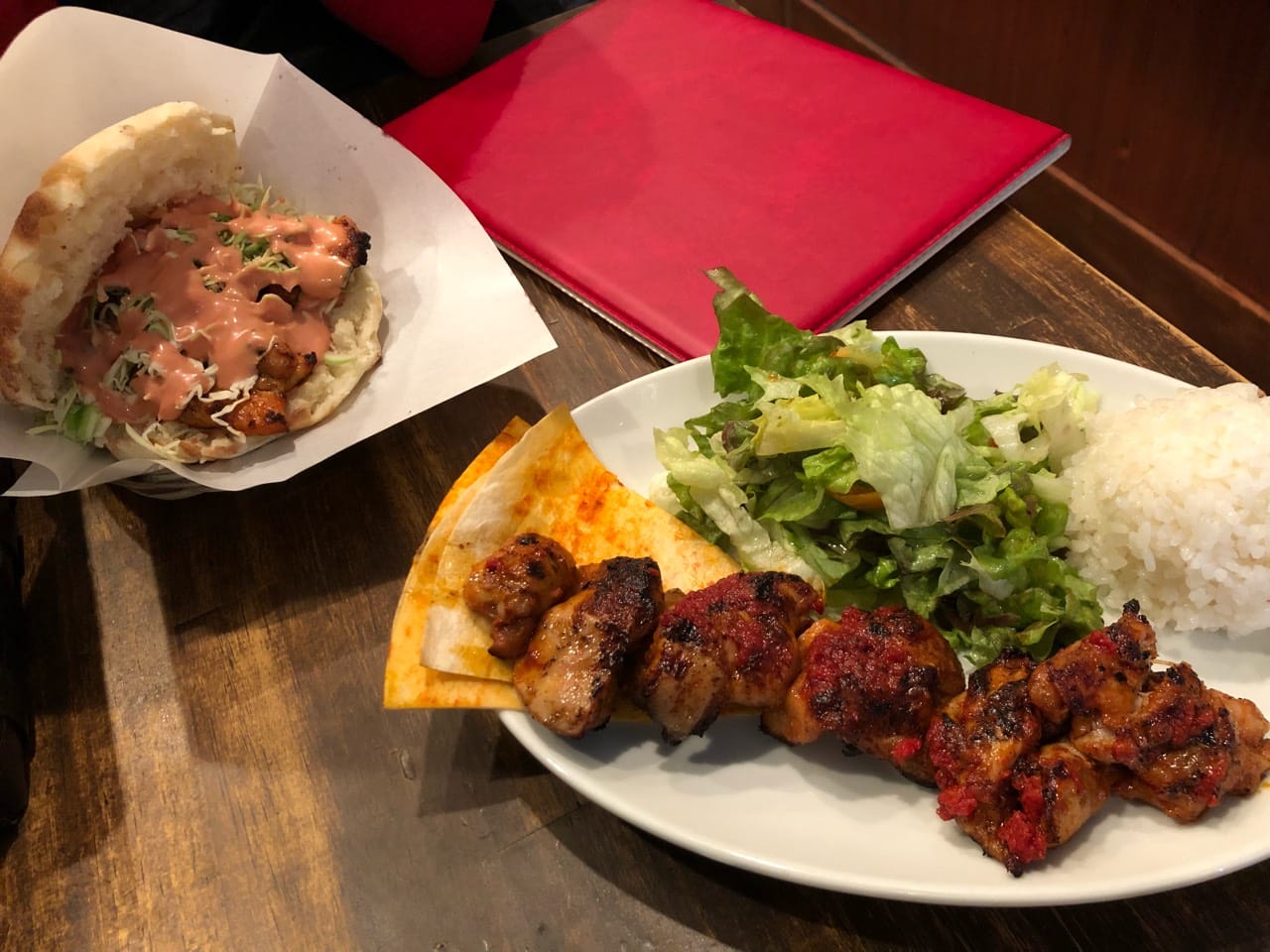
Pamukkale Restaurant in Shinjuku is listed as halal Turkish. Uskudar at Shinjuku 3-35-1, Mamo Kebab (4.4 across 1,790 reviews), Kebab Box J and Mekan Kebab in Shibuya, and Zenobia Hiroo — Syrian food at 5-2-25 Hiroo, rating 4.4 across 510 Google reviews — round out the list.
Southeast Asian and South Asian
Malay Asian Cuisine Shibuya at 2-9-9 Shibuya rates 4.2 across 592 reviews and is the obvious stop if you want Malaysian food in the middle of the city.
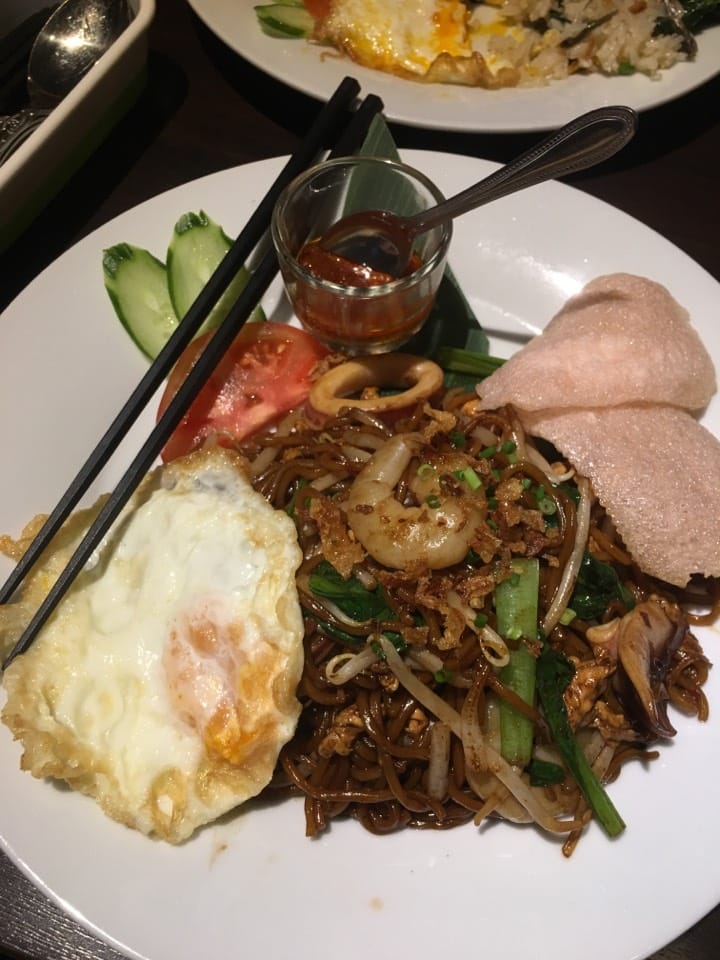
Bintang Bali Okubo in Shinjuku serves Indonesian food. Thaliya has three branches across these wards — Shibuya Namiki Bridge, Hatsudai and Nishi-Shinjuku 7-chome — and Solti Khaja Ghar in Shinjuku covers Nepalese.
Rung Rueng Thai Restaurant in Shinjuku and Asian Dining MOMO CAVE in Shibuya are further options, along with 馬記 蒙古肉餅 for Mongolian.
Cafés and Lighter Stops
KO-SO CAFE in Higashi, Shibuya, is certified by Malaysia Halal Corporation and rates 4.4 across 340 reviews — worth knowing because a certified café is much rarer in Japan than a certified restaurant.
🛏 Staying in Tokyo? We list 18 places to stay there, and each one shows how many halal restaurants are within walking distance.
See places to stay in Tokyo →
Frequently Asked Questions About Halal Food in Shibuya and Shinjuku
Where is the largest mosque in Japan? Tokyo Camii at 1-19 Oyamacho, Shibuya, in Yoyogi-Uehara — one stop from Shibuya station. It is an Ottoman-style building rating 4.7 across more than 3,900 Google reviews, it holds Friday prayer, and non-Muslim visitors are received.
Is there a prayer room in Shibuya? Yes, several. Shibuya PARCO has one on the 5th floor, west side, rating 4.8 across 184 reviews. There is also Shibuya Mushalla, and in Shinjuku, Shin-Okubo Musalla and Kabukicho Ikhlas Musalla. The prayer rooms at Takashimaya and Laox 6F have closed.
Is there halal ramen in Shinjuku? Yes. Honolu Shinjukugyoenmae Halal Ramen in the basement at Shinjuku 1-31-3 rates 4.7 across roughly 1,400 Google reviews. The group took halal certification in 2020 and uses chicken from certified farms with certified soy sauce and noodles. Ordinary ramen broth is pork bone and cannot be adjusted on request, so a certified halal ramen shop is a different thing entirely from a restaurant that will cook without pork.
Is there halal ramen in Shibuya? Yes, and Shibuya has more of it than anywhere in Japan. Gyumon Halal Wagyu Ramen Shibuya at Shibuya 2-19-17 rates 4.9 across 26,732 Google reviews — the largest count we have found for any halal restaurant in the country. Gyumon opened in 2007 as Japan's first halal wagyu yakiniku restaurant, holds Malaysia Halal Corporation certification for the yakiniku business, and keeps a prayer room on site. Three more Gyumon ramen rooms sit within a few minutes' walk: Center Gai (4.9 across 9,366), Scramble (4.8 across 6,420) and Jinnan (4.8 across 5,470). Halal Ramen Honolu Ebisu is the non-Gyumon option, rating 4.4 across about 1,950.
Why do the halal wagyu restaurants in Shinjuku all have such similar names? Because several of them are run by the same operator. Listings such as Wagyu (Halal Vegan) Hamburger Steak & Ramen in Kabukicho, Wagyu Halal Japanese Food in Shinjuku and their Shibuya, Ginza and Tsukiji counterparts all resolve to halal-food-wagyu.com or to per-branch sites built to the same template. The operator states on its own site that it is not officially halal certified and that no alcohol is used, even in sauces. Treat the review counts as overlapping listings rather than as six independent restaurants.
Is Rahmen Eddie in Shinjuku halal? No, it is not halal. Several halal directories still list it, but the business trading under that name today opened in 2023 under an Italian-restaurant operator and serves three kinds of chashu. The halal entries for that address describe an earlier business at the same location. For halal ramen a few minutes away, go to Honolu Shinjukugyoenmae Halal Ramen instead.
Is there halal yakiniku in Shibuya or Shinjuku? Yes. Gyumon in Shibuya opened in 2007 as Japan's first halal wagyu yakiniku restaurant, is certified by Malaysia Halal Corporation, and has a prayer room. For Japanese food more broadly, Gonpachi Shibuya runs a halal sushi course by telephone reservation (¥20,000) and Kurumaya Bekkan near Shinjuku station has a Muslim-welcome menu at lunch only. Book ahead — most of these are courses, not walk-in menus.
What is Uyghur food and is it halal? Uyghur cuisine comes from Xinjiang in northwest China — hand-pulled noodles, lamb, cumin-heavy grilling. Uyghurs are Muslim and the cooking uses no pork, but a restaurant in Tokyo still needs asking about meat sourcing and alcohol. Silk Road Tarim Uyghur Restaurant at Nishi-Shinjuku 3-15-8 serves it, and it is a good change from curry or kebab.
Which halal certifications appear in Shibuya and Shinjuku? Gyumon and KO-SO CAFE, both in Shibuya, are certified by Malaysia Halal Corporation, and Pamukkale in Shinjuku is certified Turkish. Japan has no single halal authority, so the certifying body matters — and so does the date. Ask when the certificate was last renewed rather than taking a listing at face value.
Plan Your Halal Tokyo Trip with Halal Navi
Shibuya and Shinjuku are the two wards most visitors actually spend their days in, and between Tokyo Camii, the PARCO prayer room, certified halal ramen in both wards and Japan's original halal wagyu yakiniku house, they support a Muslim trip better than their reputation suggests.
Download the Halal Navi app from the App Store or Google Play to check what is open today and find the nearest prayer space from wherever you are standing.
Muslim-friendly stays in Tokyo
All of these are listed in the Halal Navi database as Muslim-friendly. What each property declares is different, so the note is what the property itself states — confirm anything that matters to you when you book.
- Agora Place Asakusa — Muslim-friendly facilities declared by the hotel: Staff trained in Muslim hospitality. See the halal details Halal food within walking distance: 7 places (6 certified) · nearest 167m. HALAL WAGYU SUKIYAKI HALRA Asakusa 167m · Menya Honolu Asakusa - Halal ramen 206m · HALAL WAGYU RAMEN SHINJUKU-TEI Asakusa Tokyo 314m.
- HOTEL Grand Star TATEISHI SEVEN — Muslim-friendly facilities declared by the hotel: Separate halal cookware available. See the halal details
- HOTEL Grand Star Tokyo — Muslim-friendly facilities declared by the property: separate halal cookware, a qibla direction indicator, a prayer mat and information on halal food nearby. See the halal details
Want to see where a local creator has actually eaten? Navito's list of halal places in Japan collects the venues he has filmed, each shown with its current halal status.
About this article
Author: Aisha Rahman, Halal Navi Editorial Team. Aisha Rahman is a pen name used by the Halal Navi editorial team to maintain consistency across our halal verification reporting. Editorial responsibility is held collectively by our Halal Verification Team.
Reviewer: Halal-reviewed by Zeshan Hayat (Lead Halal Auditor, Halal Navi / Founder, HHAJ). Zeshan holds ISO 9001:2015 Internal Auditor and ISO 19011 Auditor credentials. See our editorial standards for the full review process.
Update policy: We re-verify every claim in this article quarterly. If you spot outdated information, we will review and correct it within 7 days.
Disclosure: Halal Navi receives no payment from any restaurant or hotel in exchange for inclusion, and all recommendations reflect independent editorial judgment based on Muslim-friendly criteria. Some articles contain affiliate booking links (e.g. Trip.com); if you book through one, Halal Navi may earn a small commission at no extra cost to you.
Last verified: 2026-08-01