Is Chinese Food Halal in Japan? The Qingzhen Answer (2026)
Quick Answer: Ordinary Japanese-style Chinese food is one of the hardest cuisines for Muslim travellers in Japan, because pork is structural — gyoza and shumai are pork by default, chashu is a base flavour, lard is a standard cooking fat, and Chinese cooking wine goes invisibly into sauces. Asking for "no pork" does not make a dish halal. The workaround is 清真 (qingzhen), the Chinese word for halal, marking the Hui and Uyghur Muslim traditions built without pork from the start. Lanzhou beef noodles (lamian) are the dish to know, and shops such as Uyghur Cuisine DOLAN & Bullbrothers Lanzhou, Kaenzan Lanzhou Lamian, HALAL中華 阿丽娅 in Ueno, and Muqam Halal Uyghur Restaurant in Osaka carry Google's halal classification. Halal Navi has not personally verified certification; confirm cooking wine, shared woks, and ownership at the counter.
Short answer: ordinary Chinese food in Japan is the hardest cuisine on the map for a Muslim traveller — harder than ramen, harder than izakaya. But there is a second Chinese tradition that is halal in its own home country, and Japan has it in more places than the guides admit.
The distinction is worth learning, because it turns "avoid Chinese food" into "know which Chinese food".
Why Ordinary Chinese Food Is So Difficult
In most Chinese restaurants in Japan, pork is not an ingredient you can ask them to leave out. It is structural.
- Gyoza are pork dumplings by default. So is shumai
- Chāshū — the braised pork in ramen and fried rice — is a base flavour, not a topping
- Lard is a standard cooking fat, and the wok is shared
- Chinese cooking wine (紹興酒 / 料理酒) goes into sauces and marinades, and it is not something you can see
Japanese-style Chinese food — chūka — was built around exactly these things. A "no pork please" request does not make a dish halal here, and staff who agree to it are usually answering a question about the visible ingredients only.
What "Qingzhen" (清真) Means
清真 — qingzhen — is the Chinese word for halal, and it marks a genuine culinary tradition, not an adaptation.
China's Hui Muslim community, concentrated in the north-west, and the Uyghur community in Xinjiang have their own cuisines built without pork from the start. Beef and lamb do the work pork does elsewhere. These are not "modified" Chinese dishes; they are what those regions have always eaten.
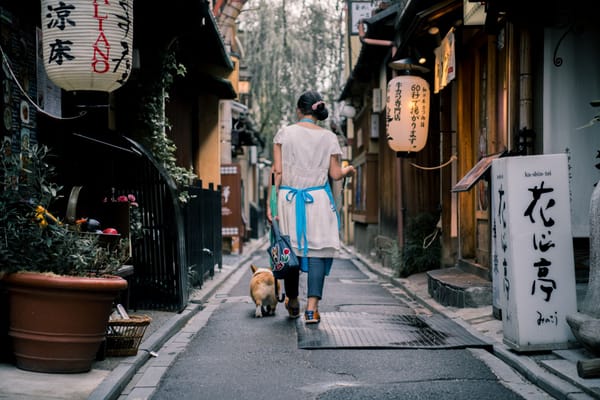
When you see 清真 on a sign in Japan, it is the operator saying the kitchen follows that tradition. It is not a certificate, and you should still ask — but it means something different from a Japanese restaurant agreeing to hold the pork.
Lanzhou Beef Noodles: The One to Know
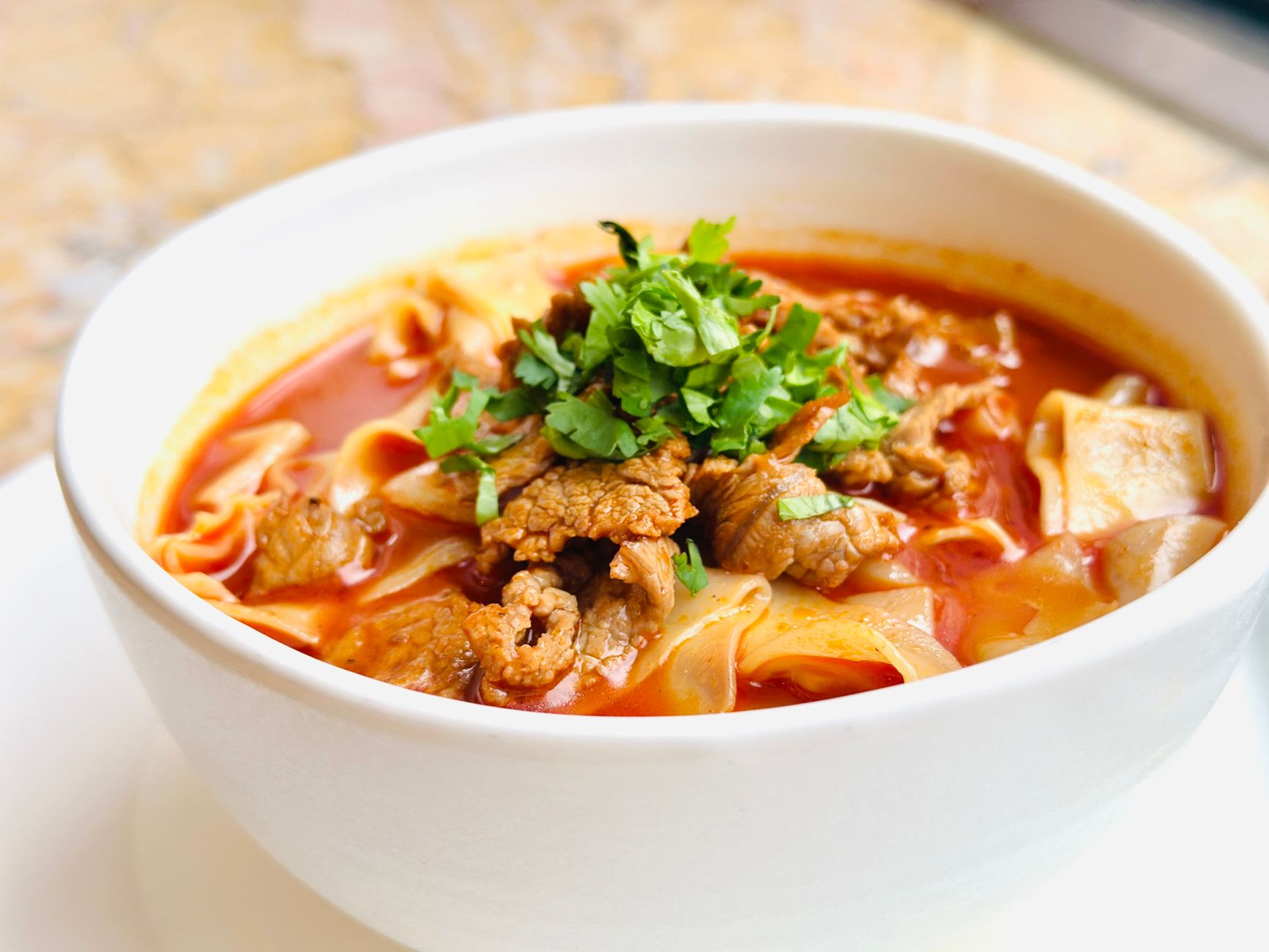
If you learn one dish from this article, make it Lanzhou beef noodles (蘭州牛肉麺 / lamian).
Hand-pulled wheat noodles in a clear beef broth, with white daikon, chilli oil and coriander. It comes from Lanzhou in Gansu province, it is a Hui Muslim dish, and there is no pork anywhere in the tradition. It has spread across Japan in the last few years, mostly through shops run by Chinese Muslim owners.
In Tokyo
- Kaenzan Lanzhou Lamian in Toshima ward (Ikebukuro) rates 4.2 across 1,127 reviews with Google's halal classification
- Gyuka Kyodai Lanzhou Beef Noodles (牛家兄弟蘭州牛肉麺) in Okubo rates 4.8 across 187 and states halal explicitly
- Bull Brothers Noodles in Okubo rates 3.3 across 158
- Chisui Halal Lanzhou Beef Ramen in Omori, Ota ward, rates 3.9 across 265
In Osaka
- Lanzhou Halal Beef Lamian Noodle at Nanba-naka 3-16-12 in Naniwa ward rates 4.2 across 464 with the halal classification
One caution that matters. Lanzhou noodles have become fashionable, and shops copying the style are opening that have no connection to the Hui tradition — Japanese-run, or Chinese-run but not Muslim. The dish being Lanzhou-style does not make the shop halal. Ask at the counter, and look for 清真 on the sign.
Uyghur Food
Uyghur cuisine from Xinjiang is the other major qingzhen tradition in Japan — lamb skewers, laghman hand-pulled noodles, polo rice, and naan-style flatbread that will look familiar to anyone from Central Asia.
- Uyghur Cuisine DOLAN & Bullbrothers Lanzhou in Toshima ward rates 4.5 across 1,176 reviews with the halal classification — the best-received of the group
- Muqam Halal Uyghur Restaurant at Dotonbori 2-2-8 in Osaka rates 4.5 across 648 with the halal classification, which puts qingzhen food inside Osaka's busiest tourist street
- Silk Road Uyghur Restaurant Alibaba in Kamata, Ota ward, rates 4.6 across 122
📱 Find halal restaurants, prayer rooms and Muslim-friendly places across Japan with the free Halal Navi app.
Download on the App Store · Get it on Google Play
Qingzhen Chinese Proper
- HALAL中華 阿丽娅 (Aliya) 清真美食 in Ueno rates 4.6 across 185 with the halal classification. The sign says 清真美食 — qingzhen cuisine — which is about as direct as it gets
- Tokyo Chinese Muslim Restaurant in Sumida ward rates 3.9 across 853 with the halal classification
- Maki Mongolian Meat Pie (馬記 蒙古肉餅) in Takadanobaba is an Inner Mongolian specialist working with halal-certified ingredients — lamb-heavy, and a different regional tradition again
What to Check Before You Order
Even at a qingzhen restaurant, three things are worth a question.
- The cooking wine. Chinese cooking wine is used in sauces almost reflexively. A qingzhen kitchen will not use it, but a shop that has adopted the style may not have thought about it
- The oil. If the shop also serves a non-qingzhen menu, ask whether the fryer and wok are shared
- Who runs it. In practice this is the most reliable signal for Chinese food in Japan. A Hui or Uyghur owner is following a tradition; a Japanese operator serving Lanzhou noodles is following a trend
And a note on our own limits. We have not personally verified certification for the restaurants above. What we can tell you is what Google classifies as halal, what the shops put on their own signage, and how the tradition works. Confirm the rest at the counter.
Frequently Asked Questions About Halal Chinese Food in Japan
Is Chinese food halal in Japan? Ordinary Japanese-style Chinese food is not, and it is one of the hardest cuisines to work around. Pork is structural — gyoza and shumai are pork by default, chashu is a base flavour, lard is a standard cooking fat, and Chinese cooking wine goes into sauces invisibly. Asking for "no pork" does not make a dish halal.
What does 清真 (qingzhen) mean? Qingzhen is the Chinese word for halal. It marks the cuisine of China's Hui and Uyghur Muslim communities, which is built without pork from the start rather than adapted. When a shop in Japan puts 清真 on its sign, it is saying the kitchen follows that tradition.
Are Lanzhou beef noodles halal? In their home tradition, yes — Lanzhou lamian is a Hui Muslim dish with no pork anywhere in it. But the style has become fashionable in Japan and shops with no connection to that tradition now serve it. The dish being Lanzhou-style does not make the shop halal, so check the signage and ask.
Where can I eat halal Chinese food in Tokyo? Uyghur Cuisine DOLAN & Bullbrothers Lanzhou in Toshima rates 4.5 across 1,176 reviews, Kaenzan Lanzhou Lamian rates 4.2 across 1,127, HALAL中華 阿丽娅 清真美食 in Ueno rates 4.6 across 185, and Tokyo Chinese Muslim Restaurant in Sumida rates 3.9 across 853 — all carrying Google's halal classification.
Is there halal Chinese food in Osaka? Yes. Muqam Halal Uyghur Restaurant at Dotonbori 2-2-8 rates 4.5 across 648 with the halal classification, and Lanzhou Halal Beef Lamian Noodle in Naniwa ward rates 4.2 across 464.
What should I ask at a qingzhen restaurant? Three things: whether Chinese cooking wine is used in the sauces, whether the wok and fryer are shared with any non-qingzhen menu, and who runs the kitchen. The last one is the most reliable signal in Japan — a Hui or Uyghur owner is following a tradition rather than a trend.
Find Halal Chinese Food with Halal Navi
Chinese food in Japan is not a closed door — it is a door with a different name on it. Learn to look for 清真 and the map changes.
Download the Halal Navi app to find halal restaurants and prayer spaces near wherever you are in Japan.
About this article
Author: Aisha Rahman, Halal Navi Editorial Team. Aisha Rahman is a pen name used by the Halal Navi editorial team to maintain consistency across our halal verification reporting. Editorial responsibility is held collectively by our Halal Verification Team.
Reviewer: Halal-reviewed by Zeshan Hayat (Lead Halal Auditor, Halal Navi / Founder, HHAJ). Zeshan holds ISO 9001:2015 Internal Auditor and ISO 19011 Auditor credentials. See our editorial standards for the full review process.
Update policy: We re-verify every claim in this article quarterly. If you spot outdated information, we will review and correct it within 7 days.
Disclosure: Halal Navi receives no payment from any restaurant or hotel in exchange for inclusion, and all recommendations reflect independent editorial judgment based on Muslim-friendly criteria. Some articles contain affiliate booking links (e.g. Trip.com); if you book through one, Halal Navi may earn a small commission at no extra cost to you.
Last verified: 2026-08-05