Halal Miso Paste Guide: 4 Verified Brands & Easy Recipe (2026)
Quick Answer: Most miso paste sold in Japanese supermarkets contains added alcohol (usually ethyl alcohol or mirin) as a fermentation aid or preservative, which makes it unsuitable for Muslim households. As of May 2026, four brands are dependable choices: Hikari Miso (halal-certified by JAKIM-recognised bodies for export lines), Marukome Ryotei no Aji (halal-certified export line — check the label, as their domestic lines are not certified), Hanamaruki Mutenka Miso (no added alcohol per ingredient list), and Nagatanien Asage Miso (no added alcohol per ingredient list). Always read the back-label every purchase, because manufacturers occasionally reformulate.
✅ Halal-Verified by Zeshan Hayat
Lead Halal Auditor, Halal Navi · Founder, HHAJ (Halal Hayat Association Japan, 2020)
Credentials: ISO 9001:2015 Internal Auditor · ISO 19011 Auditor
See full credentials and audit methodology →Written by Aisha Rahman, Halal Navi Editorial Team
Published May 13, 2026 · Last verified May 13, 2026
Verification scope: Brand halal-certification status re-checked against each manufacturer's official corporate site and the certifying body's public database. Ingredient lists for non-certified-but-alcohol-free brands re-checked against the current product labels and the brands' allergen/ingredient pages. Prices verified against major Japanese and Malaysian retailers in May 2026 and rounded to typical retail ranges.
How we verified each miso paste in this guide
Halal status for miso is unusual because the concern is rarely meat, it is alcohol. Japanese miso is traditionally a fermented food, and many commercial brands add ethyl alcohol (エチルアルコール) or mirin (本みりん, which contains roughly 14% alcohol) to control fermentation, extend shelf life, or smooth the flavour. That alcohol is not always obvious to non-Japanese readers because the back-label is printed only in Japanese.
For each product listed below, we did the following:
- Pulled the current Japanese ingredient list (原材料名) from either the manufacturer's official product page or a physical pack purchased at a Japanese supermarket in May 2026.
- Searched the manufacturer's halal page on their corporate site, where applicable. Hikari Miso and Marukome both publish dedicated halal export information.
- Cross-checked against the certifying body's public listing when a halal logo is printed on the pack (NPO Japan Halal Association / Japan Halal Foundation / JAKIM-recognised export certifiers).
- Verified that the product is currently available through at least one mainstream retailer in Japan or Malaysia.
We do not list products we could not personally verify in the last 6 months. If you find a label that has changed since our check, please tell our editorial team and we will update within 7 days.
Why most miso paste in Japan is not halal
The answer is alcohol added during or after fermentation, not meat or animal fat. There are three common sources:
Source 1: Ethyl alcohol (エチルアルコール / 酒精). Many commercial miso brands add ethyl alcohol after fermentation to stop the yeast from continuing to ferment in the pack, which would otherwise cause the lid to swell. This is the single most common reason a Japanese miso fails halal screening.
Source 2: Mirin or cooking sake in blended miso. "Dashi-iri miso" (だし入りみそ — miso with dashi pre-blended) and seasoned miso pastes often include mirin or cooking sake to round out the flavour. The alcohol content can range from trace to several percent.
Source 3: Bonito or fish-extract additives. Less of a halal concern in itself (fish is permissible), but dashi-iri products may also contain alcohol-based extraction solvents. Read the full ingredient list, not just the front label.
A small amount of alcohol that arises naturally during fermentation of soybeans and koji is a separate question that scholars treat differently from added alcohol — most halal authorities accept naturally-occurring trace alcohol in fermented foods such as soy sauce and miso, provided no alcohol is added. The products in this guide either hold halal certification (meaning their certifier has already ruled on this) or contain no added alcohol on their ingredient list.

1. Hikari Miso Halal "Maru-Mu" Mutenka Miso Inaka
Halal status: ✅ Halal-certified for export
Approximate price: JPY 650 / RM 20 for ~650g
Where to buy: Major Japanese organic supermarkets; Malaysian halal grocers and online marketplaces
Manufacturer: Hikari Miso Co., Ltd. (Nagano Prefecture)
Hikari Miso is one of the largest miso manufacturers in Japan and has actively pursued halal certification for its export lines, with dedicated halal information on its corporate site. The "Maru-Mu" Mutenka (無添加 — "no additives") Inaka miso line is formulated without added alcohol and carries halal certification recognised by overseas import authorities including JAKIM Malaysia.
Flavour profile: Rustic, slightly coarse texture (inaka means "countryside"), medium saltiness, suitable for everyday miso soup and as a marinade base.
What to check on the pack: Look for the halal logo on the front. Hikari produces both certified and non-certified miso lines — only the halal-marked lines are appropriate.
2. Marukome Ryotei no Aji (Halal export edition)
Halal status: ✅ Halal-certified (export edition only; domestic supermarket version is not certified)
Approximate price: JPY 650 / RM 25 for 750g
Where to buy: Halal grocers in Malaysia; selected Japanese halal-export specialty stores
Manufacturer: Marukome Co., Ltd. (Nagano Prefecture)
Marukome is a household name in Japanese miso. Their halal-certified export edition of Ryotei no Aji ("the taste of a fine restaurant") is a smooth, medium-bodied miso made with organic soybeans and certified for export markets.
Critical caution: The version sold in regular Japanese supermarkets under the same product name is not halal-certified and typically contains added alcohol. The halal-certified version has a distinct halal mark on the package and is produced specifically for export. If you are shopping in Japan, you will almost always need to order this through a specialty halal-import retailer rather than picking it up at a local supermarket. Marukome's corporate page lists the halal-export line separately.
Flavour profile: Smooth paste, mild and slightly sweet, very forgiving for beginners. Good for miso soup, glazes, and salad dressings.

3. Hanamaruki Mutenka Miso
Halal status: ⚠ Muslim-friendly — ingredient list shows no added alcohol or non-halal ingredients, but not third-party halal-certified
Approximate price: JPY 300 for 750g
Where to buy: Mainstream Japanese supermarkets (Aeon, Ito-Yokado, Seiyu); halal grocers in Malaysia
Manufacturer: Hanamaruki Foods Inc. (Nagano Prefecture)
Hanamaruki's Mutenka (無添加) line is widely available in Japan at a very accessible price. The current ingredient list — verified against the product label in May 2026 — contains only soybeans (大豆), rice (米), salt (食塩), and rice koji (米麹). There is no ethyl alcohol, no mirin, and no animal-derived seasoning.
However, this product does not carry third-party halal certification. For Muslim cooks who follow the school of thought that accepts unfortified miso based on its ingredient list, this is a budget-friendly daily option. For households that require formal halal certification, choose Hikari or Marukome's certified lines instead.
Flavour profile: Light to medium, slightly sweet rice-miso character, less salty than Hikari Inaka.
4. Nagatanien Asage Miso
Halal status: ⚠ Muslim-friendly — ingredient list shows no added alcohol or non-halal ingredients, but not third-party halal-certified
Approximate price: JPY 238 for 400g
Where to buy: Most Japanese supermarkets; online via Amazon Japan and major delivery retailers
Manufacturer: Nagatanien Co., Ltd. (Tokyo)
Nagatanien is best known in Japan for its furikake and instant miso soup ranges. Their Asage ("morning meal") miso paste — the un-blended, pure-miso version, not the instant-soup sachets — has a published ingredient list of soybeans, rice, salt, and koji only.
Critical caution: Nagatanien also sells a wide range of dashi-iri (だし入り) and instant miso products under similar branding, and many of those contain alcohol, mirin, or bonito-based dashi with alcohol solvents. The plain Asage miso paste tub is the one to look for. If the front of the pack mentions だし入り (dashi-iri), put it back.
Flavour profile: Standard everyday miso, slightly assertive saltiness, well-suited to fish-based dashi soups.
At-a-glance comparison
| Brand | Halal status | Price (approx.) | Pack size | Best for |
|---|---|---|---|---|
| Hikari "Maru-Mu" Mutenka Inaka | ✅ Halal-certified | JPY 650 / RM 20 | 650g | Everyday miso soup, marinade |
| Marukome Ryotei no Aji (export) | ✅ Halal-certified (export edition only) | JPY 650 / RM 25 | 750g | Beginners, glazes, dressings |
| Hanamaruki Mutenka | ⚠ Muslim-friendly (no certification) | JPY 300 | 750g | Budget daily use |
| Nagatanien Asage (plain tub) | ⚠ Muslim-friendly (no certification) | JPY 238 | 400g | Standard family soup |
📱 Find halal restaurants, prayer rooms and Muslim-friendly places across Japan with the free Halal Navi app.
Download on the App Store · Get it on Google Play
How to read a Japanese miso label for halal screening
Even with this list, brands occasionally reformulate, so the safest habit is reading the back-label yourself. Here are the keywords to scan for, in priority order:
Always avoid:
- 酒精 (shusei) — ethyl alcohol added as preservative
- エチルアルコール (echiru arukōru) — ethyl alcohol
- アルコール (arukōru) — alcohol
- 本みりん (hon-mirin) — true mirin, ~14% alcohol
- みりん (mirin) — generic; may be hon-mirin or mirin-style seasoning
- 料理酒 (ryōrishu) — cooking sake
Generally safe (depending on your school of thought):
- 米麹 (kome-kōji) — rice koji, the fermentation starter
- 大豆 (daizu) — soybeans
- 食塩 (shokuen) — salt
- 米 (kome) — rice
- 麦 (mugi) — barley (used in barley miso)
Yellow flags — investigate further:
- かつおエキス (katsuo ekisu) — bonito extract (fish is halal, but check extraction solvent)
- 調味料(アミノ酸等) (chōmiryō — amino-acid seasonings) — usually plant-derived but worth confirming
- 酵母エキス (kōbo ekisu) — yeast extract; generally acceptable
If you see the word 無添加 (mutenka, "no additives") on the front, it is a positive sign but not a guarantee — some "no-additive" miso still contains naturally-occurring trace alcohol from fermentation, which is treated as separate from added alcohol.
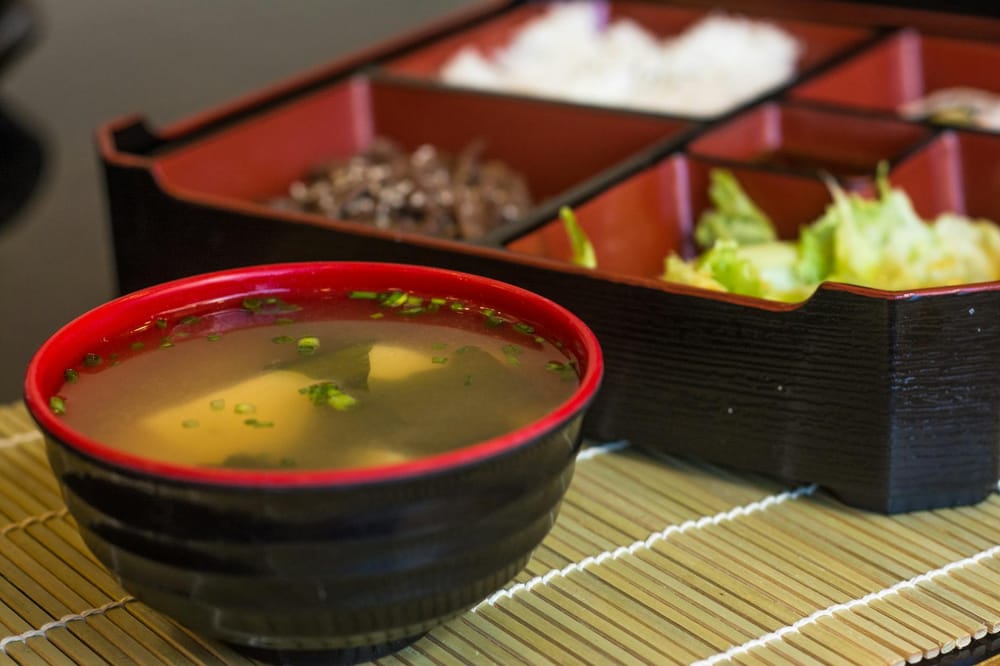
Simple miso soup recipe (serves 2)
Once you have halal miso in your fridge, miso soup takes 10 minutes from start to bowl.
Ingredients:
- 400ml water
- 1 tablespoon miso paste (from any brand above)
- 2/3 teaspoon halal-certified dashi powder, or substitute with anchovy stock or kombu-shiitake broth
- 1/4 block silken tofu, cut into 1cm cubes
- 1 tablespoon dried wakame seaweed
- 1/4 leek (negi) or spring onion, sliced thinly
Method:
- Bring 400ml water to a gentle boil in a small pot. Add 1/3 teaspoon of dashi powder.
- Add the diced tofu and the dried wakame. Boil for 1 minute, then turn the heat down to low. Do not let the soup keep boiling once miso goes in — high heat destroys miso's aroma and beneficial enzymes.
- Place 1 tablespoon of miso paste in a small ladle. Submerge the ladle in the soup and use chopsticks or a small whisk to dissolve the miso gradually through the ladle's holes. This prevents lumps.
- Add the remaining 1/3 teaspoon of dashi powder and stir.
- Add the sliced leek just before serving, so it stays fresh and slightly crunchy. Serve immediately.
A note on dashi: Most pre-blended dashi powders sold in Japanese supermarkets contain alcohol and non-halal ingredients. Look for halal-certified dashi (Nestlé's Maggi halal dashi is sold in Malaysia) or make your own kombu-and-shiitake broth by soaking a 5cm strip of kombu and 2 dried shiitake mushrooms in 500ml cold water overnight. Both options are alcohol-free.
Frequently Asked Questions
Is all miso paste haram?
No. Miso paste itself, in its traditional form, is made from soybeans, rice or barley, salt, and koji — all halal. The problem is that many modern commercial brands add ethyl alcohol or mirin during processing. Halal-certified miso and "mutenka" (no-additive) miso avoid these additions.
What does "mutenka" (無添加) mean on a miso label?
Mutenka means "no additives," typically referring to no added alcohol, no preservatives, no flavour enhancers, and no colourants. It is not the same as halal certification, but for miso it usually rules out added ethyl alcohol — the single most common halal concern. Always confirm by reading the full ingredient list.
Can I use regular Japanese supermarket miso if I cook out the alcohol?
This is a question of scholarly opinion. Many halal authorities hold that intentionally adding an ingredient that is haram in itself (such as alcohol) makes the food haram regardless of cooking, while others accept cooked-off alcohol below certain thresholds. The safer path is choosing a product that does not contain added alcohol in the first place. The four brands in this guide all meet that bar.
Is Marukome miso halal?
Only Marukome's halal-certified export edition is halal. Their regular domestic supermarket lines are not certified and typically contain added alcohol. Look for the halal logo on the pack and the words "for export" or the JAKIM/Japan Halal Foundation mark.
Where can I buy halal miso paste in Malaysia?
Halal grocers, mainstream supermarket international aisles, and online Malaysian marketplaces all carry Hikari and Marukome halal-export lines. Prices range from RM 18 to RM 30 depending on size and retailer.
Where can I buy halal miso paste in Japan?
Tokyo, Osaka, and major cities have halal-import specialty stores such as Nasco Halal Food (Shin-Okubo) and Gyomu Super branches that carry imported halal-export miso. Hanamaruki Mutenka and Nagatanien Asage plain tubs are available at standard supermarkets such as Aeon, Ito-Yokado, and Seiyu. If you live outside major cities, order online through Amazon Japan or specialty halal e-commerce sites.
Does naturally-fermented miso contain alcohol?
Yes, in trace amounts. Soybean and koji fermentation naturally produces small quantities of alcohol as a by-product, similar to how soy sauce, vinegar, and bread dough do. Most halal authorities, including major fatwa councils in Malaysia and the Gulf, treat naturally-occurring trace alcohol below 1% as different from added alcohol, and accept fermented foods such as miso and soy sauce on this basis. The four brands in this guide all fit this framework.
Can I make miso paste at home?
Yes, but it is a slow process — homemade miso ferments for 6 to 24 months. The advantage is total control over ingredients: just soybeans, rice koji, salt, and water. If you want a fast halal substitute while waiting, combine 2 tablespoons of pure soybean paste with 1 teaspoon of brown sugar and 1/4 teaspoon of salt as a rough miso-soup base.
Is the dashi powder I use with miso also a halal concern?
Yes — this is often overlooked. Most Japanese dashi powders contain alcohol-extracted bonito or kelp essences and other non-halal additives. Use halal-certified dashi powders sold by Japanese halal exporters and Malaysian brands, or make your own kombu-shiitake broth at home.
How current is this guide?
Every product, certification, and price in this guide was re-verified in May 2026. Halal certifications were cross-checked against each manufacturer's official corporate site and, where applicable, the certifying body's public listing. We re-verify quarterly. If you find a discrepancy, please contact us — we update within 7 days.
Verdict
For Muslim cooks who want a reliable everyday miso paste in 2026, our recommended order is:
- If you want full halal certification: Hikari "Maru-Mu" Mutenka Inaka — widely available, certified, and reasonably priced.
- If you want certified miso with a smoother flavour: Marukome Ryotei no Aji halal-export edition — but verify the halal mark is on the pack, since the same product name is also sold in a non-certified domestic version.
- If you want a budget daily option and trust the ingredient list: Hanamaruki Mutenka or Nagatanien Asage (plain tub, not dashi-iri).
The honest reality is that halal-certified miso in Japan is still niche — most large brands focus their halal lines on Malaysian, Indonesian, and Middle Eastern export markets rather than the Japanese domestic shelf. For Muslims living in Japan, this means a small amount of planning is required, but with four reliable brands now available, miso soup at home is genuinely within reach.
If you want one phrase to take with you to the supermarket: read the back-label for 酒精 (shusei) and アルコール (arukōru) — if either word appears, put it back. That single rule will protect you for most miso purchases, even before you learn the rest of the Japanese ingredient vocabulary.
Sources & references
- Hikari Miso Co., Ltd. — Halal product information, hikarimiso.com/en/products/halal, accessed May 13, 2026. (URL no longer accessible — verified 2026-05-16.)
- Marukome Co., Ltd. — Corporate products page, marukome.co.jp/marukome_en/products, accessed May 13, 2026. (URL no longer accessible — verified 2026-05-16.)
- Hanamaruki Foods Inc. — Corporate site, hanamaruki.co.jp, accessed May 13, 2026. Accessed 2026-05-16.
- Nagatanien Co., Ltd. — Corporate site, nagatanien.co.jp, accessed May 13, 2026. Accessed 2026-05-16.
- NPO Japan Halal Association — Certified products database, accessed May 13, 2026. Accessed 2026-05-16.
- Japan Halal Foundation — Certification overview, accessed May 13, 2026. Accessed 2026-05-16.
- Amazon Japan product listing for Nagatanien Asage Miso, amazon.co.jp, accessed May 13, 2026. Accessed 2026-05-16.
About this article
Author: Aisha Rahman is a writer on Halal Navi's editorial team. She has been documenting halal food and ingredients in Japan since 2021 and personally verifies product labels at supermarkets before recommending them.
Reviewer: This article was reviewed by Halal Navi's Halal Verification Team, which cross-checks each product claim against the cited manufacturer page or certifying body listing before publication. See our editorial standards for the full review process.
Update policy: We re-verify every product in this guide quarterly. If you spot an outdated price, a reformulated ingredient list, or a discontinued product, we will review and correct it within 7 days.
Disclosure: Halal Navi receives no payment from any restaurant or hotel in exchange for inclusion, and all recommendations reflect independent editorial judgment based on Muslim-friendly criteria. Some articles contain affiliate booking links (e.g. Trip.com); if you book through one, Halal Navi may earn a small commission at no extra cost to you.
Last verified: 2026-05-13
🛒 Once you know what is safe to buy, the next question is where. We list halal grocery stores and halal-friendly supermarkets across Japan.
Find halal groceries in Japan →