Are Japanese Biscuits Halal? Kinoko no Yama, Country Ma'am and More
Quick Answer: No major mass-market Japanese biscuit brand, including Meiji, Fujiya, Lotte Japan, Glico, and Bourbon, holds halal certification from internationally recognised bodies such as JAKIM or MUIS for products sold domestically in Japan as of mid-2026. Kinoko no Yama, Country Ma'am, Koala's March, Pocky, Alfort, and Ritz Crackers Japan all lack certified-halal status for their Japan-market versions. The primary concerns are emulsifiers whose animal or vegetable origin is not disclosed on standard packaging, and alcohol-based flavourings in some variants; pork gelatine is not commonly listed in plain or chocolate-coated biscuits, but marshmallow- or cream-filled varieties carry higher risk. Muslim travellers who require certified-halal products should shop at specialist retailers, such as JAPANeid Osaka, or use the Halal Navi app to locate verified halal snack shops, and always check the current ingredient label before purchasing.
Picking up a bag of Kinoko no Yama at a convenience store or grabbing a box of Koala's March for the family sounds simple enough: until you start wondering whether Japanese biscuits are halal. For Muslim travellers exploring Japan in 2026, snack shopping can be a minefield of unlisted emulsifiers, pork-derived gelatine, and alcohol-based flavourings hidden in tiny-font ingredient lists. This guide breaks down the halal status of the most popular Japanese biscuits and cookies, explains what to look for on packaging, and points you toward safer snack options so you can shop with confidence.
Why Checking Japanese Biscuits for Halal Status Is More Complicated Than You Think
Japan does not have a national mandatory halal-labelling law. Unlike in Malaysia, Indonesia, or the Gulf states, manufacturers in Japan are not required to flag pork derivatives, alcohol, or non-halal gelatine on packaging in any language other than Japanese, and even in Japanese, the disclosure is often buried in a standard ingredient list using abbreviated chemical names.
The key ingredients to watch for in Japanese biscuits and cookies include:
- Emulsifiers (乳化剤, nyūkazai): Can be derived from pork (e.g., mono- and diglycerides of animal origin). Source is rarely disclosed.
- Gelatine (ゼラチン): Common in marshmallow-filled or cream-filled biscuits. Often pork-derived unless stated otherwise.
- Shortening (ショートニング): May contain lard in some older formulations, though most major brands now use vegetable-based shortening. Verify per product.
- Flavourings (香料, kōryō): Can include alcohol-based carrier solvents, though amounts are typically trace.
- Leavening agents and dairy: Generally permissible, though some biscuits contain rennet-set dairy; this is a concern for stricter interpretations.
Because ingredient formulations change without notice, the information below reflects reported community and manufacturer information as of mid-2026. Always check the current ingredient label before purchasing.
Is Kinoko no Yama Halal? What Muslim Travellers Should Know
Kinoko no Yama (キノコの山), the iconic mushroom-shaped chocolate biscuit by Meiji, is one of Japan's most beloved snack exports. The standard Kinoko no Yama contains wheat biscuit, milk chocolate, and emulsifiers. As of publication, Meiji has not obtained halal certification for Kinoko no Yama from a recognised certifying body such as JAKIM or MUIS, and the product is not listed on official halal registries.
The emulsifier used is reported by the manufacturer to be derived from vegetable sources in current formulations, but this is not independently verified on a halal-certified basis. The chocolate coating contains dairy. There is no alcohol or pork-derived gelatine listed in the standard recipe, but the lack of certification means Muslim consumers, particularly those following stricter standards, should treat this as "status uncertain."
Verdict: No halal certification. Suitable for Muslims who accept non-certified products with no known haram ingredients; not suitable for those who require certified-halal only. Always verify the current label.

Is Country Ma'am Halal? Breaking Down the Fujiya Cookie
Country Ma'am (カントリーマアム) by Fujiya is Japan's best-selling soft cookie, available in chocolate chip, vanilla, and seasonal flavours. The official ingredient list for the Vanilla (厳選バニラ) variant includes wheat flour, sugar, chocolate chips, vegetable oil, eggs, white bean paste and milk ingredients, plus emulsifier and flavouring (Fujiya, checked 28 September 2026).
Key concerns: - Fujiya's official product page states that the emulsifier (乳化剤) is derived from milk, wheat and soy (Vanilla variant, checked 28 September 2026). - Vanilla flavouring in some variants has historically included vanillin, which is synthetic and generally considered permissible, but "natural flavour" variants could involve alcohol-based extraction. - Fujiya does not hold halal certification for Country Ma'am as of mid-2026.
There is no pork gelatine and no lard listed in standard Country Ma'am formulations, and Fujiya states the Vanilla variant's emulsifier is milk-, wheat- and soy-derived. It is still not halal-certified.
Verdict: No halal certification. Lower-risk than gelatine-containing products, but emulsifier source is unverified. Confirm current ingredient list before purchasing, especially for seasonal limited editions which may use different formulations.
Is Koala's March Halal? Lotte's Beloved Bear Biscuits
Koala's March (コアラのマーチ) by Lotte is a hollow biscuit shell filled with chocolate cream, featuring cute koala prints. The ingredient list includes wheat flour, sugar, vegetable fat, cocoa, milk powder, emulsifier, and flavouring.
Lotte is a Korean-Japanese manufacturer, and some Lotte products produced in South Korea carry halal certification for export markets. However, Koala's March produced in Japan does not carry halal certification from JAKIM, MUIS, or equivalent bodies as of 2026.
The vegetable fat used is reported to be palm-based, and there is no gelatine in the standard recipe. The emulsifier source is not disclosed on standard Japanese packaging. There is no alcohol listed as a standalone ingredient.
Verdict: No halal certification for the Japan-produced version. The ingredient profile is relatively low-risk (no gelatine, no listed lard), but certification is absent. If you find Koala's March carrying a certified-halal sticker in a halal snack shop, confirm that the label matches the country of manufacture.

Are Japanese Biscuits Halal? Other Popular Brands Examined
Bourbon Alfort (アルフォート)
Alfort by Bourbon is a rectangular biscuit topped with a block of chocolate. Ingredients include wheat, butter, cocoa, emulsifier, and dairy. No halal certification. Emulsifier source unspecified. No gelatine or lard listed in the standard recipe.
Pocky (ポッキー) by Ezaki Glico
Pocky biscuit sticks are among Japan's most exported snacks. Glico has pursued halal certification for some Pocky products in Southeast Asian export markets, but Pocky manufactured and sold domestically in Japan does not consistently carry halal certification. Some flavours, particularly those with alcohol-based flavouring such as certain rum-and-raisin or whisky-chocolate editions, should be avoided entirely. Standard Strawberry and Chocolate Pocky have no listed pork or alcohol ingredients but lack Japanese-market halal certification.
Ritz Crackers Japan (リッツ)
Nabisco-branded Ritz Crackers sold in Japan are manufactured locally by Mondelez Japan. The emulsifier is listed without a source. No gelatine. No halal certification for the Japan-market product.
Yuki no Yado (雪のやど) by Sanritsu
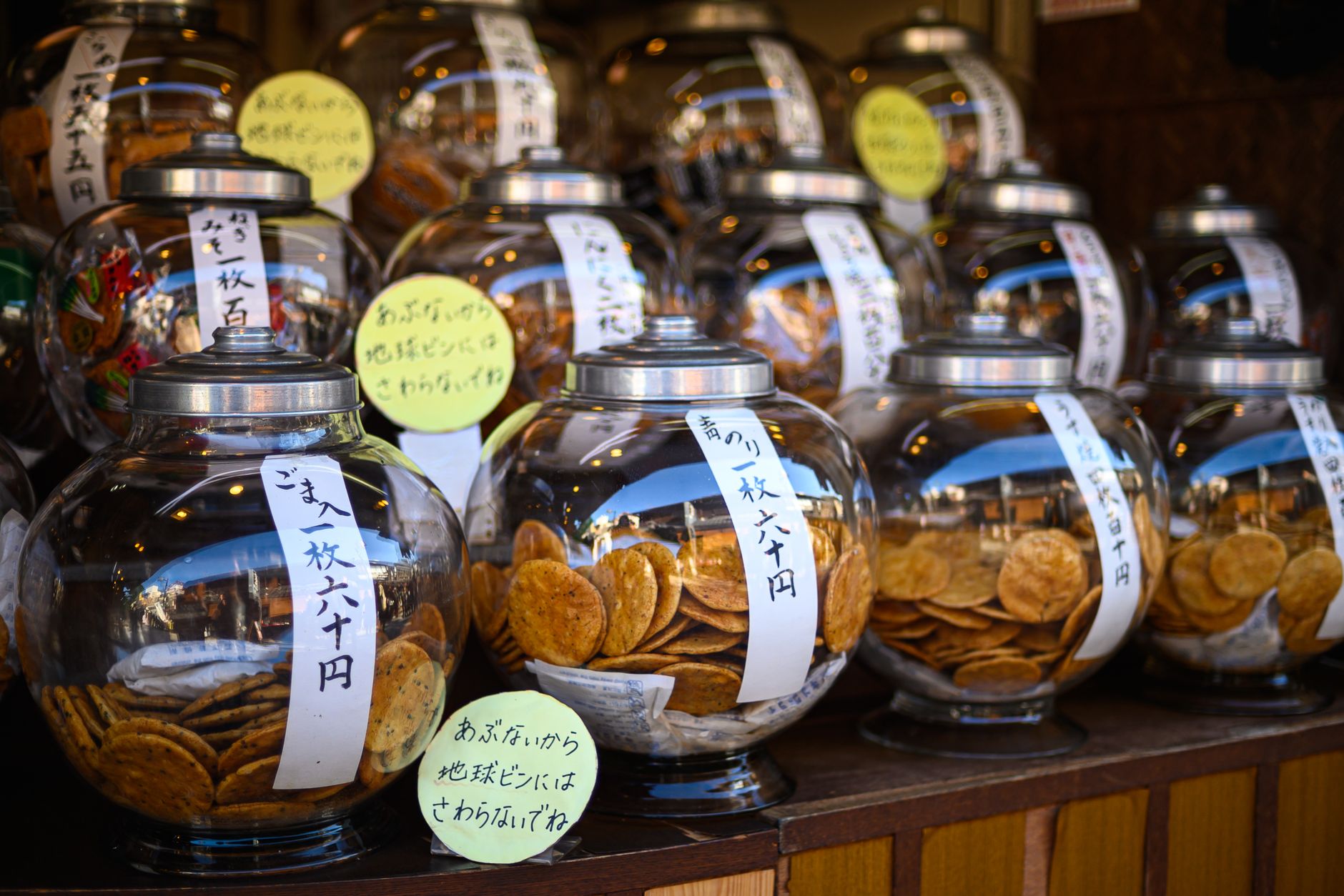
This rice cracker-style biscuit coated in sweet sugar glaze is popular as a souvenir. It contains rice, sugar, soy sauce, and a glaze: ingredients that are typically plant-based. No gelatine or lard. No halal certification, but the ingredient profile is considered lower-risk by many Muslim travellers. Always verify the current recipe.
📱 Find halal restaurants, prayer rooms and Muslim-friendly places across Japan with the free Halal Navi app.
Download on the App Store · Get it on Google Play
Where to Buy Verified Halal-Friendly Japanese Snacks and Souvenirs
If you want peace of mind rather than ingredient-list detective work, the best approach is to shop at stores that specialise in halal-certified or Muslim-friendly Japanese snacks.
In Osaka's Nishi area, JAPANeid Osaka l Muslim-friendly/Halal Japanese Souvenir & Snacks is a dedicated shop stocking Japanese souvenirs and snack items curated specifically for Muslim travellers. This is one of the few retail outlets in Japan where you can find snacks that have been pre-screened for halal suitability: a significant advantage over browsing supermarket shelves. Staff can advise on current stock, and the shop caters to travellers looking for gift-appropriate items they can bring home with confidence. Confirm current stock and certification status when visiting, as product lines rotate.
For travellers in Kanto, search the Halal Navi app for current listings of halal snack retailers and convenience stores near you.
How to Read Japanese Snack Labels as a Muslim Traveller
Even without fluent Japanese, you can scan for key risk terms:
| Japanese Term | Reading | What It Means |
|---|---|---|
| ゼラチン | Zerachin | Gelatine: check source |
| 乳化剤 | Nyūkazai | Emulsifier: source often unlisted |
| ショートニング | Shōtoningu | Shortening, usually vegetable now |
| 豚 | Buta | Pork |
| ラード | Rādo | Lard |
| 酒 / アルコール | Sake / Arukōru | Alcohol |
| 香料 | Kōryō | Flavouring: may include alcohol carrier |
If the package carries a crescent-and-star logo or a named halal certification body (e.g., Japan Islamic Trust, MHC Japan), it has been assessed. Be aware that some unofficial-looking halal stamps exist and may not correspond to any recognised certifying body: verify against official registries where possible.
Frequently Asked Questions: Japanese Biscuits and Halal Status
Are any major Japanese biscuit brands halal-certified? As of mid-2026, the major mass-market Japanese biscuit brands, including Meiji, Lotte Japan, Fujiya, Glico, and Bourbon, do not hold halal certification from internationally recognised bodies (such as JAKIM or MUIS) for their domestically sold products. Some export-market versions produced in other countries may carry certification; always check the specific package you are buying.
Is there pork in Japanese biscuits? Lard is not a commonly listed ingredient in current mainstream Japanese biscuit formulations, and pork gelatine is not standard in plain biscuits or chocolate-covered biscuits. The main concern is emulsifiers, whose animal or vegetable origin is not always disclosed. Filled biscuits with marshmallow or soft cream centres carry a higher risk of pork gelatine.
What does "no halal certification" mean in practice for Muslim travellers? It means the product has not been audited by a recognised Islamic certifying body. The ingredient list may contain no obvious haram ingredients, but cross-contamination risk, undisclosed additive sources, and alcohol-based flavourings cannot be fully ruled out without an audit. Individual Muslims make their own judgement based on their level of strictness (darura considerations, etc.).
Where can I find halal-certified Japanese snacks to bring home as souvenirs? Shops specifically catering to Muslim travellers, such as JAPANeid Osaka l Muslim-friendly/Halal Japanese Souvenir & Snacks in Osaka, stock pre-screened items. Halal supermarkets and Muslim-friendly grocery stores in tourist areas also carry certified snack products. Use the Halal Navi app to locate the nearest verified option.
Are rice crackers (senbei) safer than biscuits for halal purposes? Traditional plain senbei made from rice, salt, and soy sauce tend to have simpler ingredient lists with lower risk profiles than cream-filled or chocolate-coated biscuits. However, some flavoured senbei use mirin (rice wine) or alcohol-based seasonings, so always check. No halal certification is still the norm even for rice crackers.
Can I ask shop staff in Japan whether a snack is halal? Most convenience store and supermarket staff will not have detailed knowledge of halal status. You are better served by checking the ingredient list yourself (using the table in this article), using the Halal Navi app to search for certified products, or purchasing from a specialist halal snack retailer.
Do seasonal or limited-edition biscuit flavours carry different risks? Yes: limited editions often introduce new flavourings, fillings, or coatings that may differ from the standard formula. Alcohol-infused chocolate editions (rum, whisky, brandy) appear seasonally and are clearly not permissible. Strawberry, matcha, or fruit-flavoured editions tend to have simpler profiles, but always check the current label.
Plan Your Halal Snack Shopping in Japan with Halal Navi
Navigating Japanese snack aisles as a Muslim traveller doesn't have to be stressful. The Halal Navi app brings together verified halal restaurants, Muslim-friendly accommodation, prayer room locations, and halal snack shops across Japan and Southeast Asia: all in one place. Whether you're hunting for a certified souvenir box to bring home or looking for the nearest halal meal after a long day of shopping, Halal Navi has you covered.
Download the Halal Navi app free from the App Store or Google Play and search for halal-friendly snack shops, restaurants, and prayer facilities near you: wherever you are in Japan.
About this article
Written and halal-verified by Zeshan Hayat, CMO & Head Halal Auditor, Halal Navi.
Update policy: If you spot outdated information, we will review and correct it within 7 days.
Disclosure: Halal Navi receives no payment from any restaurant or hotel in exchange for inclusion, and all recommendations reflect independent editorial judgment based on Muslim-friendly criteria. Some articles contain affiliate booking links (e.g. Trip.com); if you book through one, Halal Navi may earn a small commission at no extra cost to you.
Last verified: 2026-07-04
🛒 Once you know what is safe to buy, the next question is where. We list halal grocery stores and halal-friendly supermarkets across Japan.
Find halal groceries in Japan →