Can You Travel Halal Outside Tokyo and Osaka? Self-Catering Guide
Quick Answer: Halal-friendly travel outside Tokyo and Osaka is absolutely possible, but requires a different strategy built on two pillars: staying in self-catering accommodation with kitchen access, and learning to navigate convenience store labels. Japan has no national halal labelling system, so travellers must read ingredients directly, scanning for 豚 (pork), アルコール (alcohol), and ラード (lard). Reliably safer konbini options include plain steamed rice bags, fresh fruit cups, hard-boiled eggs (check for mirin), and plain canned coffee or green tea. Dedicated halal dining drops sharply in smaller cities like Kanazawa, Matsuyama, and Hakodate, making it advisable to build a portable pantry of halal staples in Tokyo before departing. Prayer facilities outside major cities are rare, though hotel rooms and open spaces serve as practical alternatives. The Halal Navi app can help locate current halal and Muslim-friendly listings by location across Japan.
Japan's two biggest cities get most of the halal spotlight — but halal-friendly travel outside Tokyo and Osaka is absolutely possible, even in smaller cities and rural areas. Whether you are exploring the mountain towns of Tohoku, cycling through Kyushu's countryside, or island-hopping in Okinawa, knowing how to self-cater and navigate convenience stores can be the difference between a stressful trip and a seamless one. This guide covers everything Muslim travellers need — from choosing the right accommodation to decoding konbini labels — so you can travel with confidence wherever Japan takes you.
Why Halal-Friendly Travel Outside Tokyo and Osaka Requires a Different Strategy
In Tokyo and Osaka, halal restaurants are relatively easy to find. The moment you step into smaller prefectural cities — think Kanazawa, Matsuyama, Hakodate, or Nara — the density of dedicated halal dining drops sharply. This does not mean you will go hungry. It means your strategy needs to shift from restaurant-hunting to smart provisioning.
The two pillars of that strategy are:
- Self-catering stays — accommodation with kitchen access so you can cook with ingredients you trust.
- Konbini literacy — knowing which convenience store items are pork-free and alcohol-free, and how to read labels quickly.
Both pillars work together. When a halal restaurant simply does not exist within twenty kilometres of your ryokan, a short trip to the nearest 7-Eleven combined with a few pantry staples you packed from Tokyo makes for a perfectly satisfying and permissible meal.
Choosing the Right Self-Catering Accommodation for Muslim Travellers
Across Japan, several accommodation types lend themselves well to self-catering. Each has trade-offs for Muslim travellers.
Serviced Apartments and Vacation Rentals
Serviced apartments and platforms listing entire-home rentals are your best friend for longer stays. A private kitchen means you control every ingredient. Look for properties that explicitly list a stovetop, microwave, and rice cooker — the holy trinity for preparing a halal meal on the road. Many such properties in cities like Sapporo, Fukuoka, and Kyoto are listed on short-term rental platforms, though screening for kitchen facilities requires careful filtering.
Trust signals to look for when booking: - Full kitchen (not just a kitchenette) - Proximity to a supermarket or Asian grocery - Flexible check-in for late arrivals (important for prayer schedules) - Host responsiveness — a host who responds promptly is more likely to accommodate requests like providing a prayer mat direction note
Always ask the host whether previous guests have smoked or kept alcohol in the property if cross-contamination is a concern for your observance level.
Guesthouses and Capsule Hotels With Common Kitchens
Budget travellers will find that many guesthouses — especially backpacker-oriented ones in cities like Hiroshima, Nagasaki, and Sendai — include a shared kitchen. These are ideal for boiling halal instant noodles, reheating packaged meals from halal shops, or assembling a simple rice and curry from store-bought ingredients.
Confirm with the guesthouse that shared kitchen utensils are cleaned between uses, and consider bringing a small portable cutting board if dietary strictness is important to you.
Ryokan Stays: Navigating the Traditional Option
Staying in a ryokan is one of Japan's unmissable experiences, but traditional ryokan meal plans (kaiseki dinner and Japanese breakfast) almost always contain pork, shellfish, and dishes prepared with sake or mirin. The safest approach:
- Book a room-only rate rather than a meal plan whenever possible.
- Contact the ryokan in advance (in Japanese if possible) to explain dietary requirements — some ryokan, particularly in tourist-heavy areas like Hakone and Nikko, have begun offering modified meals.
- Use your room's kettle and any provided microwave to prepare konbini or self-catered items as backup.
Some travellers report that mid-range business hotels near train stations — while not traditional — are more practical for Muslim families because they allow outside food in rooms and sit near supermarkets. Confirm current policy with each property when booking, as rules vary.
Konbini Survival: What Muslim Travellers Can Actually Eat at 7-Eleven, Lawson, and FamilyMart
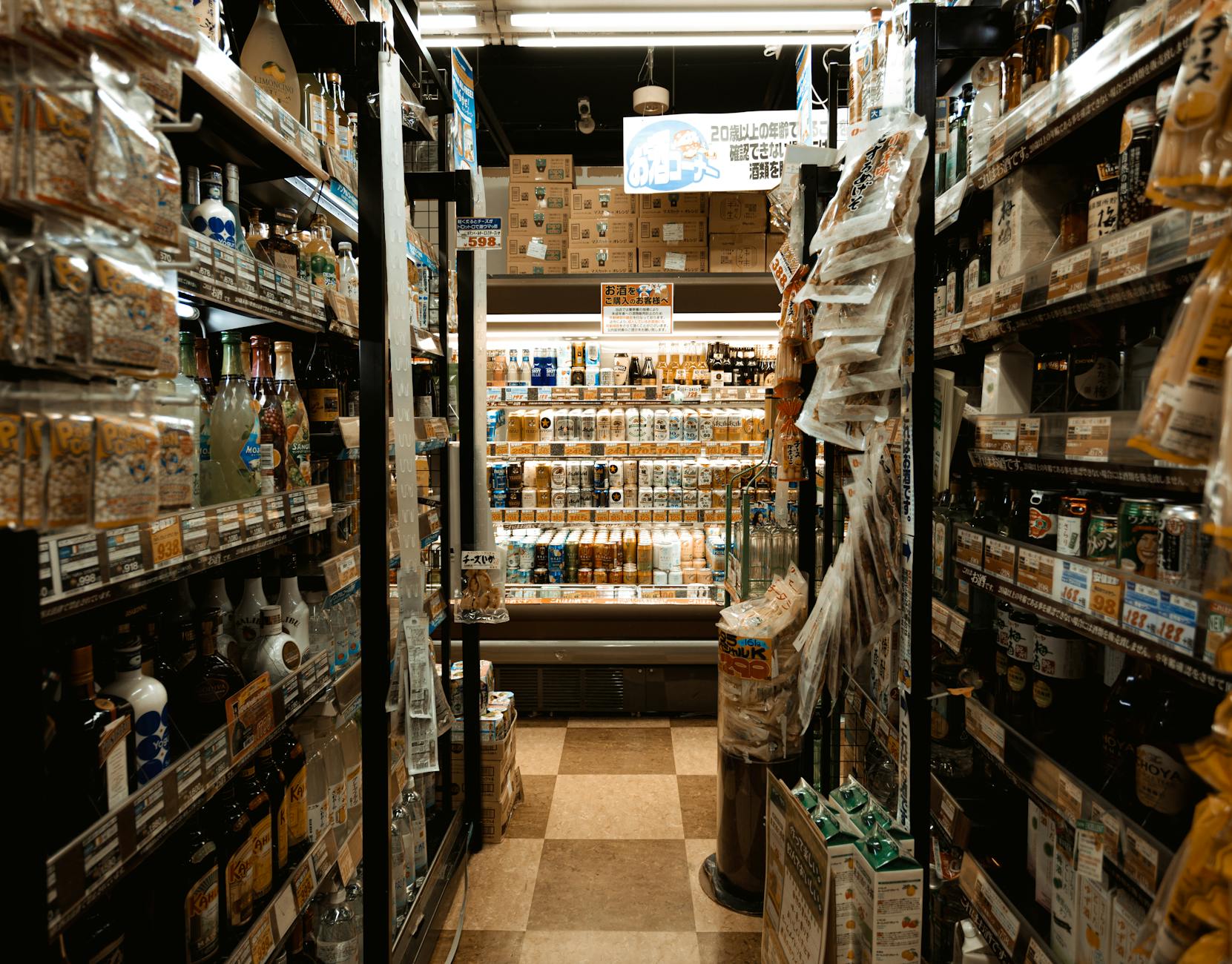
Convenience stores in Japan are open 24 hours, stocked with fresh food several times daily, and found within walking distance of almost every train station in the country. For Muslim travellers, they are a genuine lifeline — but only if you know what to look for.
The Golden Rule: Read Ingredients, Not Just the Package
Japan does not have a national halal labelling system. This means a product can look vegetarian-friendly but contain pork extract (豚肉エキス, butaniku ekisu), lard (ラード, rādo), or alcohol-based flavouring. Learn these kanji before you travel:
- 豚 (buta) — pork
- アルコール (arukōru) — alcohol
- ラード (rādo) — lard
- 豚肉 (butaniku) — pork meat
- みりん (mirin) — sweet rice wine (used extensively in Japanese cooking)
Reliably Safe Konbini Categories
The following categories are generally lower-risk, though always verify the label of each specific product:
Hard-boiled eggs (味付き卵): Usually contain only egg, soy sauce, and water. Check for mirin in the seasoning.
Plain onigiri with tuna-mayo or salmon filling: Tuna and salmon onigiri are common. Avoid any labelled 豚 or with pork-based fillings. The rice itself is plain steamed rice — safe.
Packaged steamed rice bags: Plain rice with no added flavouring — a dependable base for any self-prepared meal.
Roasted nuts and dried fruit snacks: Read for alcohol-based preservatives, but most plain nut mixes are clean.
Instant miso soup sachets: Many contain small amounts of dashi (fish stock) which is permissible for most Muslim travellers, though some scholars advise caution. Pork-free miso soup sachets are widely available.
UCC and similar canned black coffee (no milk/sugar): Plain black coffee and green tea are universally safe.
Fruit cups and fresh-cut fruit: No processing concerns; a great option for breakfast.
The 7-Eleven Asakusa Kaminarimon Mae: A Model for What's Possible
Before leaving Tokyo toward rural Japan, it is worth stocking up. 7-Eleven Asakusa Kaminarimon mae, located steps from Senso-ji Temple in Taito, is a branch particularly popular with Muslim travellers visiting the area. While it is a standard 7-Eleven store, its location in a high-tourism Muslim-visitor corridor means staff are accustomed to dietary queries. Use your visit to stock up on safe staples you have already vetted before heading into areas with fewer options. Verify current product availability in-store, as konbini inventory rotates frequently.
Building Your Halal Travel Pantry: What to Pack From Tokyo Before You Go
If you are beginning your Japan trip in Tokyo, use the capital's better-stocked halal grocery ecosystem to build a portable pantry before heading to smaller cities. Smart items to carry:
- Halal instant noodles (available at Asian grocery shops in Shin-Okubo and at specialty halal stores in Tokyo)
- Halal seasoning sachets — chicken stock, curry powder, soy sauce packets
- Packaged halal crackers and date bars for train journey snacking
- A small bottle of olive oil if your accommodation has a stovetop
- Individual-serving packets of halal-certified jam and honey for breakfast
Search the Halal Navi app for halal grocery stores near your Tokyo base before departure — it is the fastest way to find current, verified listings.
Prayer Facilities Outside Major Cities: What to Expect
Finding a designated prayer room (musalla) outside Tokyo and Osaka is genuinely challenging. In rural areas and smaller cities, dedicated Muslim prayer facilities are rare. Practical alternatives used by experienced Muslim travellers in Japan:
- Hotel rooms: A clean hotel room with enough space is a perfectly valid place to pray. Ask the front desk for the direction of Mecca (qibla direction) — many tourist-area hotels now have this information or can look it up.
- Parks and open spaces: Outdoor prayer is permissible when a clean, quiet space is available.
- Airport prayer rooms: Narita Airport Terminal 1 and Terminal 2 both have documented, publicly accessible prayer rooms — useful for your arrival and departure days.
- Shopping mall prayer rooms: Some larger regional malls, particularly in cities like Fukuoka and Sapporo, have introduced quiet rooms that can serve as prayer spaces. Confirm availability locally.
Compass apps and dedicated qibla-direction apps on your smartphone are essential travel companions. Download one before you land.
📱 Find halal restaurants, prayer rooms and Muslim-friendly places across Japan with the free Halal Navi app.
Download on the App Store · Get it on Google Play
Halal Food Hotspots in Regional Cities: What to Realistically Expect
Fukuoka
Fukuoka is one of Japan's more Muslim-friendly regional cities, partly due to its proximity to Southeast Asia and its large international student population. Halal ramen options and Indian-run curry restaurants have grown in number. Search the Halal Navi app for current listings in this area, as the restaurant scene evolves quickly.
Kyoto
Kyoto sits between Osaka and full regional territory — it has a moderate halal dining scene concentrated around the Kawaramachi and Gion areas, plus the Kyoto Station corridor. Several Muslim-run souvenir and food stalls operate in the Nishiki Market area. For accommodation, mid-range hotels near Kyoto Station sometimes accommodate prayer mat requests — confirm with the property when booking. Search the Halal Navi app for current listings in this area.
Sapporo and Hokkaido
Hokkaido is a dream destination but thin on halal-specific dining outside Sapporo city. In Sapporo, a handful of Indian and Middle Eastern restaurants serve halal-conscious menus — verify current halal status when visiting. In rural Hokkaido, self-catering becomes essential. The good news: Hokkaido's supermarkets carry excellent fresh seafood, vegetables, and dairy — all permissible — making it easier to cook wholesome meals in your vacation rental.
Hiroshima
Hiroshima's city centre has a small number of halal-friendly options, primarily kebab shops and Indian restaurants near the Hondori shopping arcade. Outside the city, Miyajima Island is almost entirely traditional Japanese food — bring your konbini staples and enjoy the scenery. Search the Halal Navi app for current listings in this area.
Frequently Asked Questions: Halal Travel Outside Tokyo and Osaka
Is it safe for Muslim travellers to eat sushi or sashimi at non-halal restaurants in Japan?
Plain raw fish sushi (such as salmon or tuna) contains no pork or alcohol in the fish itself. However, soy sauce often contains wheat, and some sauces may contain mirin (sweet rice wine). Tamari (wheat-free soy sauce) is a cleaner alternative. The main concern is cross-contamination in the kitchen rather than the fish itself. Many Muslim travellers choose to eat plain sashimi at trusted restaurants while avoiding marinated items. Confirm preparation methods with the restaurant when ordering.
What Japanese convenience store items are most reliably halal?
Plain steamed rice bags, fresh fruit cups, hard-boiled eggs (check mirin on the label), plain canned coffee and green tea, and roasted nuts without flavouring are among the safest options. Always read the ingredient label for 豚 (pork) and アルコール (alcohol), as formulations vary by brand and season.
Can I find halal certification marks on any products in Japanese konbini?
Occasionally yes — some imported products (particularly from Southeast Asian brands) carry JAKIM or MUI certification marks. However, the majority of Japanese-made konbini products do not carry halal certification. Rely on ingredient reading rather than expecting certification marks.
How do I ask for prayer space or qibla direction at a Japanese hotel?
A polite approach in Japanese goes a long way. You can write or show: 「メッカの方向を教えてください」(Mekka no hōkō wo oshiete kudasai — "Could you tell me the direction of Mecca, please?"). Many hotel front desks in tourist areas have encountered this request before. Alternatively, use a qibla compass app on your smartphone as a self-sufficient backup.
Are there halal-friendly ryokan options in Japan?
A small but growing number of ryokan, particularly in Hakone, Nikko, and the Kyoto region, now offer halal meal plan options — usually requiring advance notice of two weeks or more. Outside these areas, booking room-only and self-catering is the most reliable approach. Search the Halal Navi app for verified halal-friendly ryokan listings before your trip.
What is the best way to communicate dietary restrictions in smaller Japanese towns?
Carry a printed or saved halal dietary card in Japanese that lists what you cannot eat (pork, lard, alcohol, gelatin from pork). Several Muslim travel communities share free printable versions online. Showing this card to restaurant staff — even at non-halal establishments — helps them check ingredients or offer safe alternatives like plain grilled fish and rice.
Is tap water in Japan safe to drink, and are there any halal concerns with it?
Japan's tap water is among the safest and most closely regulated in the world. It is safe to drink directly from the tap in virtually all cities and towns. There are no halal concerns with Japanese municipal tap water.
🛏 Staying in Osaka? We list 22 places to stay there, and each one shows how many halal restaurants are within walking distance.
See places to stay in Osaka →
Plan Your Halal Journey Beyond the Big Cities With Halal Navi
Halal-friendly travel outside Tokyo and Osaka is not just achievable — it can be deeply rewarding. The quieter ryokan towns, the snow-dusted Hokkaido countryside, the ancient temples of Kyushu — these experiences are absolutely within reach for Muslim travellers who travel prepared.
The Halal Navi app is your on-the-go companion for finding verified halal and Muslim-friendly restaurants, stores, and accommodation across Japan and Southeast Asia. Filter by location, cuisine, prayer facilities, and certification status — all in one place, updated regularly by a dedicated team.
Download Halal Navi free from the App Store or Google Play and start planning your beyond-the-beaten-path halal adventure today.
Muslim-friendly stays in Osaka
Two things matter for a Muslim traveller choosing a hotel: what the property itself provides, and whether there is halal food you can walk to. We show both, from our own restaurant database. Confirm anything that matters to you when you book.
- Richmond Hotel Namba Daikokucho — Muslim-friendly facilities declared by the hotel: Hotel serves halal meal. See the halal details Halal food within walking distance: 3 places (1 certified) · nearest 167m. Lanzhou Halal Beef Lamian Noodle 167m · Adlon French Tacos ( HALAL ) 254m · Vitti Halal Cafe & Restaurant Osaka 389m.
- Midosuji Hotel — No Muslim-friendly facilities are declared for this property — it is here for the location. See the halal details Halal food within walking distance: 20 places (3 certified) · nearest 199m. Experieat Osaka Flavors 199m · Kobe Beef WANOMIYA Namba Midosuji Store 209m · Muqam Halal Uyghur Restaurant 251m.
- MIMARU Osaka Shinsaibashi East — No Muslim-friendly facilities are declared for this property — it is here for the location. See the halal details Halal food within walking distance: 15 places (2 certified) · nearest 211m. Wagyu Steak Kobe Beef Halal Dotonbori Omakase Restaurant 大阪和牛餐厅 211m · Halal Honolu Grande Shinsaibashi 215m · NazaR Shinsabashi 238m.
About this article
Author: Aisha Rahman, Halal Navi Editorial Team. Aisha Rahman is a pen name used by the Halal Navi editorial team to maintain consistency across our halal verification reporting. Editorial responsibility is held collectively by our Halal Verification Team.
Reviewer: Halal-reviewed by Zeshan Hayat (Lead Halal Auditor, Halal Navi / Founder, HHAJ). Zeshan holds ISO 9001:2015 Internal Auditor and ISO 19011 Auditor credentials. See our editorial standards for the full review process.
Update policy: We re-verify every claim in this article quarterly. If you spot outdated information, we will review and correct it within 7 days.
Disclosure: Halal Navi receives no payment from any restaurant or hotel in exchange for inclusion, and all recommendations reflect independent editorial judgment based on Muslim-friendly criteria. Some articles contain affiliate booking links (e.g. Trip.com); if you book through one, Halal Navi may earn a small commission at no extra cost to you.
Last verified: 2026-06-17
🛒 Once you know what is safe to buy, the next question is where. We list halal grocery stores and halal-friendly supermarkets across Japan.
Find halal groceries in Japan →
Related guides you might like
- 5-Day Muslim-Friendly Tokyo Itinerary: The Complete Halal Travel Guide
- Halal Food Near Tokyo Station: Bento, Restaurants and Quick Bites for Muslim Travelers (2026)
- Muslim Guide to Tokyo Disneyland & DisneySea: Halal Food & Prayer 2026
- First-Time Muslim Solo Female Traveler in Tokyo: Safety, Halal Food & Mosque Guide