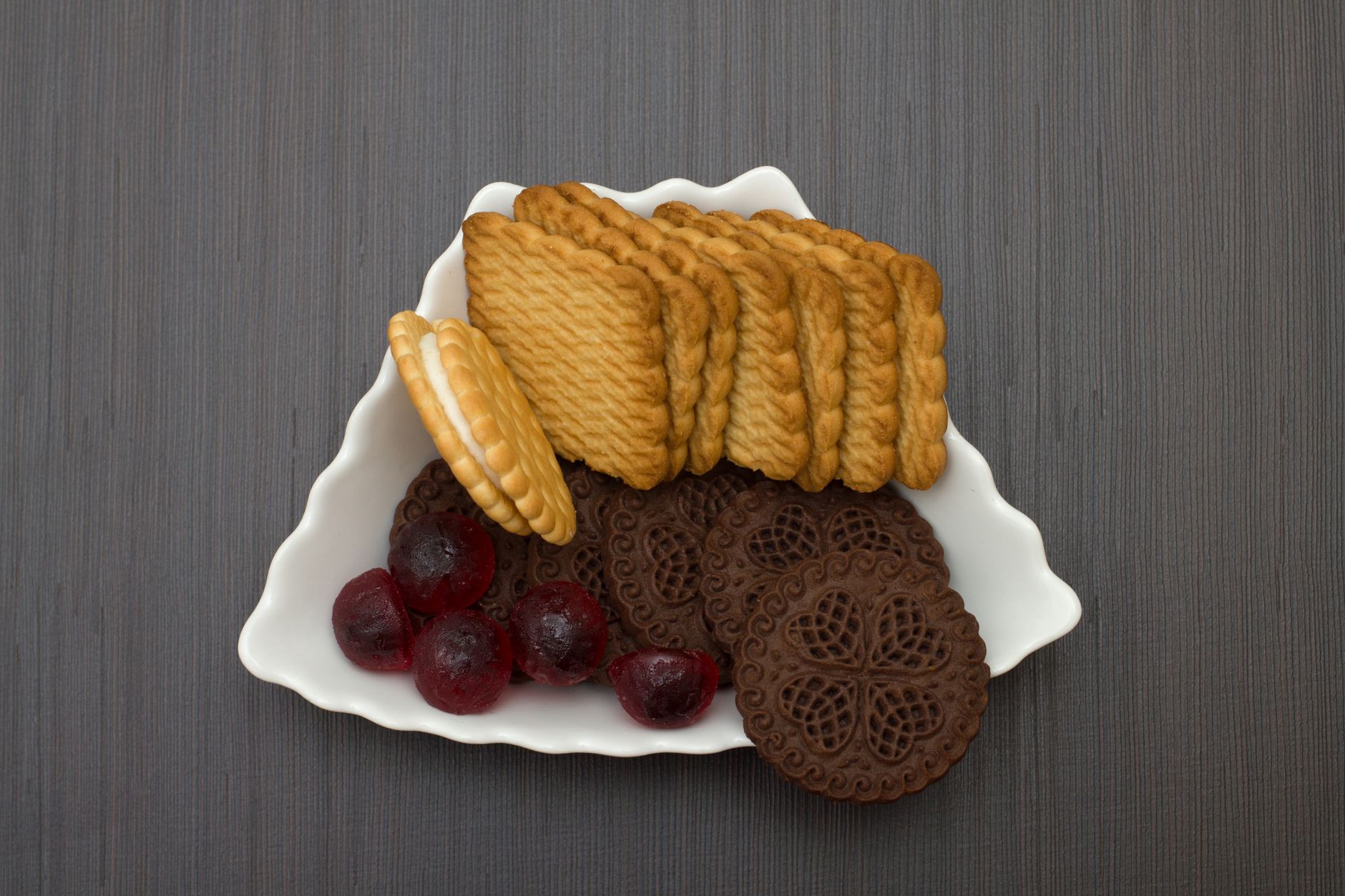
Are Senbei Halal? Happy Turn, Kabukiage and Arare
Quick Answer: Senbei are Japanese rice crackers, baked or fried and often seasoned with soy sauce. Whether Japanese rice crackers are halal depends on the specific product and its ingredients, as no major mainstream brand, including Kameda Seika, Tohato, or Masuya, holds halal certification recognised by bodies such as JAKIM or MUIS as of 2026. The original Happy Turn does not list pork, lard, or alcohol, and is widely reported by Muslim visitors as acceptable after label-checking, but it is not certified halal and should be treated as a "proceed with informed caution" snack. Kabukiage is fried in vegetable oil with no pork listed, but falls into a grey zone due to fermented soy sauce, which some scholars permit and others advise avoiding. Plain salted or nori-flavoured arare tend to have simpler ingredient lists, while sweet-glazed varieties often contain mirin, which is alcohol-derived. Always read the current label and watch for みりん (mirin), ラード (lard), and unlabelled flavouring sources.
If you are a Muslim traveler exploring Japan, one of your first snack dilemmas will likely be whether Japanese rice crackers are halal. Senbei, Happy Turn, Kabukiage, arare: these crispy, savory treats fill every konbini shelf and souvenir shop across the country. But are Japanese rice crackers halal-safe for Muslim visitors? The answer is nuanced: some are genuinely suitable, some require label-checking, and others contain hidden ingredients that disqualify them. This complete 2026 guide breaks down each popular variety so you can snack with confidence.
What Are Japanese Rice Crackers and Why Do Muslims Need to Check Them?
Senbei (煎餅) is a broad category of Japanese rice-based crackers that have been enjoyed for centuries. They are made primarily from rice flour or glutinous rice and baked or fried into crisp shapes. Sub-varieties include:
- Senbei: flat, baked crackers typically seasoned with soy sauce, salt, or sweet glazes.
- Arare: small, bite-sized crackers made from glutinous rice, often in mixed assortments.
- Kabukiage: a puffed, deep-fried cracker made by Tohato, famous for its light texture and soy-based seasoning.
- Happy Turn: a Kameda Seika product coated in a distinctively sweet-savory "Happy Powder" seasoning.
For Muslim consumers, the concern is not the rice itself, rice is inherently halal, but the flavouring agents applied on top. Common red-flag ingredients include:
- Alcohol (mirin, sake, or ethanol-based flavour carriers)
- Pork-derived gelatin or lard (used in some coatings)
- Non-halal meat extracts (chicken or beef stock derived from non-halal slaughter)
- Ambiguous emulsifiers (e.g. E471, which can be animal-derived)
None of the mainstream Japanese rice cracker brands currently carry halal certification recognised by major bodies such as JAKIM or MUIS, so the approach for Muslim travelers is ingredient scrutiny rather than certification reliance.
Is Happy Turn (ハッピーターン) Halal? What Muslims Should Know
Happy Turn is arguably the most internationally recognised Japanese rice cracker brand. Produced by Kameda Seika, the original Happy Turn is a round, baked rice cracker dusted with "Happy Powder": a sweet, umami-rich seasoning blend.
Looking at the standard ingredient list for the classic Happy Turn as of 2026, the main components are: rice, sugar, salt, starch, amino acid seasoning (typically glutamate), and vegetable oil. Notably, the original flavour does not list any obvious pork, lard, mirin, or alcohol ingredients.
However, key caveats apply:
- The seasoning includes amino acids and flavour enhancers whose exact animal-derived status Kameda Seika does not publicly disclose for halal purposes.
- Kameda Seika does not hold a halal certification for Happy Turn as of publication.
- Certain seasonal and limited-edition Happy Turn flavours (including cheese variants and some premium lines) introduce dairy or flavour extracts that require separate scrutiny.
Muslim traveler verdict: The original Happy Turn is widely reported by Muslim visitors as a snack they consume after ingredient checking, but you should verify the label of each specific product at purchase, as formulations can change. It is not certified halal: treat it as a "proceed with informed caution" snack.
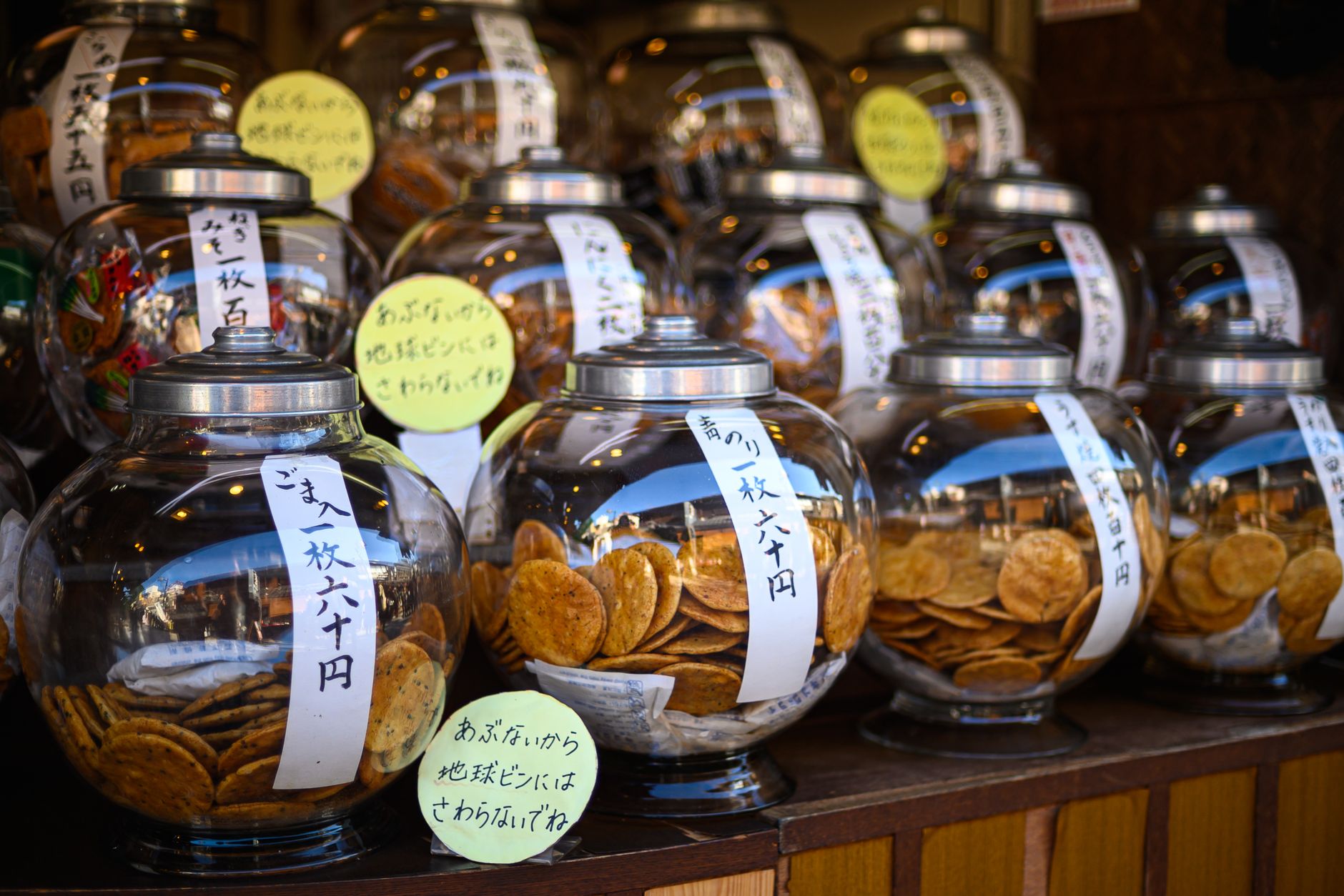
Is Kabukiage (歌舞伎揚) Halal? The Deep-Fried Cracker Question
Kabukiage, made by Tohato, is a deep-fried puffed cracker seasoned primarily with soy sauce and a subtle sweetness. Its distinctive embossed design references traditional Kabuki theater crests. It is one of Japan's most iconic snack exports and widely available in supermarkets and souvenir shops.
The standard Kabukiage ingredient list includes: glutinous rice, soy sauce, sugar, salt, and vegetable oil. Soy sauce in Japan sometimes contains a trace amount of alcohol generated during the fermentation process, which is a point of scholarly debate among Islamic jurists. Some scholars classify naturally fermented soy sauce as permissible because the alcohol is a byproduct of fermentation rather than an additive, while others advise avoidance.
Additional considerations for Kabukiage:
- The frying oil used is vegetable-based according to the product label, which is a positive indicator.
- No pork or lard is listed in the ingredient declaration.
- Like Happy Turn, Kabukiage carries no official halal certification.
Muslim traveler verdict: Kabukiage falls into the "grey zone" primarily due to soy sauce fermentation. Travelers following stricter halal standards may choose to avoid it; those who accept naturally fermented soy sauce widely consider it suitable. Always check the current label, as Tohato periodically revises recipes.
Are Arare and Okaki (あられ・おかき) Halal?
Arare and okaki are glutinous rice crackers that form the colourful mixed assortments found in traditional Japanese confectionery shops and souvenir boxes. They are often given as omiyage (gifts) and come in flavours ranging from plain salt and soy sauce to nori seaweed, sesame, and sweet soy glaze.
The halal picture for arare and okaki is similarly ingredient-dependent:
- Plain salted or nori-flavoured arare generally contain straightforward ingredients: glutinous rice, salt, nori, starch syrup, and vegetable oil. These are typically the most Muslim-friendly options.
- Soy sauce-glazed varieties carry the same fermentation consideration described for Kabukiage.
- Sweet arare coated in a caramelised glaze sometimes include mirin (a sweet rice wine), which is alcohol-derived and considered haram by mainstream scholars. Read labels carefully for the word みりん (mirin) or 味醂.
- Some premium mixed assortments include ebi (shrimp) or squid-flavoured pieces, which are halal from a species perspective (seafood is generally permissible in most Islamic schools), though cross-contamination warnings in shared production lines merit attention.
When purchasing loose or bulk arare from traditional confectionery shops, ingredient information may not be readily available in English. Stick to pre-packaged products with printed ingredient lists, and look for the simple, minimal-ingredient varieties for the safest choice.
Other Popular Japanese Rice Cracker Brands: Kameda, Masuya and Convenience Store Options
Beyond Happy Turn and Kabukiage, several other widely sold Japanese rice crackers deserve a mention for Muslim travelers.
Kameda Seika produces a large range beyond Happy Turn, including their Kakinotane (柿の種): small chilli-soy cracker slivers often sold mixed with peanuts. The Kakinotane flavour relies heavily on soy sauce and chilli seasoning. Like Happy Turn, no halal certification exists, but the base ingredients are relatively simple. Peanuts in the mix are naturally halal. The concern remains the soy sauce fermentation question.
Masuya is a smaller but respected senbei brand producing traditional flat baked senbei in soy sauce glaze. Their artisan-style crackers are popular in souvenir packaging. The ingredients are typically minimal, rice, soy sauce, starch syrup, making them relatively straightforward to evaluate, though the mirin/alcohol question applies to glazed varieties.
Convenience stores (7-Eleven, FamilyMart, Lawson) stock a wide rotating selection of rice cracker snacks under their own private labels. These are often cheaper and come in a variety of flavours, including wasabi, cheese, and spicy seasonings. For these, the same rule applies: check for alcohol, mirin, pork extract, and lard in the ingredient list. The good news is that konbini ingredient labels in Japan are highly regulated and comprehensive: take a moment to read them or use a translation app.
📱 Find halal restaurants, prayer rooms and Muslim-friendly places across Japan with the free Halal Navi app.
Download on the App Store · Get it on Google Play
Where to Buy Verified Halal-Friendly Japanese Snacks and Souvenirs
While supermarkets require careful label-reading, a more reliable option for Muslim travelers is to shop at stores that specifically curate halal-friendly Japanese snacks. In Osaka, JAPANeid Osaka l Muslim-friendly/Halal Japanese Souvenir & Snacks in the Nishi area is a dedicated shop catering specifically to Muslim visitors, offering Japanese souvenir snacks and confectionery that have been screened for Muslim suitability: a major convenience when you want to buy gifts without spending an hour decoding ingredient labels. Please confirm the current product range and any halal certification status directly with the store when you visit, as stock rotates regularly.
For travelers based in Tokyo, the Asakusa area has a strong Muslim-friendly infrastructure. While the focus there is primarily on restaurants, the neighbourhood's souvenir shops near Senso-ji Temple carry a range of traditional Japanese confectionery and snacks. Pairing a snack shopping trip with a meal at a trusted halal restaurant in the area makes for an efficient itinerary. Search the Halal Navi app for current snack and souvenir shop listings in Asakusa and across Japan.
Prayer Facilities and Muslim Traveler Tips for Snack Shopping in Japan
Snack shopping in Japan can take time, and knowing where to pause for prayer makes the experience more comfortable. A few practical notes:
- Major department stores in Tokyo (Shibuya, Ikebukuro, Ginza) and Osaka (Namba, Shinsaibashi) occasionally have multi-faith or prayer rooms: check with customer service on arrival.
- Narita Airport Terminal 1 and Terminal 2 both have designated prayer rooms with qibla direction indicated, convenient for last-minute souvenir shopping before departure.
- Kansai International Airport also has a prayer room facility, useful for Osaka-based travelers stocking up on snacks before flying home.
- When visiting traditional senbei shops, staff are accustomed to overseas visitors and will usually be patient if you photograph the ingredient list for translation. A "no pork, no alcohol" card in Japanese (豚肉不使用・アルコール不使用) is a useful communication tool.
- Female Muslim travelers will find Japan generally comfortable for modest dress; there is no social friction around hijab in shopping areas.
Frequently Asked Questions About Japanese Rice Crackers and Halal
Are any Japanese rice crackers officially halal-certified? As of 2026, no major mainstream Japanese rice cracker brand, including Kameda Seika, Tohato, or Masuya, holds a halal certification recognised by JAKIM, MUIS, or comparable bodies. Some specialist import products distributed for overseas Muslim markets may carry certification, but domestic Japanese supermarket products do not. Always verify before purchasing.
Is soy sauce in Japanese snacks halal? This is a subject of scholarly difference. Traditional Japanese soy sauce (shoyu) undergoes fermentation that produces trace alcohol. Many Islamic scholars, particularly those following the Hanafi school, consider naturally fermented condiments permissible as long as the primary purpose is not intoxication. Stricter interpretations advise avoidance. Know your own standard and choose accordingly.
Does Happy Turn contain pork or lard? The standard original Happy Turn ingredient list does not include pork, lard, or any explicitly pork-derived ingredient as of publication. However, Kameda Seika does not publish a halal declaration, so cross-contamination and ambiguous flavour enhancers cannot be fully ruled out. Always read the current label.
Is Kabukiage fried in pork lard? According to the product label, Kabukiage is fried in vegetable oil, not lard. This is a positive indicator. The main Muslim consideration is the soy sauce seasoning, as discussed above.
Can I find halal Japanese snacks as souvenirs to bring home? Yes. Specialist halal-friendly souvenir shops like JAPANeid Osaka l Muslim-friendly/Halal Japanese Souvenir & Snacks in Osaka curate products suitable for Muslim visitors. Additionally, some plain rice crackers with simple ingredient lists, particularly salted or nori varieties, are widely considered acceptable by Muslim travelers who do their own label verification.
What Japanese snack ingredients should Muslim travelers always watch for? The key watchlist items are: みりん (mirin/sweet sake), 酒 (sake/rice wine), ラード (lard/pork fat), ゼラチン (gelatin, which may be pork-derived), 豚 (pork), and broad "flavouring" or "seasoning" declarations that do not specify the source. A halal snack scanner app or translation tool is helpful in store.
Are arare crackers safer than soy sauce senbei? Plain salted or nori-flavoured arare tend to have simpler ingredient lists than soy sauce-glazed senbei, making them easier to evaluate. However, sweet-glazed arare often contain mirin, so they are not automatically safer. The safest approach is always to read the specific product label.
Discover Halal-Friendly Dining and Snacks Across Japan with Halal Navi
Navigating Japanese rice crackers, snack labels, and souvenir shops as a Muslim traveler is manageable once you know what to look for, but finding halal-certified restaurants, prayer rooms, and Muslim-friendly snack stores shouldn't require hours of research every time you visit a new city.
That's exactly what the Halal Navi app is built for. Whether you're looking for a halal ramen shop near your hotel in Asakusa, a wagyu yakiniku restaurant in Kyoto's Gion district, or a dedicated halal souvenir shop in Osaka, Halal Navi brings verified, up-to-date listings to your fingertips: complete with location maps, prayer facility information, and user reviews from the Muslim travel community.
Download the Halal Navi app free from the App Store or Google Play and travel through Japan with confidence, from your first senbei purchase to your final meal before the flight home.
About this article
Written and halal-verified by Zeshan Hayat, CMO & Head Halal Auditor, Halal Navi.
Update policy: If you spot outdated information, we will review and correct it within 7 days.
Disclosure: Halal Navi receives no payment from any restaurant or hotel in exchange for inclusion, and all recommendations reflect independent editorial judgment based on Muslim-friendly criteria. Some articles contain affiliate booking links (e.g. Trip.com); if you book through one, Halal Navi may earn a small commission at no extra cost to you.
Last verified: 2026-07-04